
Put Down the Ratchet: How to Use Sockets on a Standard Drill
Skip the ratchet—learn how to use a 10mm socket for drill to drive fasteners faster and safer.

The Fastest Way to Drive a 10mm Bolt? Skip the Ratchet
Using a 10mm socket for a drill is simpler than most people think — and it saves serious time on the job.
Here's the quick answer:
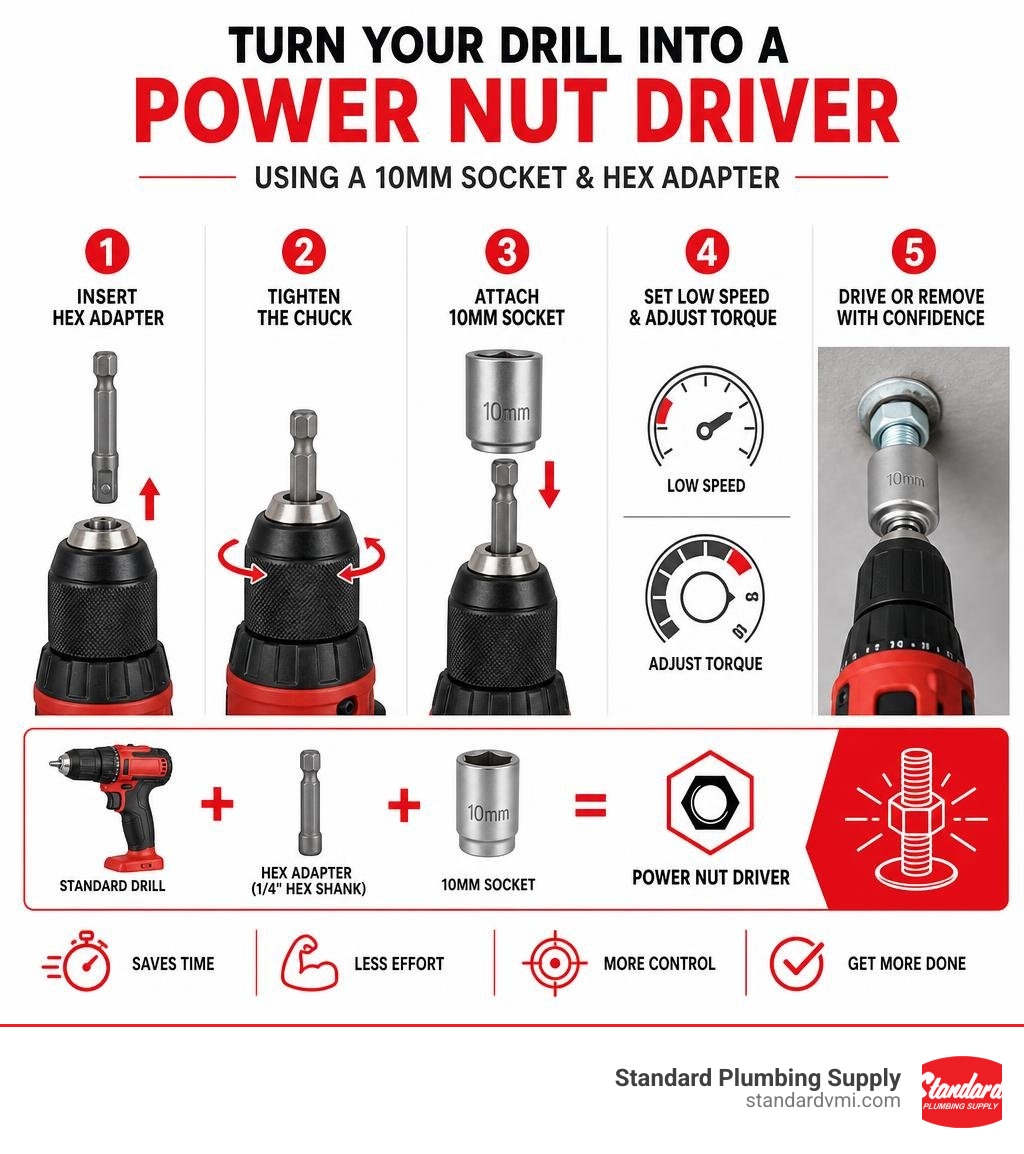
How to use a 10mm socket on a drill:
- Get a hex shank socket adapter (most common size: 1/4-inch hex)
- Insert the adapter into your drill's chuck and tighten
- Attach a 10mm socket to the adapter
- Set your drill to low speed and use the clutch to control torque
- Drive or remove your fastener without picking up a ratchet
That's it. No special drill required — just the right adapter and the right socket.
Most people reach for a hand ratchet when they need to drive a 10mm bolt. But if you're managing a property, running a crew, or doing repetitive installs, that approach slows you down fast. A cordless drill with the right socket setup can do the same job in a fraction of the time.
The 10mm size, in particular, is one of the most commonly used fastener sizes in automotive, HVAC, and plumbing work — especially on Japanese-made vehicles and equipment, where metric hardware is standard throughout.
I'm Jacob Reese, Vice President at Standard Plumbing Supply, where I work closely with contractors and tradespeople who rely on the right tools to keep installs moving efficiently — and a 10mm socket for a drill comes up more often than you'd think. I'll walk you through everything you need to know to use one correctly and confidently.
What is a 10mm Socket for Drill and How Does It Work?
To understand how a 10mm socket for drill applications works, we must first look at how standard hand sockets transfer torque compared to power tools. When you use a hand ratchet, the square drive of the ratchet inserts directly into the square opening of the socket. Power drills, however, do not have square drive anvils; they feature either a three-jaw adjustable chuck or a quick-release 1/4-inch hex collet.
To bridge this gap, we use a hex shank socket adapter. This adapter has a 1/4-inch hex shank on one end (which locks securely into your drill) and a square drive (typically 1/4-inch, 3/8-inch, or 1/2-inch) on the other end to hold your standard 10mm socket. Alternatively, you can use a dedicated 10mm nut driver, which is a one-piece tool featuring a 10mm socket permanently attached to a hex shank.
When you pull the trigger on your drill, the motor spins the hex shank, transferring rotational force through the adapter to the socket. This allows you to apply rapid, continuous torque to the fastener without the back-and-forth motion required by a manual ratchet.
Standard Sockets vs. Dedicated 10mm Socket for Drill Bits
Can you just grab any old 10mm socket from your toolbox and throw it on a drill adapter? Yes, but there are key design differences between hand-tool sockets and sockets engineered specifically for electromotive or power tool use.
Standard hand sockets often feature sharp, internal corners that grip the flat sides of a nut. Under the high-speed rotational force of a power drill, these sharp corners can easily slip and round off the edges of a 10mm fastener. Conversely, power-optimized sockets, such as the 1/4 Hex Dr. Long Socket 10mm 12 point 104mm - Ko-ken USA , are engineered to handle the unique dynamics of power tools.
Many dedicated power sockets utilize a lobular design. This design distributes torque away from the vulnerable corners of the hex bolt and focuses the pressure on the flat, stronger midsections of the fastener. This radial torque distribution minimizes the risk of stripping or rounding, even when spinning at high RPMs.
Drive Sizes and Drill Chuck Compatibility
When setting up your drill to drive 10mm fasteners, you need to match your adapter's square drive to the drive size of your 10mm socket. Sockets generally come in three primary drive sizes:
- 1/4-inch Drive: Best for light-duty tasks, tight spaces, and small fasteners.
- 3/8-inch Drive: The standard "Goldilocks" size for general mechanical, plumbing, and HVAC work, offering an optimal balance of strength and clearance.
- 1/2-inch Drive: Reserved for heavy-duty applications requiring high torque.
A standard 1/4-inch hex shank adapter fits perfectly into both quick-change hex chucks (commonly found on impact drivers) and traditional three-jaw chucks (found on standard cordless drills). If you are using a standard drill, you simply insert the hex shank into the three-jaw chuck and hand-tighten the chuck sleeve until the jaws grip the adapter securely.
Types of 10mm Sockets Available for Power Drills
Depending on the job at hand, you will need to choose the right style of socket. The environment, the torque requirements, and the type of drill you are using will dictate your choice.
| Feature | Standard Chrome Sockets | Impact-Rated Sockets |
|---|---|---|
| Material | Chrome Vanadium (Cr-V) | Chrome Molybdenum (Cr-Mo) or Heavy-Duty Cr-V |
| Finish | Mirror-polished chrome plating | Matte black oxide or manganese phosphate |
| Wall Thickness | Thin walls for tight clearances | Thick walls to absorb rotary impacts |
| Primary Use | Hand ratchets and light drill work | Impact drivers and high-torque power tools |
| Shatter Risk | High under sudden impact | Low (designed to flex, not shatter) |
The Benefits of a Magnetic 10mm Socket for Drill Fastening
If you have ever dropped a 10mm bolt into a dark, inaccessible engine bay or behind a finished wall, you know how frustrating it can be. This is where a magnetic 10mm socket for drill setup becomes a game-changer.
A magnetic socket features a small, high-strength magnet recessed inside the socket well. This magnet holds the steel head of the bolt firmly inside the socket, allowing you to guide the fastener into tight spots with one hand without it falling out. This simple feature drastically improves efficiency on production lines, during HVAC duct assembly, or during plumbing bracket installations.
For situations where magnets might attract unwanted metal shavings or interfere with sensitive electrical components, a high-quality non-magnetic option like the 10mm Hex No-Magnetic Power Socket 80mm Length Adapter Drill ... provides the clearance and durability you need without the magnetic pull.
Deep vs. Shallow and Hex Bit Sockets
Selecting the right socket depth is crucial for accessing different types of fasteners:
- Shallow Sockets: These are compact and perfect for tight spaces where clearance is limited. A premium option like the 1/2 Inch Drive x 10 mm Shallow 6-Point Impact Socket | TEKTON offers a shallow profile combined with high-performing steel alloys, making it ideal for high-torque applications in cramped quarters.
- Deep Sockets: When you are dealing with a nut threaded far down a long bolt or stud, a shallow socket will bottom out before reaching the nut. A deep socket, such as the 3/8" Drive 10MM 6-Point Deep Socket | Milwaukee Tool , features a deep well that allows the excess bolt shaft to pass through, ensuring full engagement with the nut.
- Hex Bit Sockets: Sometimes the fastener is not a standard hex nut but an internal hex socket head (Allen head). In these cases, a specialty option like the 10mm Long Hex Bit Socket | 3/8" Drive | Milwaukee Tool allows you to drive internal 10mm hex fasteners quickly with your power drill.
Step-by-Step Guide: How to Safely Use Sockets on a Drill
Using a drill to drive sockets is highly efficient, but if done incorrectly, you risk stripping the fastener, breaking the adapter, or injuring yourself. Follow these steps to ensure safe and proper operation.
Selecting the Right Adapter and Speed
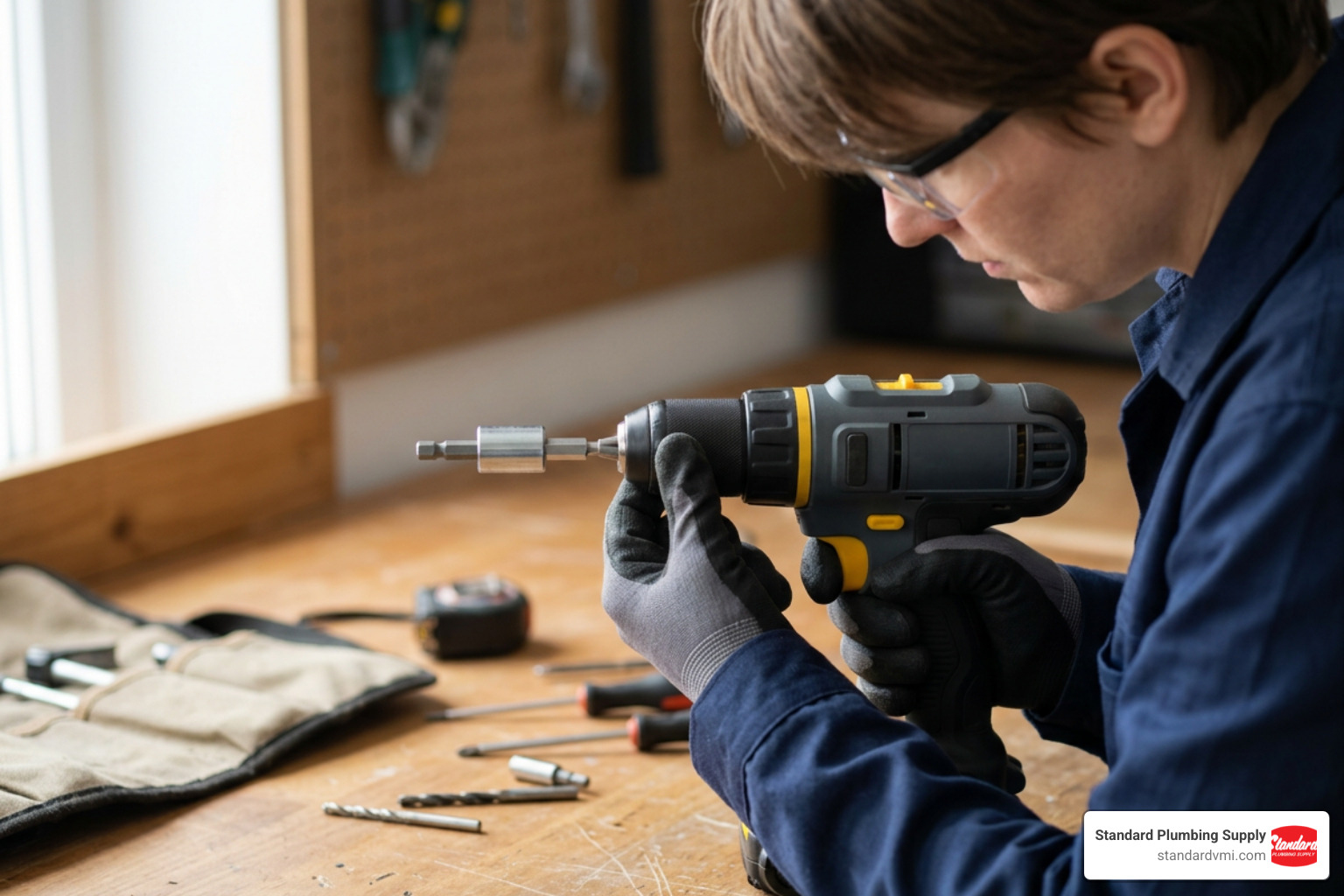
- Inspect the Adapter: Make sure your hex-to-square adapter is free of cracks or excessive wear.
- Insert and Tighten: Slide the 1/4-inch hex shank of the adapter into your drill chuck. If using a three-jaw chuck, tighten it firmly by hand. Ensure the shank is centered in the jaws.
- Attach the Socket: Push your 10mm socket onto the square drive of the adapter until the detent ball clicks into place.
- Adjust Drill Speed: Set your drill to its lowest speed setting (usually speed "1" on the top switch). High speed (speed "2") is designed for drilling holes, not driving fasteners. Low speed provides maximum control and torque.
- Set the Clutch: If your drill has a mechanical clutch collar (the ring with numbers near the chuck), set it to a low-to-medium number. This prevents the drill from over-tightening and stripping the threads once the bolt bottoms out.
Preventing Fastener Rounding and Stripping
To keep your fasteners in pristine condition, keep these tips in mind:
- Keep it Straight: Always hold the drill perfectly perpendicular to the surface of the fastener. Angling the drill causes the socket to ride up on the edges of the bolt head, leading to immediate slippage and rounding.
- Apply Forward Pressure: Lean into the drill slightly. The constant forward pressure helps keep the socket teeth fully engaged with the flat sides of the 10mm bolt.
- Avoid Over-tightening: Let the drill's clutch do the work. If your drill doesn't have a clutch, feather the variable speed trigger gently as the bolt tightens, and stop the moment you feel the motor resist.
Common Applications for 10mm Sockets in DIY and Professional Work
The 10mm fastener is arguably the most ubiquitous metric size in modern manufacturing. Whether you are working out of our Sandy, UT branch or managing a project in Heber City, UT, you will find endless uses for a 10mm socket for drill setups.

Automotive and Mechanical Repairs
If you own a Japanese or European car, you quickly learn that almost everything under the hood is held together by 10mm bolts. From battery terminals and headlight assemblies to engine brackets, plastic under-body shields, and interior trim panels, the 10mm socket is the undisputed king of the garage. Using a drill with a socket adapter allows you to zip off splash guards and engine covers in seconds, transforming a tedious oil change or battery replacement into a quick, painless task.
Electrical, HVAC, and Plumbing Installations
In the commercial and residential trades, 10mm fasteners are everywhere:
- Electrical: Many conduit clamps, grounding lugs, and electrical panel enclosures rely on 10mm bolts.
- HVAC: Duct straps, blower motor mounts, and air handler brackets frequently use metric hardware.
- Plumbing: Valve brackets, pipe hangers, and pump housing bolts often require a 10mm socket.
While a specialized tool like the Heavy Duty 10mm 300 Watt Drill Machine With Hss Bits, Line Tester, Plier, Wire Cutter & Wrench For Electrician/ Electrical Work Purposes is designed for dedicated drilling tasks, having a standard cordless drill equipped with a socket adapter gives you the versatility to switch from drilling holes to driving fasteners instantly.
For instance, you might use a DeWalt Multi Material Drill Bit 10mm x 134mm | Toolstation or a Bosch SDS Plus Shank Masonry Drill Bit 10mm x 210mm - Screwfix to drill anchor holes into masonry or wood, and then immediately switch to a 10mm socket adapter to drive the concrete sleeve anchors or lag bolts home.
Frequently Asked Questions About Drill Sockets
Can you use standard hand-ratchet sockets on an impact driver?
We strongly advise against this. Standard hand-ratchet sockets are made from Chrome Vanadium (Cr-V) steel, which is highly rigid and finished with a brittle, shiny chrome plating. Impact drivers deliver rapid, violent rotational blows. Under these intense, repetitive impacts, standard chrome sockets cannot flex; instead, they can shatter, sending sharp metal shards flying.
Always use impact-rated sockets made from Chrome Molybdenum (Cr-Mo) or impact-optimized Cr-V when using an impact driver. If you must use a standard chrome socket, restrict its use to a standard, non-impacting rotary drill, and always wear safety glasses.
Why is the 10mm socket always the one that goes missing?
It is the great mystery of the tool world! Because the 10mm size is so widely used across automotive, plumbing, and industrial sectors, it is handled far more often than any other size. More use simply means more opportunities to drop it, misplace it, or leave it sitting on a frame rail.
To combat this, many manufacturers sell dedicated multi-packs of just 10mm sockets. If you find yourself constantly searching for yours, we recommend checking out 10 mm - Sockets - The Home Depot to stock up on replacements, or investing in magnetic socket rails to keep them locked down in your tool bag.
What is the difference between a nut driver and a socket adapter?
A nut driver is a solid, one-piece tool with a hex shank on one end and a non-removable socket on the other. It is incredibly robust, slim, and has zero risk of the socket falling off. However, you are locked into that single size.
A socket adapter is a modular system. It allows you to swap out different socket sizes (8mm, 10mm, 12mm, etc.) on the fly using the same hex shank. While highly versatile, it takes up slightly more space in a tight spot and introduces a connection point where the socket could theoretically slip off.
Conclusion
Upgrading your workflow by pairing a 10mm socket for drill use with a reliable hex adapter is one of the easiest ways to boost your job site efficiency. Whether you are tightening plumbing brackets in Orem, UT, mounting HVAC ducts in Heber City, UT, or running a busy maintenance crew out of Sandy, UT, putting down the manual hand ratchet and letting your power drill do the heavy lifting will save your wrists and your schedule.
At Standard Plumbing Supply , we are dedicated to helping professional contractors and DIYers alike find the exact tools, parts, and expert support they need to get the job done right.
Ready to take your operational efficiency to the next level? If you manage a large inventory of tools, fittings, and fasteners for your business or fleet, don't let disorganized stock slow you down. Optimize your inventory with professional VMI solutions from Standard Plumbing Supply to keep your crew fully equipped and your cash flow moving smoothly. Stop by one of our Utah locations today, and let's get your tool kit dialed in!