
How to Choose the Right 9/16 Magnetic Nut Driver
Choose the right 9 16 nut driver bit for HVAC, plumbing and electrical jobs with impact-rated hollow-shaft options.
The Right 9/16 Nut Driver Bit Can Save You Hours on the Job
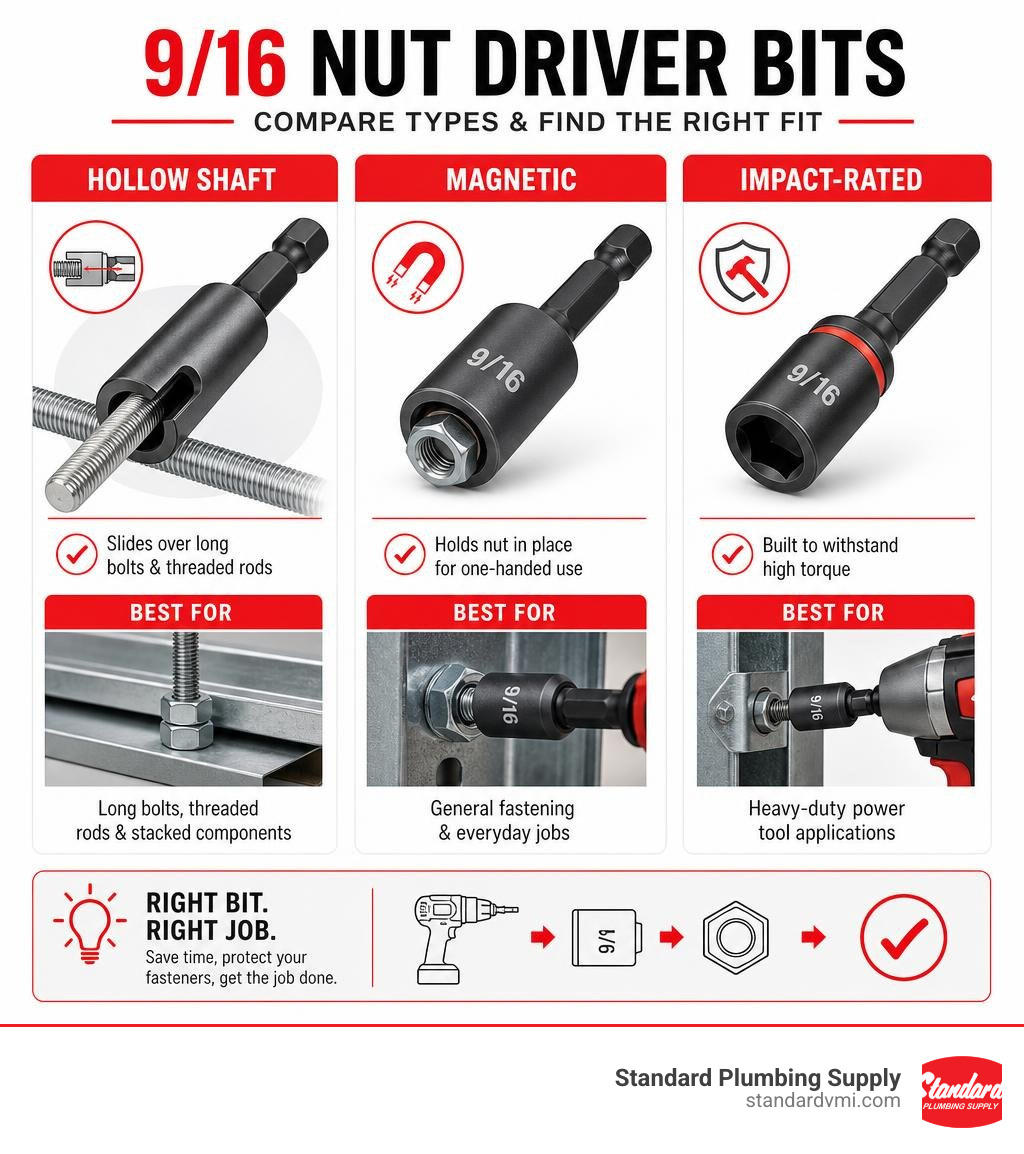
A 9/16 nut driver bit is one of the most-used sizes in plumbing, HVAC, electrical, and general construction work. If you need a quick answer, here are the most common options:
| Type | Best For | Key Feature |
|---|---|---|
| Hollow shaft nut driver | Long bolts, threaded rods | Slides over unlimited bolt length |
| Magnetic nut driver bit | General fastening | Holds nut in place one-handed |
| Impact-rated nut driver bit | Heavy-duty power tool use | Withstands high torque without breaking |
| Standard (solid shaft) | Light-duty, short bolts | Simple and affordable |
Pick the hollow shaft version if you work with threaded rods or stacked components. Pick the impact-rated version if you use a power impact driver.
Getting the wrong type slows you down — or worse, strips your fasteners or breaks your bit mid-job. That's a problem when you're running a crew or managing multiple properties.
The good news: once you know what to look for, choosing the right bit takes about 60 seconds.
I'm Jacob Reese, Vice President at Standard Plumbing Supply, and I work daily with contractors and property managers who rely on tools like the 9/16 nut driver bit for plumbing and HVAC applications. In this guide, I'll walk you through exactly how to pick the right one for your situation.
What is a 9 16 Nut Driver Bit and Its Primary Uses?
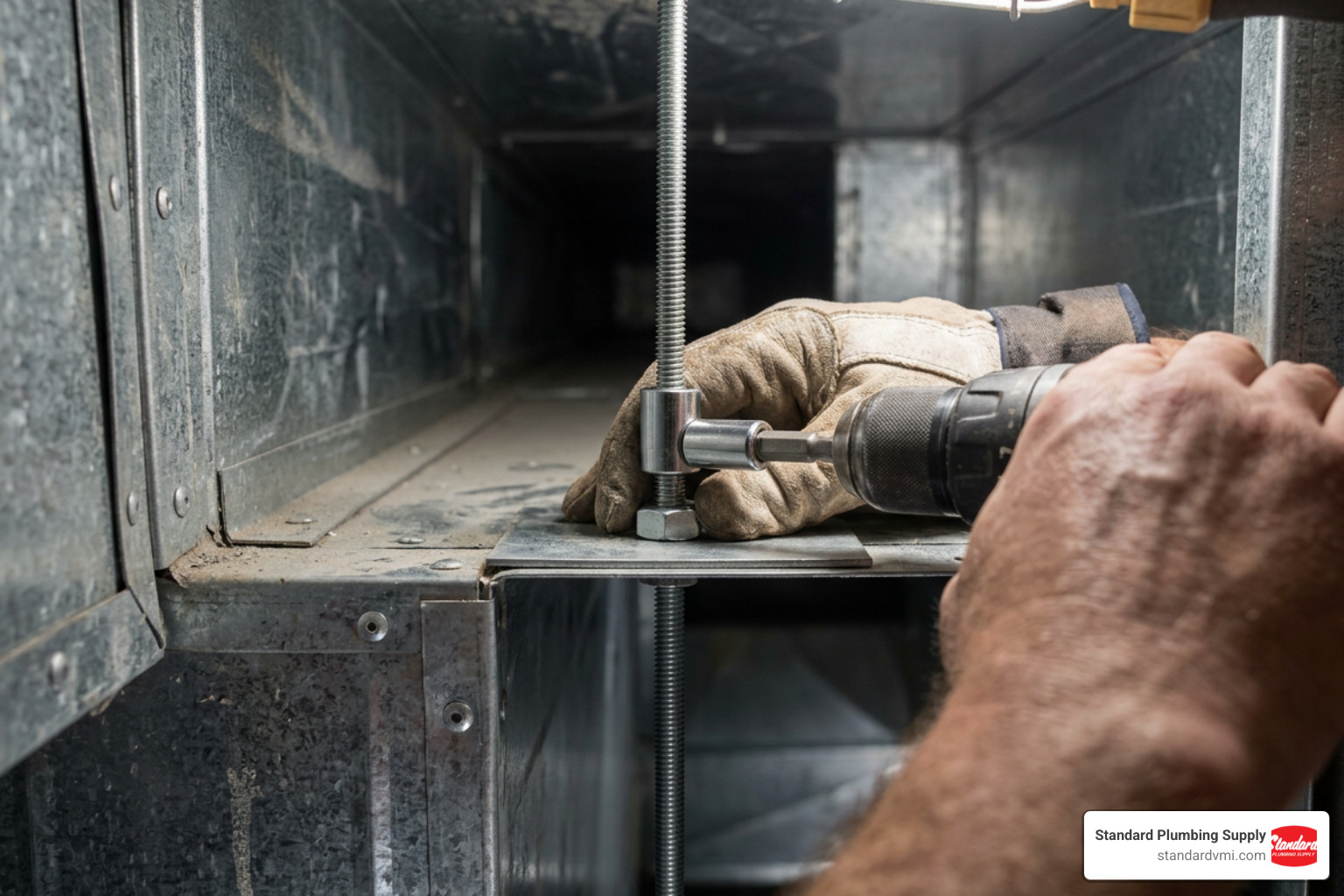
A 9/16 nut driver bit is a specialized socket attachment designed to drive hex-head nuts, bolts, and self-tapping screws. The 9/16-inch size is incredibly common in North American construction and plumbing because it perfectly matches 3/8-inch standard bolts, which are the backbone of commercial pipe hangers, heavy-duty ductwork, and equipment mounts.
Unlike standard sockets that require a bulky ratchet, a nut driver bit features a integrated shank—typically a 1/4-inch hex shank—that pops directly into your drill, impact driver, or multi-bit hand driver. This streamlined shape allows you to slip into tight spaces where a standard ratchet wrench would bump against walls, pipes, or framing.
We see these bits utilized daily across several major industries:
- HVAC and Ductwork: Securing heavy duct hangers, mounting air handlers, and tightening large tension bolts.
- Plumbing and Mechanical: Fastening pipe hangers to threaded rods, mounting commercial water heaters, and assembling heavy-duty pipe clamps.
- Automotive Repair: Accessing engine bay brackets, suspension components, and body panels where clearances are tight.
- Electrical Installations: Securing conduit hangers, strut channels, and heavy electrical panels to walls or ceilings.
If you are currently looking to add one of these versatile tools to your belt, you can explore the extensive selections available on 9/16 Nut Driver - Amazon.com to see what styles are currently dominating the retail market.
Key Features to Look For in a 9/16 Nut Driver
When you are purchasing a 9/16 nut driver bit, it is easy to assume they are all built the same. However, minor design choices can make a massive difference in how long the tool lasts and how comfortable it is to use during a long shift.
Here are the primary features you should evaluate:
- Shank Size and Style: Most modern power nut driver bits use a quick-change 1/4-inch hex shank. This allows you to swap bits in seconds without tightening a drill chuck. Ensure the shank is made of high-grade steel to prevent twisting under load.
- Color Coding: In a busy tool bag, finding the right size can feel like searching for a needle in a haystack. High-quality manufacturers color-code their tools. For 9/16-inch nut drivers, the industry-standard color code is orange. Look for orange bands or fully colored handles to save yourself time on the job site.
- Comfort Grip and Torque: If you are using a manual hand-held driver, look for a cushion-grip handle. This gives you extra torque and prevents hot spots on your hands. Internal flanges inside the handle are also crucial because they provide a solid, twist-resistant shaft anchor so the metal shaft never spins inside the plastic handle.
- Material Quality: Chrome plating prevents rust and corrosion, which is vital when working in damp crawlspaces or outdoors in Utah winters.
To help you decide between a hollow shaft and a solid shaft, we have broken down the core differences in the table below:
| Feature | Hollow Shaft Driver | Solid Shaft Driver |
|---|---|---|
| Depth Clearance | Unlimited (bolt passes through the shaft) | Limited to the depth of the socket head |
| Threaded Rod Compatibility | Perfect; can run nuts far up a rod | Poor; will bottom out immediately |
| Tool Weight | Lighter due to the hollow core | Heavier and solid |
| Torque Threshold | Moderate to High (ideal for hand tools) | Extremely High (ideal for raw power driving) |
Choosing a Hollow Shaft 9 16 Nut Driver Bit for Long Bolts
If you have ever tried to tighten a nut down a long piece of threaded rod with a standard socket, you know the frustration. The bolt quickly hits the bottom of the socket, and you are forced to switch to a slow open-ended wrench.
This is where the hollow shaft design shines. A hollow shaft nut driver features a hollow core that runs the entire length of the shaft (and sometimes even into the handle). As you spin the nut, the excess bolt or threaded rod simply slides right up inside the tool. This allows you to run a nut down an unlimited length of bolt without ever bottoming out.
This design is highly recommended for:
- Threaded Rod Applications: Hanging pipes, HVAC units, or electrical trays from ceilings.
- Stacked Circuit Boards: Electrical work where long, thin studs hold multiple components in place.
- Deep Recesses: Reaching nuts nestled deep inside machinery housings.
For manual tasks, the 9/16-Inch Hollow Shaft Nut Driver 4-Inch Shaft - 630-9/16 | Klein Tools (also available as the 9/16 in. Nut Driver with 4 in. Hollow Shaft- Cushion Grip Handle ) is a legend in the trade. With a 4.8 out of 5-star rating from over 2,400 customers, it is a highly trusted option.
If you need a bit more reach to get past ductwork or deep framing, opting for a longer version like the 9/16-Inch Nut Driver 6-Inch Hollow Shaft - 646-9/16 | Klein Tools (or its retail listing 203310603 ) gives you that extra clearing distance. For our metric-focused projects, the 9/16'' Nut Driver - 152 mm Hollow Shaft - 646-9/16 | Klein Tools provides the exact same high-performance reach.
Selecting an Impact-Rated 9 16 Nut Driver Bit for Heavy-Duty Tasks
If you are planning to run your 9/16 nut driver bit on an impact driver, standard bits will not cut it. The intense rotational blows of an impact driver will quickly shatter standard steel sockets. You must look for bits specifically labeled as impact-rated.
These heavy-duty bits are forged from proprietary steel alloys designed to flex slightly under high torque, preventing the metal from snapping. Additionally, they often feature rare-earth magnets. Unlike cheap standard magnets that drop heavy nuts at the slightest bump, a rare-earth magnet holds the fastener securely, allowing for easy, one-handed overhead driving.
For heavy-duty manual applications where you might need to apply a wrench to the shaft for extra leverage, tools like the 9/16'' Heavy-Duty Nut Driver - 635-9/16 | Klein Tools offer a built-in wrench-assist feature. This allows you to slide an open-ended wrench onto the metal shaft to get massive torque on stubborn, rusted nuts.
If you are looking to build a versatile tool kit that covers all your bases, we highly recommend checking out The Ultimate Guide to 1/4 and 5/16 Reversible Nut Drivers to understand how to pair your heavy-duty 9/16 bits with other essential reversible options. To see these sets compared side-by-side in real-world scenarios, you can also watch this helpful breakdown on the Top 7 Best Nut Driver Set You can Buy Right Now [2024] - YouTube .
How to Choose the Right Tool for Your Industry

Choosing the perfect 9/16 nut driver bit depends entirely on the environment you work in:
- HVAC Technicians: You are constantly working with sheet metal, duct hangers, and outdoor condenser units. You need an impact-rated, magnetic bit that can withstand high-speed driving and hold screws securely while you reach into tight plenums.
- Plumbers: Water and rust are your constant companions. You want a chrome-plated, hollow-shaft nut driver that can handle wet environments without rusting, and can run nuts up long copper pipe hangers.
- Electricians: Safety is paramount. While standard chrome-plated drivers are excellent for dead circuits and structural boxes, always ensure you are using insulated hand tools if there is any risk of contacting live wires. (Standard hollow-shaft drivers are not insulated and will not protect against electrical shock!)
In our experience serving contractors across Utah—from our busy showrooms in Orem and Sandy to our mountain-region partners in Heber City—most professionals find that carrying a variety of sizes is the best path to efficiency. For instance, pairing your orange 9/16-inch driver with a standard plumbing size like the Product: 5/16 NUT DRIVER - Standard Plumbing Supply ensures you are never caught unprepared when switching between heavy framing and standard equipment panels.
Frequently Asked Questions about 9/16 Nut Drivers
What is the difference between a magnetic and non-magnetic 9/16 nut driver?
A magnetic nut driver uses a small magnet (often a powerful rare-earth magnet) inside the hex socket to hold the nut or bolt in place. This is incredibly helpful for one-handed starting, especially when reaching overhead or working in deep walls.
The downside of magnetic drivers is that they attract metal shavings and iron-rich dirt over time. Non-magnetic drivers do not collect this debris, making them easier to keep clean, and they are often preferred in precision electronics or cleanroom environments where magnetic fields could cause issues.
Can I use a 9/16 nut driver bit in an impact driver?
You can, but only if the bit is explicitly rated for impact use. Regular chrome-plated nut driver bits are designed for hand tools or standard rotary drills. The intense, rapid hammering action of an impact driver can easily crack or shatter a non-impact bit, which can send metal shards flying. Always wear approved safety glasses on the job, regardless of the bit you are using.
Why is a hollow shaft design important for a 9/16 nut driver?
A hollow shaft design allows the tool to slide over long bolts and threaded rods. With a solid-shaft driver, the bolt will quickly hit the back of the socket, preventing you from tightening the nut any further. The hollow shaft allows the extra bolt length to pass completely through the driver head and up into the handle, giving you unlimited depth clearance.
Conclusion
Selecting the right 9/16 nut driver bit is all about matching the tool to the task. If you are hanging threaded rods all day, a hollow shaft driver is non-negotiable. If you are blasting through heavy-duty assembly with an impact driver, make sure you grab an impact-rated bit with a strong rare-earth magnet.
At Standard Plumbing Supply, we pride ourselves on providing the expert support, trusted brands, and fast nationwide shipping you need to keep your projects moving forward. Whether you are visiting us at our local Utah branches in Sandy, Orem, or Heber City, or ordering from across the country, we have the inventory and expertise to back you up.
For commercial operations and busy contracting crews looking to streamline their inventory and never run out of critical tools, check out our Standard Plumbing Supply VMI Solutions to see how we can boost your efficiency and free up your cash flow today!