
Don't Get Gassed: A Guide to Different Types of LPG Regulators
Discover different types of LPG regulators and choose the right one for safe, reliable propane pressure control.

Why Understanding the Different Types of LPG Regulators Matters for Your Property or Business
The different types of LPG regulators can make or break how safely and efficiently your gas-powered equipment runs — whether that's a commercial kitchen range, an RV heating system, or a rooftop grill.
Here's a quick overview of the main types:
| Regulator Type | Primary Use | Key Feature |
|---|---|---|
| Single-Stage | Small grills, portable appliances | Simple, one-step pressure reduction |
| First-Stage | First point in a two-stage system | Reduces high tank pressure to ~10 PSI |
| Second-Stage | Final point before appliance | Reduces to ~11 inches water column |
| Integral Twin-Stage | Single-tank setups, RVs | Combines both stages in one unit |
| High-Pressure / Adjustable | Fryers, high-BTU burners | Delivers elevated, adjustable pressure |
| Automatic Changeover | Multi-tank systems | Switches tanks seamlessly without interruption |
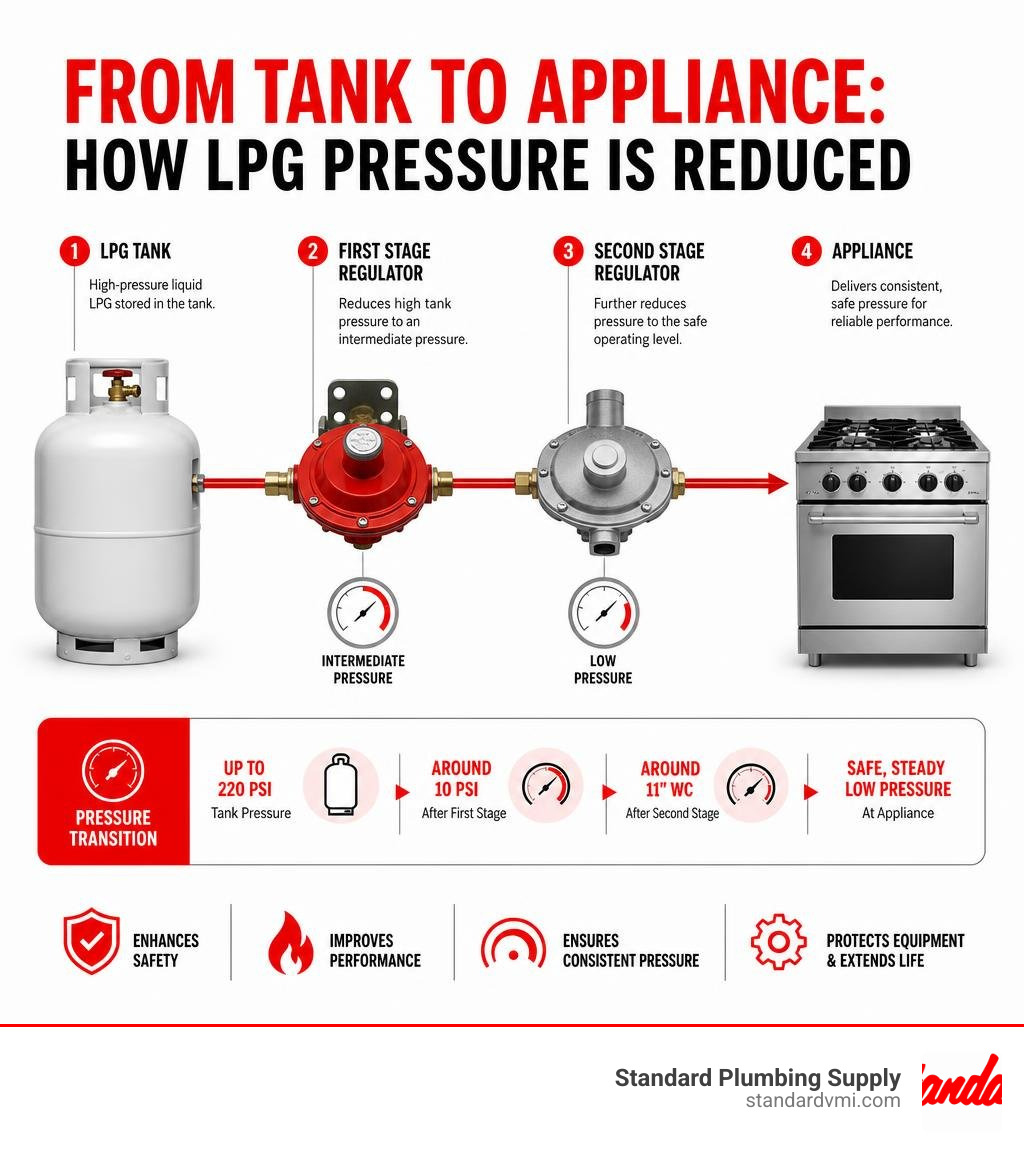
Most people don't think about their LPG regulator until something goes wrong — a weak flame, a frozen line, or worse, a gas leak. But the right regulator isn't just a convenience; it's a safety device that stands between high tank pressure (up to 220 PSI) and the appliances designed to run at a fraction of that.
This guide breaks down every major regulator type, what it does, and when to use it — so you can make a confident, informed decision.
I'm Jacob Reese, Vice President at Standard Plumbing Supply, where I work closely with contractors and property managers navigating the different types of LPG regulators and the broader gas and plumbing supply chain every day. My background in HVAC and plumbing wholesale distribution means I've seen what happens when the wrong regulator ends up on the wrong system — and this guide is here to make sure that doesn't happen to you.
What is an LPG Regulator and How Does It Work?
At its core, an LPG (Liquefied Petroleum Gas) regulator is a control valve that automatically reduces high-pressure gas from a storage cylinder or tank to a safe, usable, and consistent lower pressure required by downstream appliances.
LPG is stored in tanks under immense pressure to keep it in a liquid state. This pressure varies wildly based on the ambient temperature. On a freezing morning in Evanston, Wyoming, or Salt Lake City, Utah, your tank pressure might sit around 8 to 50 PSIG (pounds per square inch gauge). On a scorching summer afternoon in Phoenix or Las Vegas, that same tank can surge to 220 PSIG or more.
Because appliances like stoves, heaters, and boilers are designed to operate at incredibly low, stable pressures—usually around 11 inches of water column (roughly 0.4 PSI or 27.5 millibars)—the regulator must act as a dynamic barrier.
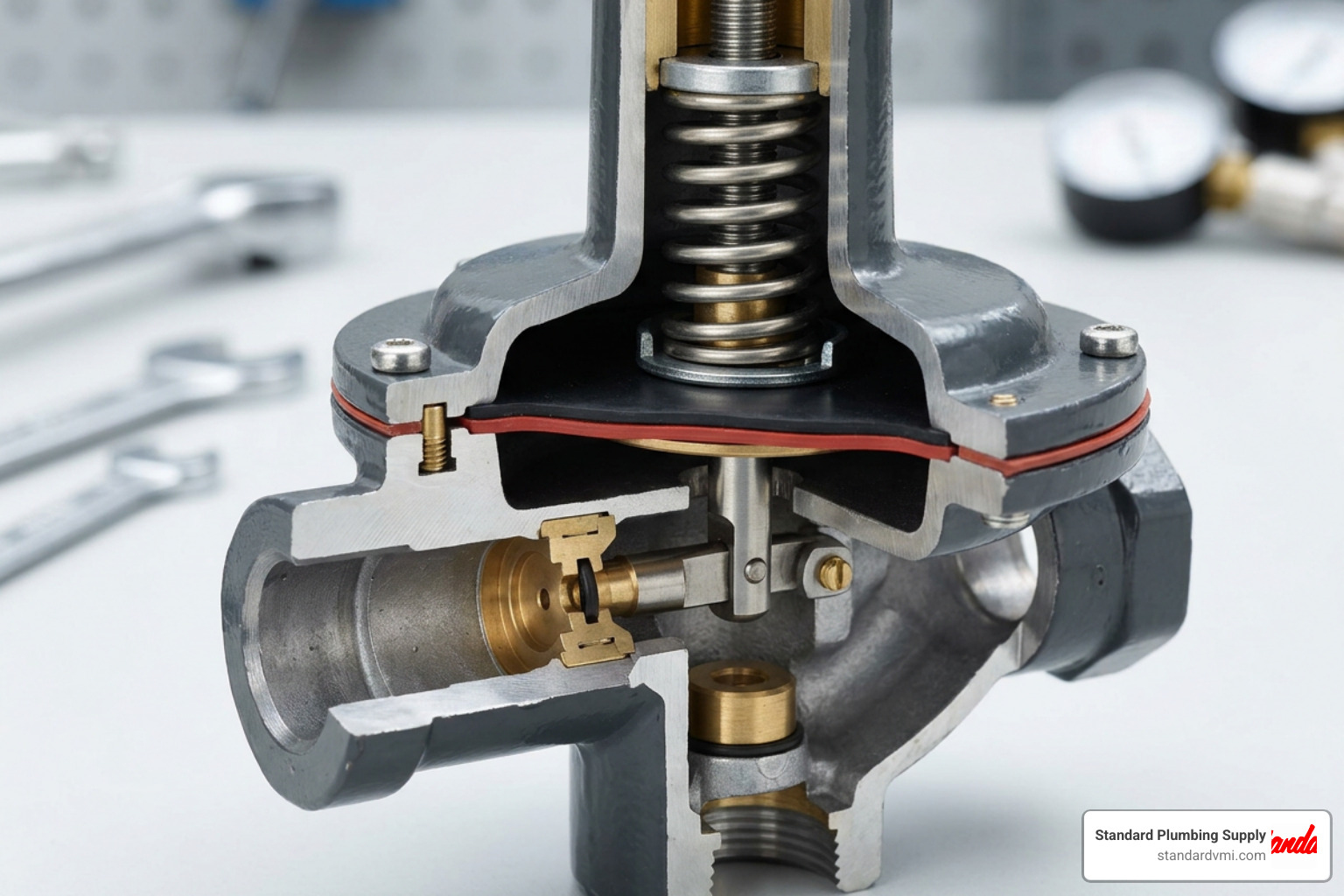
To understand how this happens, we have to look inside the regulator. It relies on three primary components working in perfect harmony:
- The Diaphragm: A flexible rubber or synthetic disc that senses changes in downstream pressure.
- The Spring: A calibrated metal spring that sits above the diaphragm, applying a constant downward reference force.
- The Valve Seat and Orifice: The physical mechanism that opens and closes to control the flow of gas.
When you turn on a gas appliance, gas flows out of the system, causing the pressure below the diaphragm to drop. The spring pushes the diaphragm down, which moves a lever that opens the valve seat. This allows more high-pressure gas from the inlet to enter the regulator. As the pressure builds back up to the set point, it pushes the diaphragm back up against the spring, closing the valve seat and restricting the flow.
This continuous, micro-adjusting balancing act is the difference between simple pressure reduction (which just chokes the flow) and true pressure regulation (which actively adapts to changing inlet pressures and demand). You can Learn more about LPG regulator and fitting basics to see how these parts interact with various piping systems.
Exploring the Different Types of LPG Regulators
Not all gas systems are built the same, which is why there are several different types of LPG regulators engineered for specific setups. Matching the right regulator design to your system is critical for both safety and performance.
Single-Stage Regulators
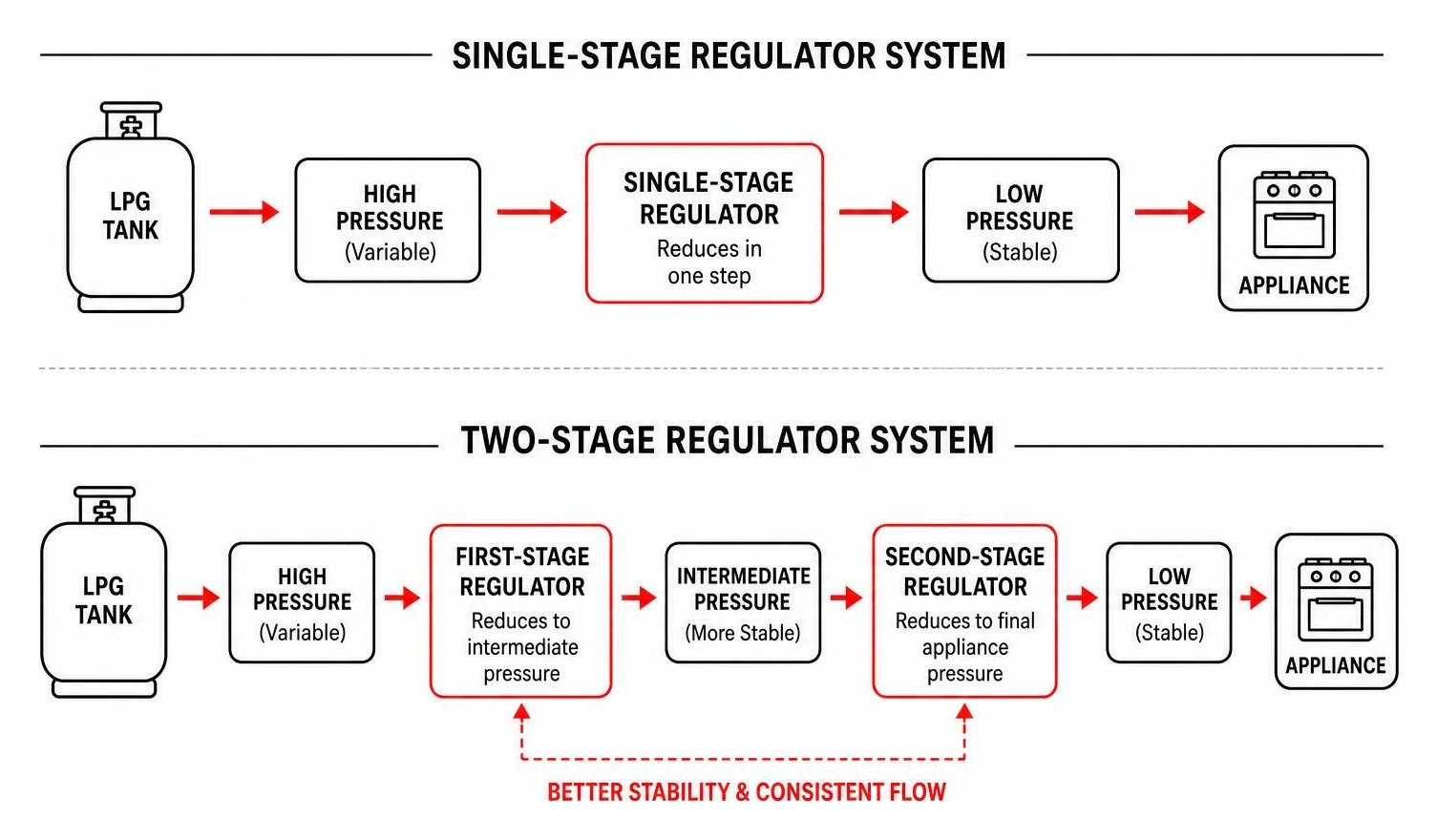
A single-stage regulator reduces tank pressure to appliance pressure in one single step. While simple and cost-effective, they are highly sensitive to inlet pressure fluctuations. If the tank pressure drops (either due to cold weather or because the tank is running low), the outlet pressure will fluctuate as well.
Because of this, single-stage regulators are only suitable for small, portable applications where the inlet pressure is relatively stable and minor flame fluctuations are acceptable—such as small backyard BBQ grills or portable camping stoves. To prevent hazardous pressure spikes, safety standards like NFPA 58 prohibit the use of single-stage regulators on fixed piping systems in residential homes, RVs, and commercial buildings.
Two-Stage Regulator Systems
For permanent structures and high-demand applications, a two-stage system is the gold standard. Instead of dropping the pressure all at once, this system splits the job across two distinct devices:
- First-Stage Regulators: Installed directly at the propane tank, these regulators take the high tank pressure (up to 220 PSI) and reduce it to an intermediate pressure of around 5 to 10 PSI. This intermediate pressure is high enough to push the gas through long pipe runs to the building without requiring massive, expensive pipe diameters.
- Second-Stage Regulators: Installed at the building exterior or close to the appliance intake, these units take that 5 to 10 PSI intermediate gas and drop it down to the final operating pressure of 11 inches of water column.
By dividing the pressure drop into two steps, two-stage systems dramatically reduce the risk of regulator freeze-ups in cold climates like Idaho, Colorado, and Wyoming. They also ensure a perfectly steady flow of gas to your appliances, even if the tank pressure swings wildly.
Integral Twin-Stage Regulators
An integral twin-stage regulator combines both the first-stage and second-stage mechanisms into a single, compact body. It has two diaphragms and two chambers built into one unit.
This is the most common setup for residential homes where the propane tank sits close to the building, as well as for RVs and trailers. It gives you all the safety and performance benefits of a two-stage system without needing to buy and install two separate physical regulators.
Automatic Changeover Regulators
Designed for systems that use two or more propane cylinders, automatic changeover regulators are incredibly popular for RVs, cabins, and commercial applications.
These devices connect to both tanks simultaneously. They draw gas from the primary tank until it is nearly empty, then seamlessly switch over to the reserve tank without interrupting the gas flow to your appliances. Most models feature a clear window indicator that turns red when the primary tank is depleted, letting you know it's time to disconnect and refill the empty bottle while your system continues to run safely off the reserve.
To make sure you are selecting the correct configuration for your setup, you should Understand the safety differences between regulator types.
Low-Pressure vs. High-Pressure Options Among the Different Types of LPG Regulators
When browsing the different types of LPG regulators, you will see them broadly categorized by their output pressure. Using the wrong pressure rating can destroy your appliances or create a severe fire hazard.
- Low-Pressure Regulators: These are designed for standard household and light commercial appliances (stoves, water heaters, fireplaces, and furnaces). They typically deliver gas at a fixed 11 inches of water column (equivalent to about 27.5 mbar, 2.75 kPa, or 0.4 PSI).
- High-Pressure Regulators: These deliver gas at pressures measured in PSI (usually ranging from 1 to 20 PSI or higher). They are used to power high-heat outdoor cookers, turkey fryers, industrial torches, and commercial manufacturing equipment.
- Adjustable High-Pressure Regulators: These feature a control knob or screw that allows the user to manually adjust the output pressure to fine-tune the heat output of specialized burners.
- Zero Governors: A highly specialized type of low-pressure regulator used in industrial burners and gas engines. They reduce the gas pressure down to near-atmospheric pressure (zero pressure), allowing the downstream equipment to pull gas into the combustion chamber via suction or mixing valves.
If you are curious about how low-pressure units maintain such tight control, you can Explore how gas bottle regulators deliver low pressure.
Specialized Applications for Different Types of LPG Regulators
Matching a regulator to its application requires looking at the environment, the fuel demand, and local safety codes.
- Commercial Kitchens: These setups demand high-capacity, low-pressure, two-stage systems. Because commercial ranges and ovens pull massive amounts of gas, a standard residential regulator will suffer from "droop" (a drop in outlet pressure when multiple burners are lit at once).
- Food Trucks and Mobile Catering: Space is tight, and vibration is a constant factor. These systems require compact, rugged, twin-stage regulators equipped with built-in safety shutoffs to protect against line breaks during transit.
- RV and Caravan Systems: RVs require specialized twin-stage regulators that can handle the shifting ambient temperatures of travel. In the US, these must comply with NFPA 58 standards for fixed piping systems.
- Industrial Systems: Manufacturing plants, asphalt heaters, and metal-cutting operations often require high-purity barstock regulators or heavy-duty piston-type regulators that can handle corrosive environments and massive flow rates.
To dive deeper into how commercial and mobile food vendors manage safety compliance, Read about pressure regulator safety standards.
Key Factors for Choosing the Right LPG Regulator
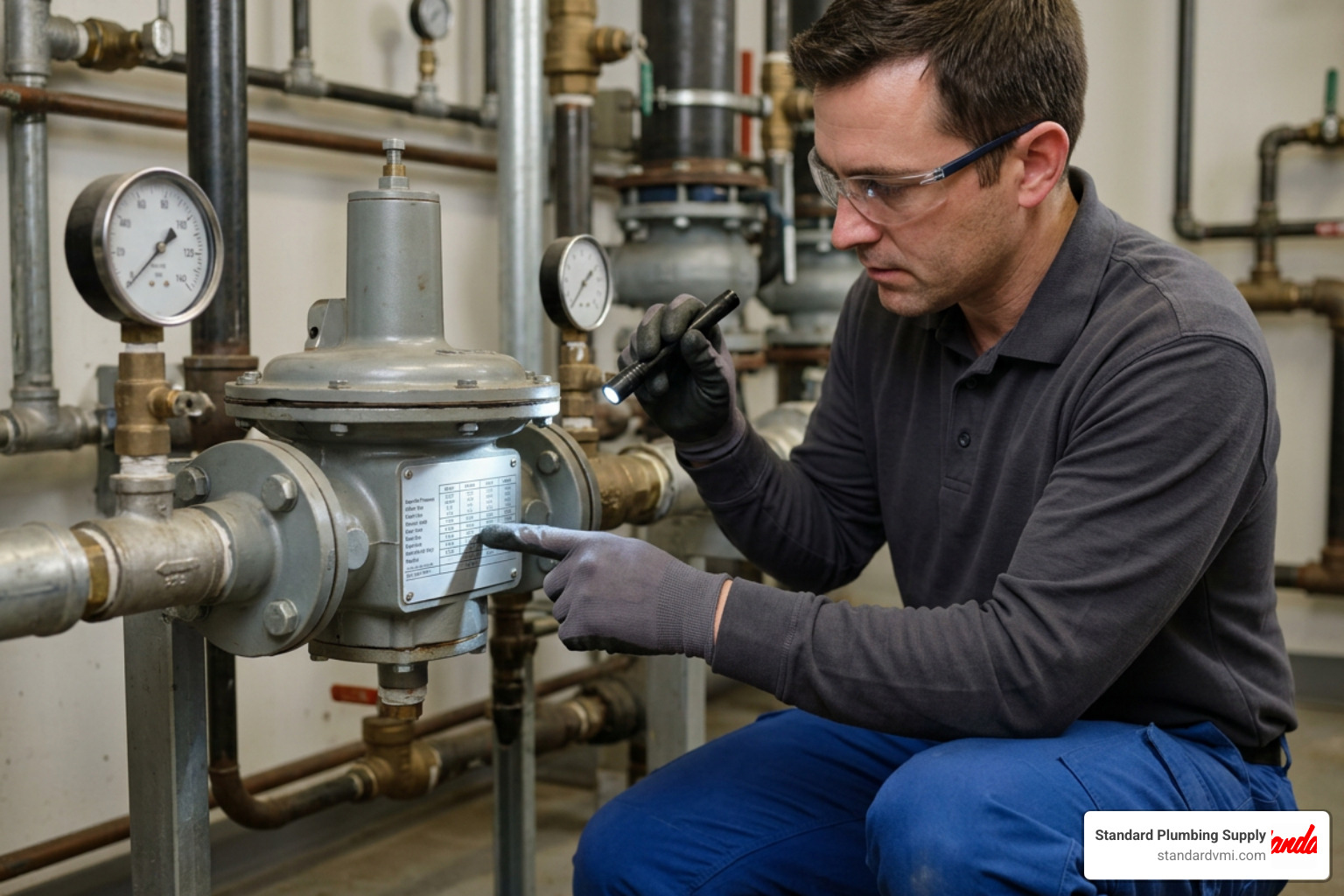
Selecting the right regulator isn't a matter of guesswork. You must calculate and verify several technical specifications before making a purchase.
1. BTU Capacity
Every gas appliance has a BTU (British Thermal Unit) rating, which measures its maximum heat output and fuel consumption. You must add up the total BTU demand of all appliances connected to the regulator.
- Basic hose-and-regulator kits for standard backyard grills typically support 50,000 to 60,000 BTUs.
- Heavy-duty grills, multi-burner outdoor kitchens, and small home appliances require regulators rated for 175,000 to 200,000 BTUs.
- Commercial systems and large homes can require capacities of 500,000 BTUs or more. Always choose a regulator with a capacity rating that exceeds your system's maximum combined BTU load.
2. Inlet and Outlet Pressures
Ensure the regulator is rated to handle your maximum tank pressure (inlet) and can deliver the exact pressure your appliance manual specifies (outlet). Never connect a high-pressure regulator to an appliance designed for low pressure.
3. Connection and Fitting Types
- POL Connectors (Prest-O-Lite): The traditional, heavy brass threaded connection used on larger propane tanks. They require a wrench to tighten and feature a left-handed thread.
- Type 1 (QCC1) Connectors: The modern, user-friendly plastic hand-wheel connection found on standard 20-lb propane cylinders. They feature a built-in thermal shutoff that stops gas flow if it detects extreme heat.
- BSP vs. NPT Fittings: Ensure the threaded outlet matches your piping. In the US, NPT (National Pipe Thread) is the standard, while BSP (British Standard Pipe) is common in imported equipment.
4. Materials and Build Quality
For high-purity or highly corrosive environments, the construction material matters. While standard regulators use forged aluminum or brass, high-purity laboratory systems require barstock bodies and stainless steel diaphragms to prevent moisture adsorption and chemical contamination.
For a look at how low-pressure regulators are manufactured and tested to meet strict safety limits, you can Review the technical specifications for low-pressure regulators.
Safety, Maintenance, and Troubleshooting Guidelines
Because LPG is highly flammable and stored under pressure, safety must always be your top priority.
The 15-Year Replacement Rule
Even the highest-quality regulators don't last forever. Over time, the internal rubber diaphragm can dry out, crack, or lose its flexibility. Most manufacturers recommend replacing your LPG regulator every 15 years, though some commercial and outdoor units exposed to harsh weather may need replacement every 5 to 10 years.
Overpressure Protection (OPSO)
Modern commercial and residential systems often utilize OPSO (Over Pressure Shut Off) devices. If a regulator's internal diaphragm fails and allows high pressure to rush downstream, the OPSO valve instantly snaps shut, physically blocking the gas flow before it can rupture appliance valves or cause an explosion.
Troubleshooting Common Regulator Issues
- Low or No Flame: If your grill or heater has a weak, pathetic flame, the regulator's safety bypass mechanism may have been tripped. This happens if you open the tank valve too quickly while the burner valves are open. To reset it, turn everything off, disconnect the regulator, reconnect it, and slowly open the tank valve first.
- Freezing Regulators: In cold weather, propane vaporization drops. If you draw gas too quickly from a small tank in freezing temperatures, the rapid pressure drop causes the regulator to freeze up and restrict flow. Upgrading to a two-stage regulator or using a larger tank resolves this.
- The Soap Bubble Test: If you smell gas or suspect a leak, mix equal parts dish soap and water. Spray it onto the regulator body, connections, and hoses. If you see growing bubbles, you have a leak. Shut off the gas valve immediately.
If you are still wondering about compatibility across different brands, you can Find out if all gas regulators are the same.
Frequently Asked Questions About LPG Regulators
How often should an LPG regulator be replaced?
Most manufacturers recommend replacing propane regulators every 15 years. However, units operating in harsh coastal, industrial, or high-vibration environments should be inspected annually and replaced every 5 to 10 years.
Why is my propane regulator freezing up?
When liquid propane converts to gas inside your tank, it absorbs heat from its surroundings. If you draw gas too quickly—or if the ambient temperature is very low—the regulator can drop below freezing, causing moisture in the air (or trace moisture in the gas) to freeze inside the regulator vents or mechanisms.
Can I use a single-stage regulator on my RV?
No. Under NFPA 58 standards, all fixed gas piping systems on RVs, motorhomes, and manufactured homes must use a two-stage or integral twin-stage regulator system to ensure stable pressure control and prevent hazardous overpressurization.
Conclusion
Understanding the different types of LPG regulators is essential for keeping your home, business, or job site running safely and efficiently. From simple single-stage units for backyard grills to heavy-duty two-stage systems for commercial properties, choosing the right pressure control device is a choice you can't afford to get wrong.
At Standard Plumbing Supply, we are committed to providing HVAC, plumbing, and gas professionals across the Western US with the highest-quality products and services. With locations spanning Utah, Idaho, Wyoming, Colorado, Oregon, California, Arizona, Nevada, and Nebraska, we offer:
- Expert Support: Our knowledgeable team can help you size and match the perfect regulator for any project.
- Trusted Brands: We carry industry-leading gas regulators and fittings built to last.
- Fast Nationwide Shipping: Get the parts you need delivered straight to your shop or job site.
- VMI (Vendor Managed Inventory) Solutions: We help contractors and industrial partners streamline their supply chains, boost efficiency, and free up cash flow.
Ready to upgrade your system or stock up for your next installation? Partner with our agents for expert gas and plumbing solutions today!