
A Homeowner's Guide to the Electric Hot Water Heater Pressure Relief Valve
Learn how your electric water heater pressure valve prevents explosions, plus maintenance, testing, and replacement tips for safety.

Why the Electric Water Heater Pressure Valve Matters
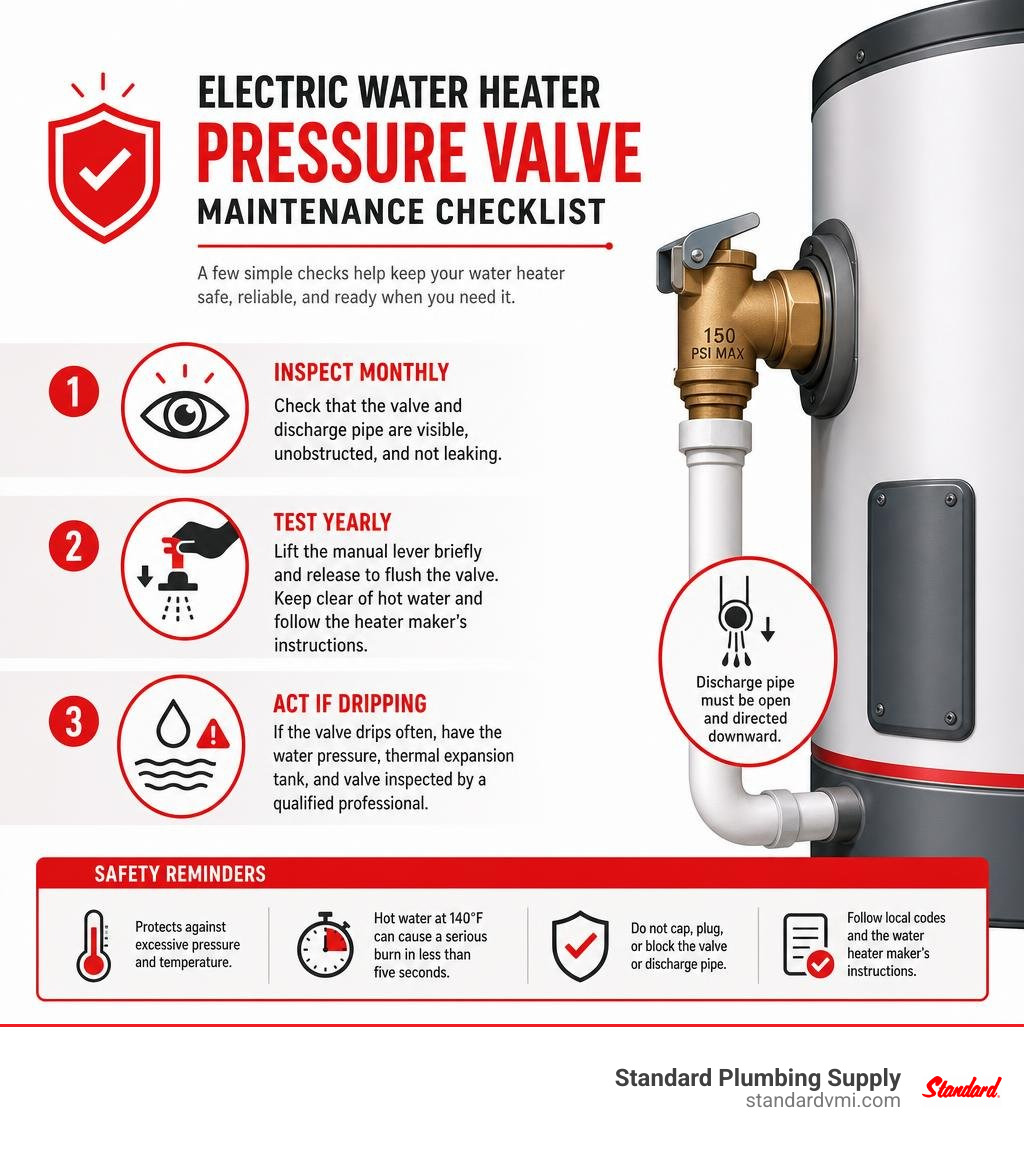
An electric water heater pressure valve, usually called a temperature-and-pressure (T&P) relief valve, is a critical safety device. It opens to release hot water if tank pressure or temperature rises to an unsafe level. Keep its discharge pipe open, directed downward, and never cap or plug it.
For basic maintenance:
- Check that the valve and discharge pipe are visible, unobstructed, and not leaking.
- Test the manual lever once a year, following the heater maker's instructions and keeping clear of hot water.
- If it drips often, have the water pressure, thermal expansion tank, and valve inspected. Do not treat a leaking valve as the problem until you know what caused it.
Most residential electric water heaters are rated for up to 150 PSI, while a T&P valve is designed to open at or below the tank's rated pressure. It also protects against excessive temperature, which matters because water at 140°F can cause a serious burn in less than five seconds.
For property managers and small businesses, this small valve can prevent a major repair, flooded mechanical room, or dangerous tank failure. Standard Plumbing Supply helps contractors and maintenance teams source dependable water-heater safety parts, pressure-control products, and practical technical support when repairs cannot wait.
I am Jacob Reese, Vice President at Standard Plumbing Supply, with experience helping plumbing professionals and property teams get the right products for safe, efficient repairs. In this guide, I will cover what an electric water heater pressure valve does, what its discharge line needs, and how to spot trouble early.
Understanding Your Electric Water Heater Pressure Valve and How It Works
Every storage tank water heater operates as a closed pressurized vessel. When water is heated, it expands physically, increasing mechanical force against the interior tank walls. Without an operational safety relief mechanism, continuous heating would turn a domestic water heater into a potential projectile.
The electric water heater pressure valve serves as the mechanical fail-safe of your hot water system. Manufactured and certified under rigorous standards like ANSI Z21.22 and the ASME Boiler and Pressure Vessel Code, these valves operate purely on mechanical principles. They do not rely on electricity, Wi-Fi connections, or microprocessors, ensuring they open reliably even during electrical faults or power surges.

Primary Purpose of Temperature and Pressure Relief Valves
The primary purpose of a combination temperature and pressure relief (T&P) valve is dual-stage emergency mitigation:
- Overpressure Relief: The maximum working pressure rating for a standard residential electric water heater is 150 PSI (1,034 kPa). The internal spring mechanism inside the valve is calibrated to mechanically lift and unseat when internal tank pressure reaches or approaches 150 PSI, exhausting excess water volume until safe operating pressure is restored.
- Over-Temperature Protection: Water heaters are equipped with internal thermostats, but an electrical contact weld or thermostat runaway can cause heating elements to heat continuously. When water exceeds boiling temperatures under pressure, sudden tank rupture causes the superheated liquid to instantly flash into expansive steam, resulting in a catastrophic explosion. A built-in thermal element—typically a thermostat probe coated in a temperature-sensitive wax compound—extends into the top 6 inches of the tank. If the water hits 210°F (99°C), the probe expands, forcing the valve open to purge scalding water and draw cool replacement water into the tank.
Tankless vs. Storage Electric Water Heater Pressure Valve Requirements
Homeowners often ask if point-of-use or on-demand systems need the same heavy-duty safety components.
Storage tank water heaters store 30 to 120 gallons of water continuously under pressure, necessitating full temperature and pressure relief protection. In contrast, units like the Eemax LavAdvantage Electric Tankless Water Heater utilize flow chambers that heat water instantaneously only when a fixture is active.
Because modern electric tankless systems incorporate high-limit electronic safety switches that instantly cut element power if flow drops or water overheats, many manufacturers require only a dedicated pressure relief valve on the hot water outlet rather than an extended thermal probe valve. However, you must always consult the manufacturer's installation manual to verify specific relief requirements for your exact unit.
Combination T&P Valves vs. Pressure-Only Relief Devices
While combination T&P valves monitor both heat and force within storage vessels, standalone pressure relief valves focus purely on fluid force.
- Combination T&P Valves: Feature an extended thermal stem inserted directly into the storage vessel to monitor internal water temperature while simultaneously using a calibrated spring seat to detect high PSI.
- Pressure-Only Relief Valves: Use a spring-loaded poppet design, such as the Watts LF3L Poppet Pressure Relief Valve 3/4 in., to release fluid when mechanical system pressure spikes above a pre-set threshold. These are widely used in closed-loop heating systems, thermal bypass setups, and supplemental branch lines.
Plumbing Codes and Discharge Pipe Installation Requirements
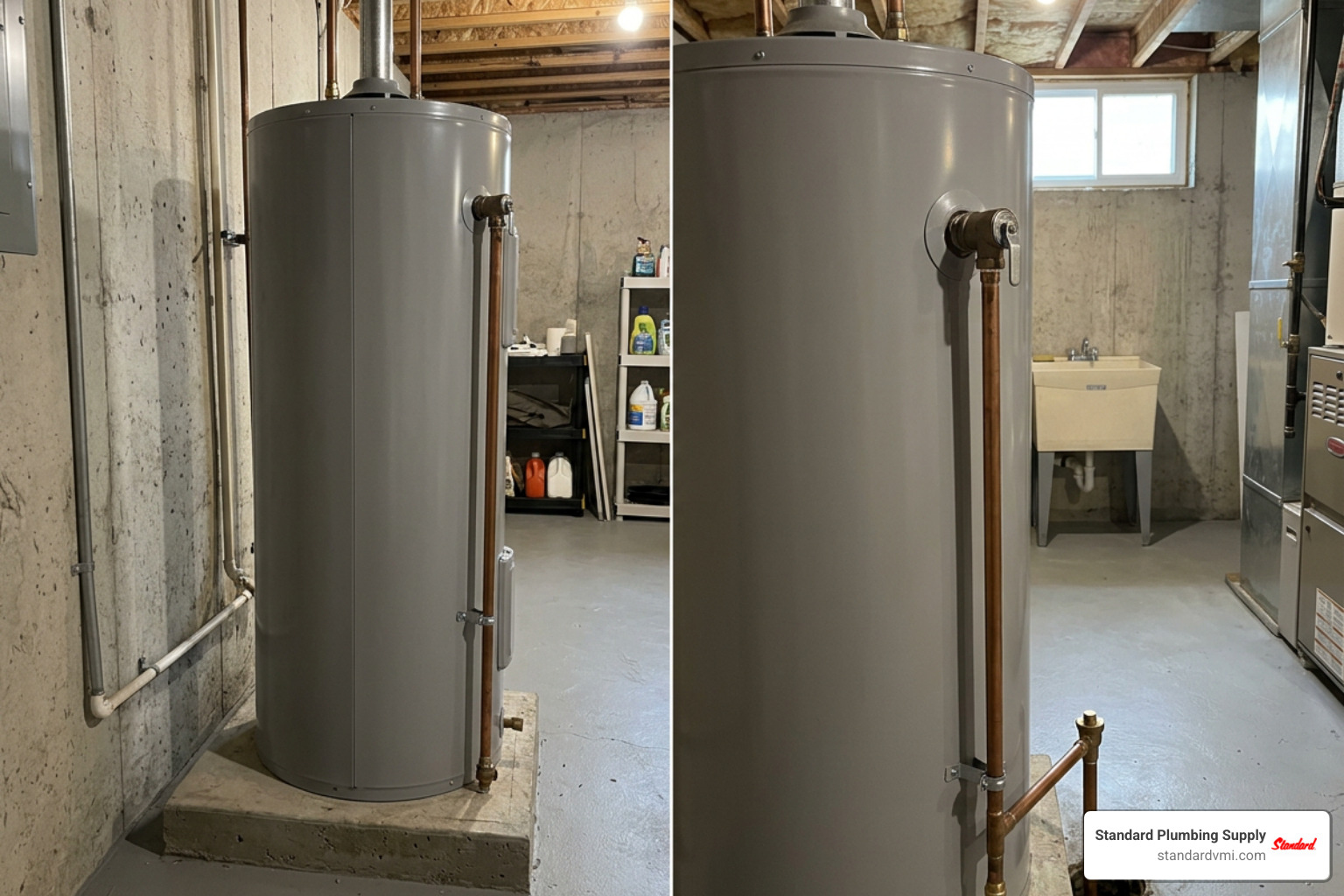
Installing the valve into the tank is only half the job. Plumbing codes, including the Uniform Plumbing Code (UPC) and International Plumbing Code (IPC), place strict requirements on the discharge line connected to the valve outlet.
When a T&P valve discharges, it vents near-boiling water and pressurized steam. If the valve lacks a discharge pipe, anyone standing beside the water heater could suffer immediate, severe third-degree burns.
Approved Discharge Piping Materials and Sizing
Discharge lines must safely channel scalding water by gravity without melting, bursting, or restricting flow.
- The discharge pipe must have an inside diameter equal to the valve outlet—never less than 3/4 inch (19 mm).
- The piping must be rated to withstand temperatures of at least 250°F (121°C) without structural deformation or softening.
- The run must not exceed 30 feet in total length, must contain no more than four 90-degree elbows, and must pitch downward toward the termination point.
| Piping Material | Code Approved for T&P Discharge? | Operating Temperature Rating | Primary Reason / Code Concern |
|---|---|---|---|
| Rigid Hard-Drawn Copper | Yes | 400°F+ | Excellent thermal resilience and structural rigidity under pressure. |
| CPVC (Chlorinated Polyvinyl Chloride) | Yes | 200°F–210°F (Rated for hot water) | Approved if certified for domestic hot water distribution. |
| Standard PVC (White) | NO | ~140°F | Softens, warps, and can blow apart under boiling water discharge. |
| PEX (Cross-linked Polyethylene) | Conditional | 180°F–200°F | Must be explicitly approved by local jurisdiction and rated for relief discharge. |
| Flexible Rubber Hose / Garden Hose | NO | <140°F | Will kink, soften, or burst, trapping extreme steam pressure inside the tank. |
Safe Discharge Pipe Termination Rules
To prevent water damage and injury, the discharge pipe must terminate safely:
- Air Gap Clearance: The discharge line must terminate with an unobstructed air gap no more than 6 inches (15 cm) above the floor drain, catchment basin, or structural floor. A gap higher than 6 inches allows boiling water to splash, while terminating flush with the ground or into a drain pipe prevents visual inspection and risks dirty water siphoning back into the valve.
- Exterior Routing: If piped to the building exterior, the line must face downward, terminate between 6 and 24 inches above grade, and be protected from freezing.
- Drain Pan Isolation: The T&P discharge pipe should never discharge into a standard water heater pan unless explicitly permitted by local code for indirect routing. Instead, protect floors using an approved Oatey Water Heater Pan for Electric Water Heaters piped to an independent disposal drain.
For specific clearance diagrams and electrical safety instructions, refer to your unit's Residential Electric Water Heater Manual.
Dangers of Capping, Plugging, or Restricting Relief Valves
Never, under any circumstances, cap, plug, or install a shut-off valve on the T&P relief valve or its discharge pipe.
If a valve begins dripping, capping the outlet eliminates your only mechanical safety release. As water heats, the pressure inside the tank will rise unchecked until the structural integrity of the steel shell fails, resulting in catastrophic property demolition and severe risk to human life.
Managing Closed Systems, Pressure Spikes, and Thermal Expansion
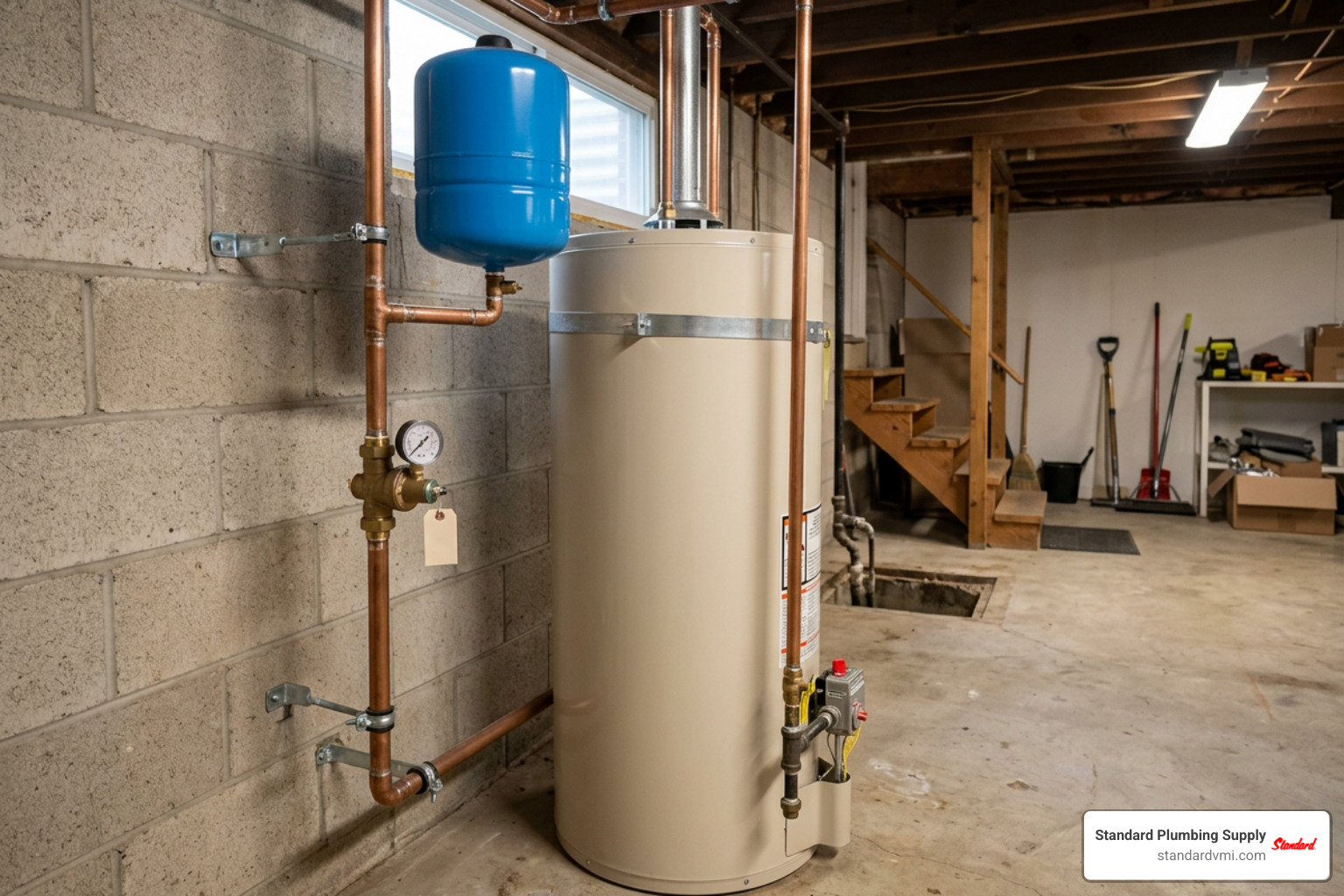
Many persistent pressure valve leaks are not caused by defective valves, but by external hydraulic dynamics in your home's plumbing system.
Why Modern Closed Plumbing Systems Require Expansion Tanks
Decades ago, municipal water systems were open. When a home water heater warmed up, expanding water simply pushed backward into the city water main.
Following regulations inspired by the Safe Drinking Water Act, water utilities installed backflow preventers, check valves, and pressure regulators at meters to keep private water from contaminating the public supply. These one-way check valves create a closed plumbing system.
Because water cannot be compressed, heated water expands into the closed household pipes, causing rapid pressure spikes. A telltale sign of excessive thermal expansion is a toilet fill valve that runs intermittently for a few seconds late at night without anyone flushing.
Installing an appropriately sized, pre-pressurized thermal expansion tank on the cold water supply line provides a flexible rubber bladder that absorbs this expanded volume, keeping system pressure stable and protecting the T&P valve seat from constant wear.
Pressure Reducing Valves and Municipal Water Regulation
City supply mains often operate at elevated pressures exceeding 100 to 150 PSI to transport water across elevated terrain or deliver adequate flow for fire hydrants.
Plumbing codes dictate that incoming residential water pressure must never exceed 80 PSI (551 kPa), with the optimal recommended working range between 50 and 60 PSI. Constant exposure to water pressure above 80 PSI damages plumbing fixtures, stresses water heater tank seams, and causes safety relief valves to weep.
To stabilize municipal surges, install a high-capacity regulator like the Watts LFN45B Pressure Reducing Valve. For detailed piping guidance on hybrid heat pumps, consult official Hybrid Electric Water Heater Installation Instructions.
Maintenance, Troubleshooting, and Valve Replacement
Regular maintenance keeps your electric water heater's safety systems operating properly.
Step-by-Step Testing for an Electric Water Heater Pressure Valve
Plumbing manufacturers recommend manually operating the test lever of your T&P relief valve at least once per year to confirm the waterway is clear and the internal spring moves freely.
- Check the Discharge Path: Ensure the 3/4-inch discharge pipe is directed to a floor drain or place a large metal bucket underneath the termination outlet.
- Protect Your Hands and Eyes: Wear safety glasses and protective gloves. The discharged water will be hot.
- Lift the Lever: Gently lift the metal test lever on the valve body. You should hear water rush into the discharge pipe and see water flow freely from the outlet.
- Release and Seat: Allow the lever to snap back down into place. The flow of water should shut off completely within a few seconds.
- Inspect for Weeping: Watch the discharge outlet for five minutes. If water continues to drip or leak from the discharge pipe after testing, the valve must be replaced.
Diagnosing a Weeping or Leaking Relief Valve
If water is actively leaking from the relief valve discharge pipe, determine whether the issue is steady discharge or slow dripping:
- High-Volume, Scalding Gush: Indicates an emergency condition. Either a runaway heating element has superheated the water past 210°F or incoming line pressure has spiked past 150 PSI. Turn off the electrical breaker to the water heater immediately and shut off the cold water supply valve.
- Intermittent Weeping During Heating Cycles: Points directly to thermal expansion issues within a closed plumbing system lacking an active expansion tank.
- Continuous Slow Drip: Caused by mineral and sediment deposits lodging under the valve's rubber seat washer after testing, or general fatigue of the internal spring mechanism.
Replacement Intervals and Installation Best Practices
Inspect your T&P relief valve thoroughly every 2 to 4 years, replacing it immediately if you observe mineral crusting, rust, green corrosion, or persistent leakage.
When replacing the valve:
- Always turn off power at the main electrical panel and confirm the circuit is dead with a non-contact voltage tester before starting work.
- Shut off the cold water supply and drain several gallons from the tank using the bottom drain valve.
- Unscrew the faulty valve counter-clockwise using an adjustable pipe wrench.
- Apply 3 to 4 wraps of PTFE thread sealing tape to the male threads of the new ANSI-certified valve.
- Never reuse an old valve. Thread the new valve into the designated opening on the tank until snug, orienting the discharge outlet downward.
- Reattach the rigid discharge pipe using appropriate fittings. When working with cold water feed lines, use quality brass unions or flexible connectors like the John Guest Flexible Water Heater Connector to ensure secure, clean joints.
Frequently Asked Questions About Water Heater Safety Valves
Can an old T&P relief valve be reused on a replacement water heater?
No. When installing a replacement water heater, never reuse the old T&P relief valve, regardless of whether it looks clean. Internal springs suffer metal fatigue over time, and elastomeric seals degrade from prolonged exposure to hot water. Manufacturers explicitly mandate installing a brand-new, certified valve with every replacement unit to maintain warranty coverage and guarantee safety.
Why does a water heater pressure relief valve leak after manual testing?
In areas with hard water, calcium and mineral scale accumulate along the interior rim of the valve seat. When you lift the test lever, rushing water dislodges sediment, which can become trapped between the rubber washer and the brass seat when the valve closes. If gently tripping the lever once or twice does not clear the debris and stop the leak, the valve must be replaced.
What is the safe residential water pressure range for electric water heaters?
The ideal working water pressure for residential plumbing systems and electric water heaters is between 50 and 60 PSI (345 to 414 kPa). Plumbing codes enforce a maximum safe limit of 80 PSI (551 kPa). You can easily test your incoming pressure by attaching an inexpensive pressure gauge to an outdoor hose bib or laundry tub faucet.
Conclusion
The pressure relief valve on your electric water heater protects your home from over-pressurization and thermal hazards. By conducting simple annual lever tests, keeping discharge piping clear and code-compliant, and maintaining system water pressure with dedicated expansion tanks and regulators, you ensure your water heating equipment operates safely for years to come.
At Standard Plumbing Supply, we support homeowners, commercial contractors, and facility managers with a comprehensive selection of plumbing hardware, HVAC equipment, and irrigation systems. With expert technical support, trusted brand partnerships, fast nationwide shipping, and vendor-managed inventory (VMI) solutions that streamline supply chains, we provide the dependable components you need to get every installation done right.
Explore our complete catalog of commercial and residential pressure relief valves or visit one of our local branch counters across Utah, Idaho, Wyoming, Colorado, Nevada, California, Arizona, and Oregon to find the right safety and pressure-control parts for your next project.