
The Complete Guide to Hot Water Pressure Relief Valve Purpose
Learn how a hot water pressure relief valve prevents explosions, leaks, and code issues. Get installation, testing, and replacement tips.

Why a Hot Water Pressure Relief Valve Is a Critical Safety Device
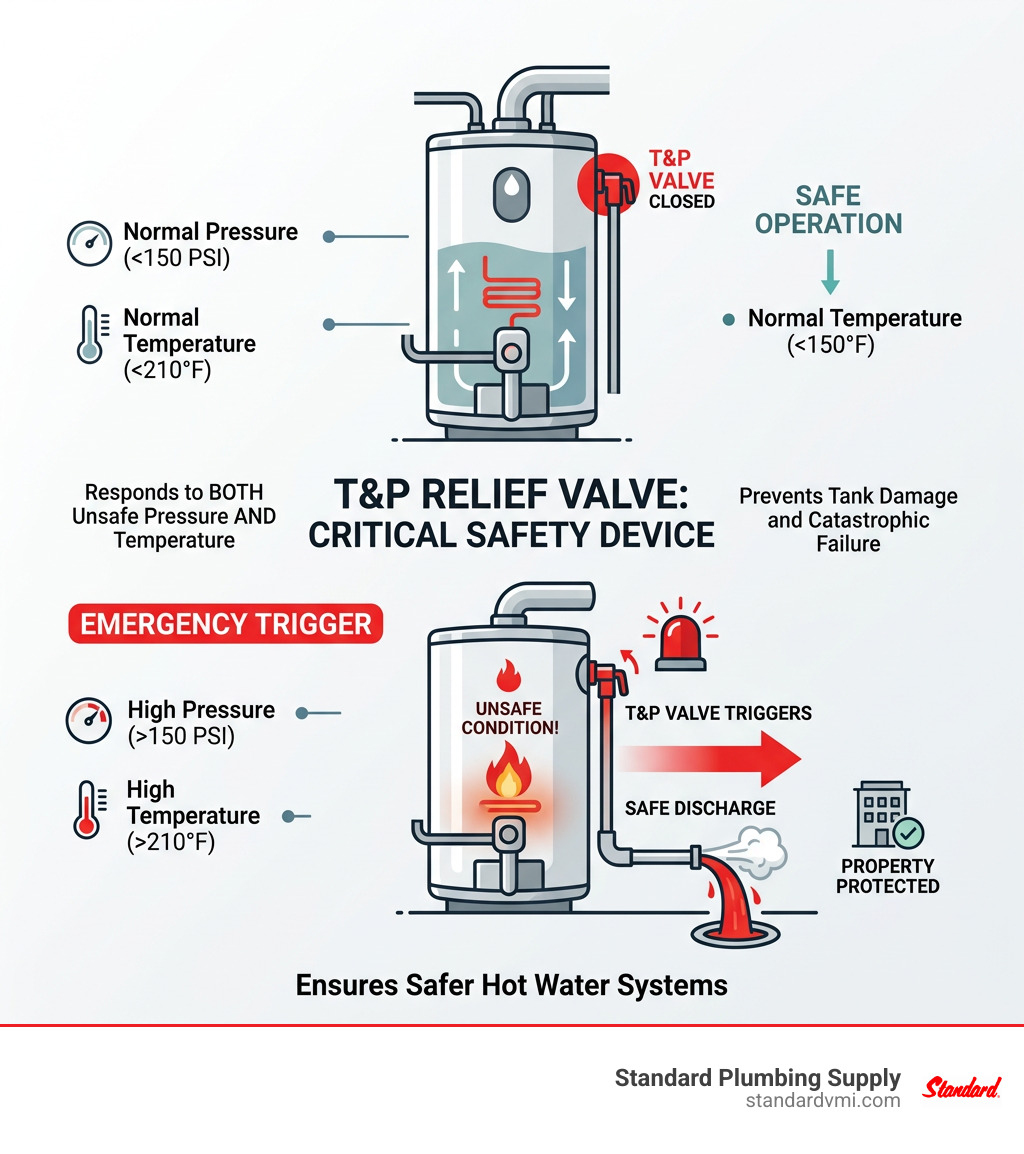
A hot water pressure relief valve is a safety device that opens to release water if a water heater reaches unsafe pressure or temperature. Most residential temperature-and-pressure (T&P) valves are factory set to open at about 150 psi or 210 F, helping prevent tank damage, scalding water, and potentially catastrophic failure.
For property managers and small business owners, a dripping or corroded valve should not be ignored. It may signal thermal expansion, excessive incoming water pressure, sediment in the valve, or a failing water-heater control. The valve may need replacement, but the underlying pressure problem also needs attention.
A T&P valve is different from a pressure-only valve because it responds to both hazards. That dual protection is why it is normally required on storage water heaters. Selecting the correct certified valve, matching its connection and rating to the heater, and installing a safe discharge pipe are essential parts of the job.
Standard Plumbing Supply helps contractors, maintenance teams, and property operators source reliable water-heater safety parts with product support and fast nationwide shipping. The rest of this guide compares valve types, explains leak causes, and covers the installation and maintenance details that keep hot-water systems safer.
I am Jacob Reese, Vice President at Standard Plumbing Supply, with experience supporting contractors and property-maintenance teams with plumbing product selection, availability, and operational needs. In the next sections, I will break down how to identify, choose, and maintain the right hot water pressure relief valve without overcomplicating the decision.
Understanding the Hot Water Pressure Relief Valve and How It Works
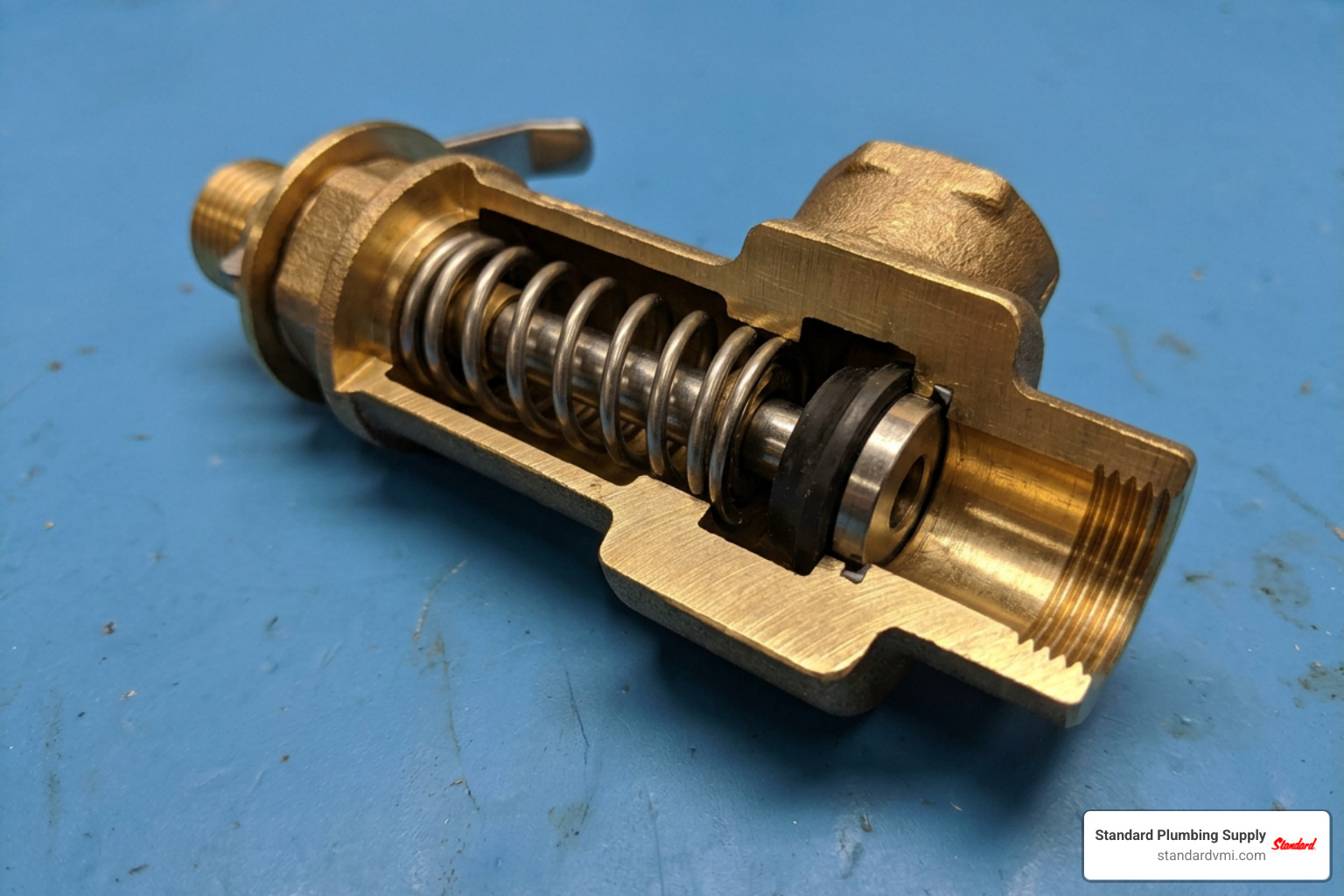
A hot water pressure relief valve acts as the emergency escape hatch for a water heater. Without this simple mechanical safeguard, a water heater whose thermostat malfunctions could convert into a sealed, pressurized boiler.
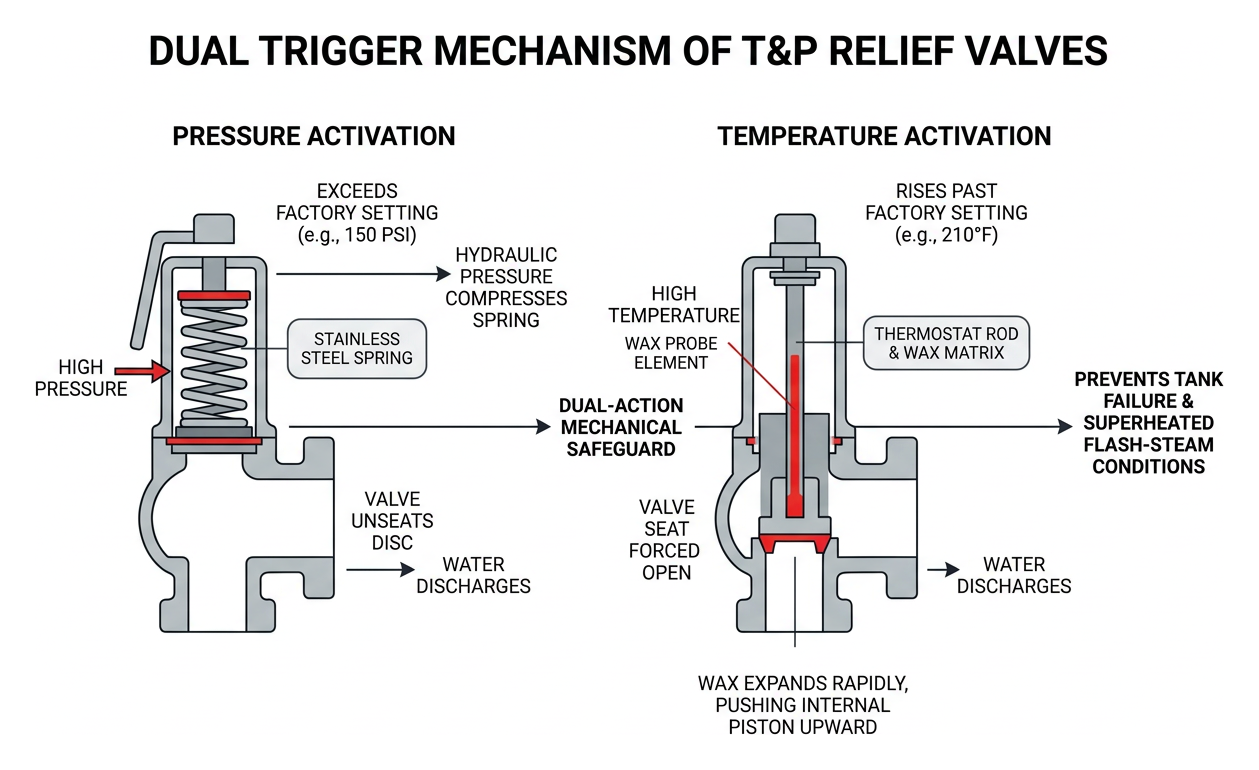
The valve features a dual-action mechanism designed to monitor both physical force and thermal expansion:
- Pressure Activation (Spring Mechanism): Inside the valve body sits a heavy-duty stainless steel spring calibrated against a seat washer. When internal tank pressure exceeds 150 PSI (or the valve’s factory set rating), hydraulic pressure compresses the spring, unseating the disc and allowing water to exhaust.
- Temperature Activation (Wax Probe Element): Extending down into the top portion of the storage vessel is a thermostat rod coated in a specialized wax matrix. When the water temperature climbs past 210°F (99°C), the wax expands rapidly, physically pushing an internal piston upward to force the valve seat open regardless of the tank's internal pressure.
How a Hot Water Pressure Relief Valve Protects Against Overpressure and Overheating
Water expands when heated. In a closed plumbing network, thermal expansion creates extreme hydraulic stress. If a water heater’s burner or heating elements fail to shut off, water temperature can exceed the normal boiling point (212°F) under pressure without turning into steam immediately.
If the tank integrity is compromised under these superheated conditions, the sudden drop in pressure causes the entire volume of water to flash-boil into steam instantaneously. Steam occupies roughly 1,600 times the volume of liquid water, resulting in a violent explosion capable of launching a 50-gallon tank through multi-story buildings. By opening at 210°F or 150 PSI, the T&P valve discharges water before these flash-steam conditions can develop.
Standard Specifications, Sizes, and Ratings
When selecting replacement valves for residential and commercial tanks, matching exact physical and operational specifications is essential:
- Inlet/Outlet Thread Sizes: Residential storage heaters typically utilize a 3/4-inch NPT threaded connection, while smaller or specialized European-style cylinders may specify a 1/2-inch (15mm) connection.
- Shank Lengths: Standard tank fittings require a 2-1/2-inch to 4-1/4-inch shank to position the thermal probe directly into the upper six inches of the water tank.
- Protective Coatings: Modern high-performance valves incorporate epoxy-coated or inert barrier "white coat" probes to insulate against galvanic corrosion and mineral encrustation from hard water.
- Certifications: Safe installations require valves certified under ASME Section IV for pressure relief and ANSI Z21.22 / CSA 4.4 for temperature-sensing safety devices.
Comparing T&P Relief Valves vs. Pressure-Only Relief Valves
Understanding the difference between temperature-and-pressure relief valves and dedicated pressure-only valves ensures safety code compliance.
| Feature / Metric | Temperature & Pressure (T&P) Valve | Pressure-Only Relief Valve |
|---|---|---|
| Primary Trigger | Dual: Internal Pressure & Water Temperature | Single: Internal Pressure Only |
| Standard Setpoints | 150 PSI / 210°F (99°C) | 30 to 150 PSI (varies by system design) |
| Thermal Sensing Probe | Yes (Wax-filled copper/brass probe) | No thermal element |
| Primary Application | Storage Water Heaters, Unvented Hot Water Tanks | Tankless Heaters, Closed-Loop Hydronics, Boilers |
| Code Compliance | Mandatory per IPC/UPC for Domestic Storage Tanks | ASME Section IV for Hydronic Heating / ASME Section VIII |
Pressure-only valves protect closed hydronic loops and chiller systems where temperatures are independently monitored, or where rapid fluid flow prevents static localized heat buildup.
Selecting the Right Valve for Storage Tanks vs. Tankless Systems
For standard storage water heaters, always choose a dual-action T&P valve whose BTU discharge rating equals or exceeds the total input rating of the heater. Installing an undersized valve restricts emergency venting capacity.
Tankless water heaters lack a large reservoir of standing water, making flash explosions from stored superheated water less of a hazard. However, tankless units still require overpressure protection due to rapid heating in compact heat exchangers. Plumbing codes allow tankless systems to use a 3/4-inch pressure-only relief valve (set to 150 PSI) installed directly onto the dedicated isolation valve kit. Explore our collection of water heater parts & accessories to find certified valves and isolation trim kits matching your equipment.
Critical Installation Guidelines and Code Compliance Standards
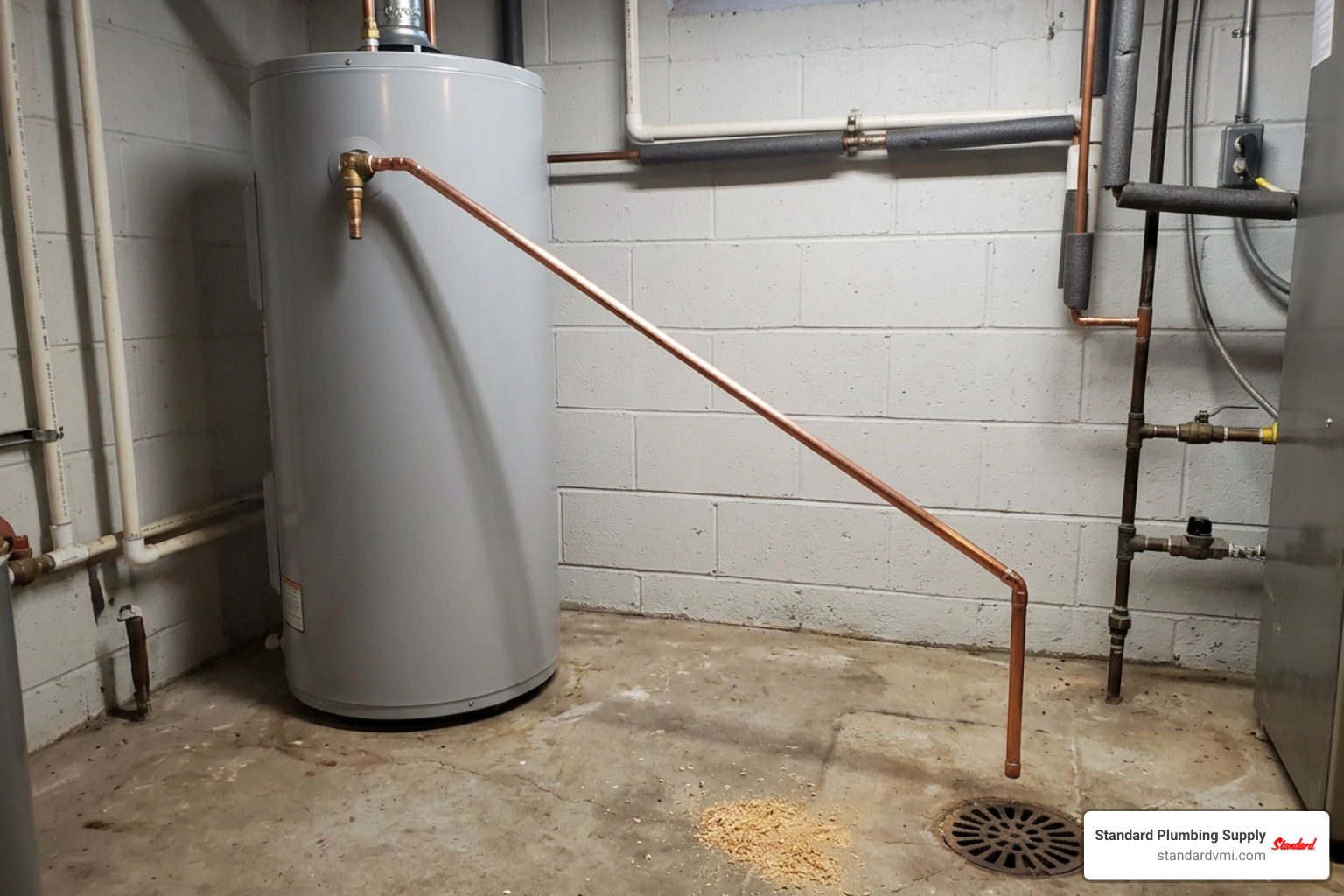
Plumbing codes dictate strict rules for relief valve discharge line installation:
- Valve Location: Install the valve directly into the designated tapping located in the top six inches of the tank shell, where the hottest water collects.
- Orientation: Valves may be installed horizontally or vertically based on manufacturer design specifications, but the discharge port must point down.
- Discharge Piping: The drain pipe must match the full internal diameter of the valve outlet (typically 3/4-inch nominal), run downward by gravity without upward traps, and use rigid copper, CPVC, or galvanized steel.
- Discharge Termination: The pipe must terminate with an air gap between 2 and 6 inches above a floor drain, catch pan, or outside grade to prevent back-siphonage and allow visual inspection. Never thread or cap the end of a discharge line.
Managing Thermal Expansion in Closed Plumbing Systems
When municipal utilities install check valves or backflow preventers at water meters, they create a "closed" plumbing system. As water heats, it expands, pushing pressure past safe operating limits and causing the relief valve to pop open intermittently.
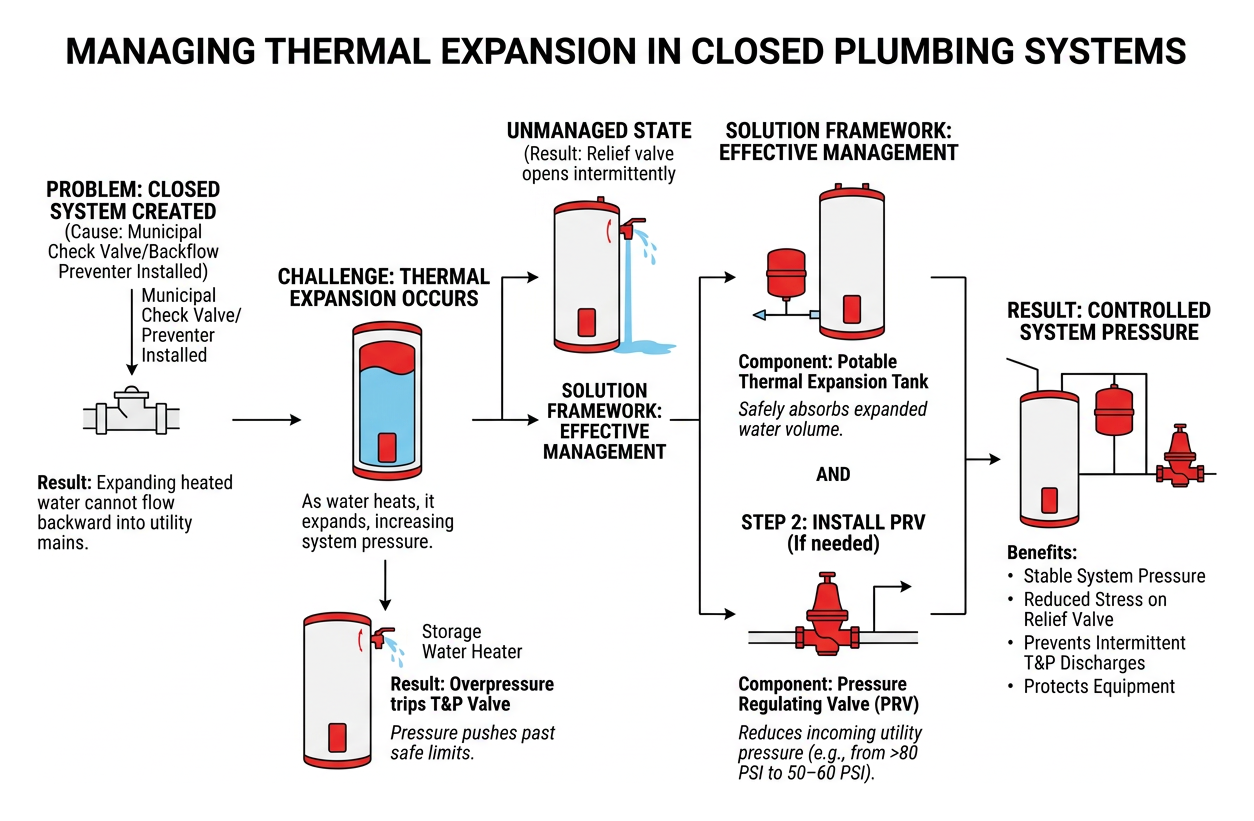
To solve thermal expansion issues without stressing your relief valve:
- Install a properly sized potable thermal expansion tank on the cold-water inlet line.
- Review local municipal plumbing resources, such as city guidelines on thermal expansion management, to align with regional backflow prevention standards.
- If street supply pressure exceeds 80 PSI, install a dedicated pressure regulator, such as Cash Acme pressure regulating valves, to bring incoming utility pressure down to a steady 50–60 PSI.
Troubleshooting Common Relief Valve Issues and Leaks
A leaking relief valve generally indicates one of two conditions:
- Intermittent Dripping During Heating Cycles: This usually indicates thermal expansion in a closed system or excessive street water pressure rather than a valve defect.
- Continuous, Steady Water Discharge: This points to internal component failure, heavy mineral scale on the valve seat, a compromised spring, or a failed water heater thermostat that is constantly overheating the tank.
Signs Your Hot Water Pressure Relief Valve Needs Immediate Replacement
Relief valves have an average service life of 4 to 5 years depending on local water chemistry. Replace the valve immediately if you encounter:
- Heavy green oxidation, white limescale, or rust flaking on the brass valve body.
- A test lever that is seized, loose, or fails to release water when lifted.
- Water that continues to spray or drip steadily from the discharge pipe after the manual lever is snapped shut.
- A ruptured or degraded thermal wax element caused by repeated overheating cycles.
Frequently Asked Questions About Pressure Relief Valves
How often should I test the manual lever on a pressure relief valve?
Test your valve once per year. Place a bucket beneath the discharge pipe, wear protective eye gear and gloves, and gently lift the test lever. Water should flow freely into the bucket. Release the lever; it should snap closed and seal completely within seconds.
Why is my relief valve dripping when no hot water is running?
If the valve drips while the heater is idle, check your main water line pressure with a threaded gauge. Municipal water pressure spikes above 80 PSI or a failed diaphragm inside your thermal expansion tank will force the valve seat open even when the water is cold.
Can I replace a water heater relief valve myself?
While experienced DIYers can replace a threaded relief valve by shutting off power/fuel, isolating the cold-water line, and partially draining the tank, professional installation ensures code-compliant discharge piping slope, thread sealant application, and correct BTU matching.
Conclusion
A hot water pressure relief valve is an essential safety component in any domestic or commercial hot water setup. Routine annual maintenance and prompt replacement of leaking components protect your property from water damage and structural hazards.
Standard Plumbing Supply supports professional contractors, maintenance technicians, and property operators with an extensive inventory of plumbing, HVAC, and irrigation supplies. We provide top industry brands, expert counter support, and fast nationwide shipping, alongside customized vendor-managed inventory (VMI) solutions that free up cash flow and keep your job sites stocked. Browse commercial and residential pressure relief valves to find the right safety equipment for your next project.