
All About Pipe Wrench Types: A Detailed Guide
Discover straight, offset, and S-type pipe wrench types, key features, and safety tips in this detailed guide for trade professionals.

What Is a Pipe Wrench and What Does It Do?
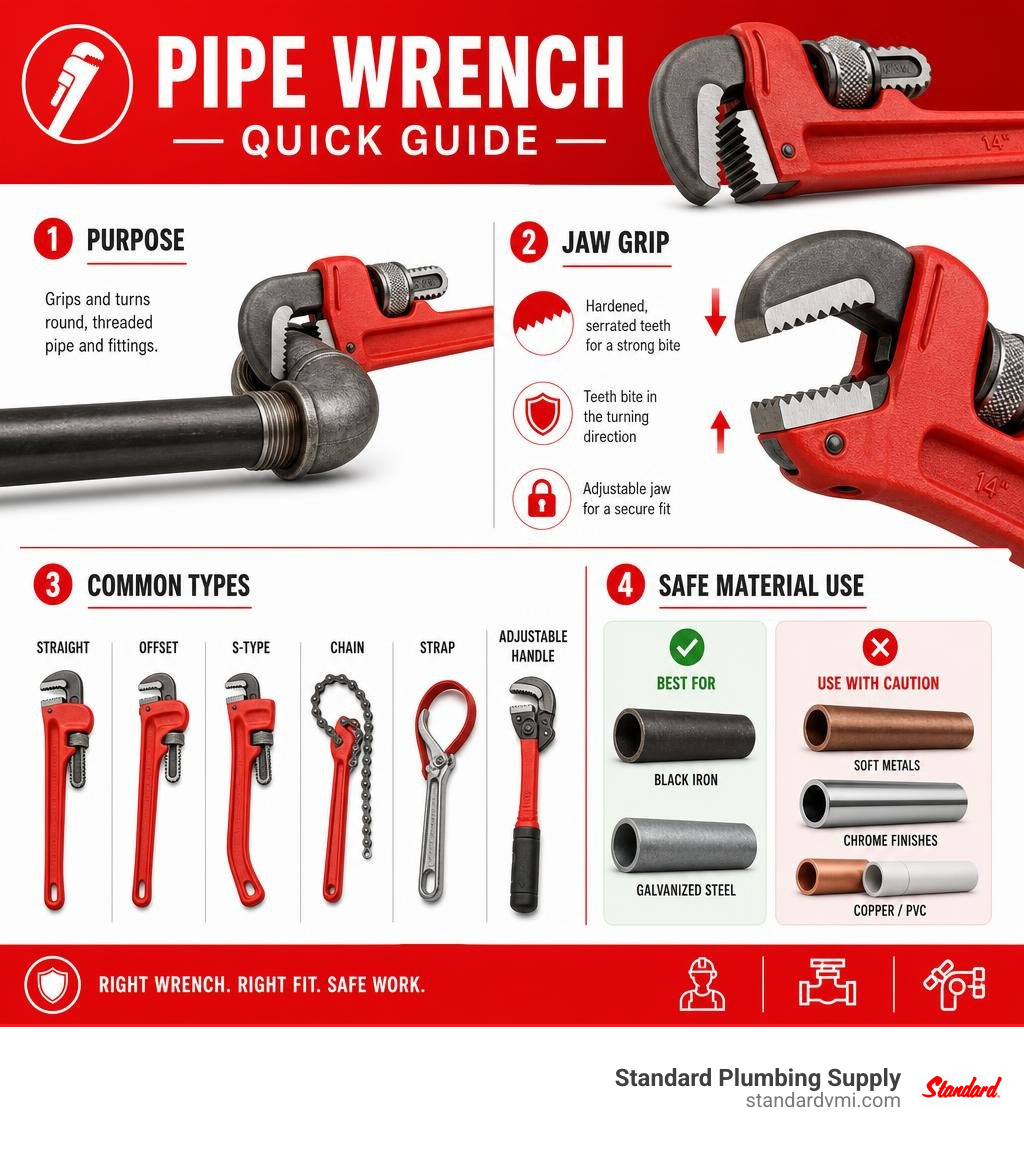
A pipe wrench is an adjustable hand tool with hardened, serrated jaws that grip and turn round threaded pipe and fittings. It is built for assembling or loosening materials such as black iron and galvanized steel, where a smooth-jaw wrench can slip.
Its teeth bite into the pipe as force is applied in the turning direction. That grip makes it highly effective for stubborn threaded connections, but it can also mark soft metals, chrome finishes, copper, and PVC. For property maintenance teams and small plumbing operations, choosing the right pipe wrench helps prevent delays when a fitting needs service now.
Pipe wrenches come in compact models for close work and long-handled versions for high-torque repairs. Common styles include straight, offset, S-type, chain, strap, and adaptable-handle models. Standard Plumbing Supply helps contractors and maintenance professionals source dependable plumbing and HVAC tools, fittings, and replacement parts with knowledgeable support and fast nationwide shipping.
The familiar Stillson-pattern wrench traces back to Daniel C. Stillson's U.S. patent in 1869. Swedish inventor Johan Petter Johansson later patented an adjustable pipe wrench on August 17, 1888, helping reduce the need for tradespeople to carry many fixed-size wrenches.
I am Jacob Reese, Vice President at Standard Plumbing Supply, with experience supporting plumbing and HVAC contractors through product availability, inventory planning, and practical jobsite needs. In this guide, I will help you understand which pipe wrench style fits the work your team needs to complete safely and efficiently.
Exploring Specialized Pipe Wrench Types and Mechanics

When selecting the proper pipe wrench for commercial plumbing, industrial mechanical work, or municipal maintenance, understanding mechanical design variations is vital. Standard straight pipe wrenches remain the foundational workhorse across job sites, but specialized geometry overcomes extreme tight-space obstacles, high torque limits, or delicate pipe surfaces.
For a detailed understanding of historical developments and fundamental mechanics, the classic Pipe wrench design relies on intentional play between the floating hook jaw and the main body frame. As pressure is exerted on the handle, this inherent play causes the serrated upper and lower jaws to bind down tighter on round surfaces, converting lateral leverage into continuous gripping power.
Straight and Offset Wrench Designs
The straight pipe wrench is the most widely recognized configuration in the plumbing industry. It features a parallel jaw alignment directly inline with the handle, providing direct linear leverage when working on accessible pipe lines, gas meters, or bench-mounted vise assemblies. Built with heavy-duty I-beam handles, these tools maximize structural strength while maintaining ergonomic hand placement.
Offset pipe wrenches adjust the jaw opening to a 90-degree angle relative to the handle shaft. This perpendicular geometry gives trade professionals clearance when working overhead in narrow ceiling joists, against interior walls, or inside tight trenching enclosures. By shifting the jaw opening sideways, an offset wrench allows technicians to swing the handle freely without hitting surrounding obstacles or parallel pipe runs.
S-Type and Heavy-Duty Adaptable Models
The European Swedish-pattern S-type pipe wrench introduces a curved jaw geometry designed for supreme grip stability. Instead of relying on two flat parallel jaws, the S-shape design establishes a self-locking three-point contact along the pipe's outer diameter. For technicians working on slippery or oily industrial fittings, the Pipe Wrench S-Type | KNIPEX utilizes induction-hardened, counter-angled teeth to deliver incredible biting power without requiring aggressive manual compression.
Heavy-duty adaptable wrenches, such as multi-length cheater models, feature customizable handle extensions. By allowing operators to switch between a compact 11-inch handle for tight cabinet installations and a long 24-inch extension for heavy torque application on frozen main lines, adaptable designs eliminate the weight and bulk of carrying multiple oversized tools to elevated work areas.
Comparing Mechanics: Pipe Wrench vs. Adjustable Wrench
A frequent point of confusion for apprentice technicians involves choosing between a pipe wrench and a smooth-jaw adjustable wrench. While both feature adjustable jaw capacities, their mechanical intentions are fundamentally different.
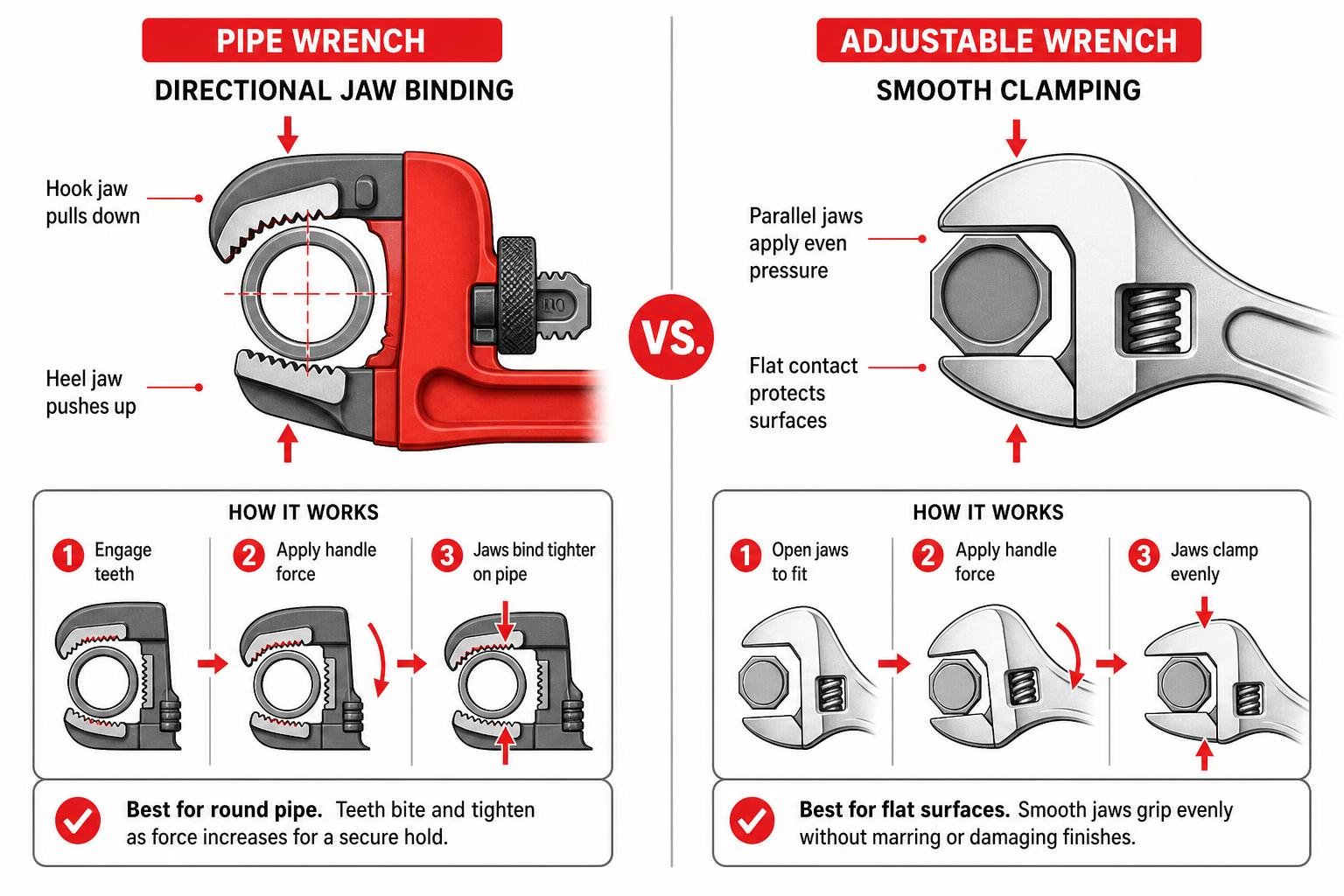
Smooth-jaw adjustable wrenches exert parallel flat clamping forces engineered specifically for smooth, multi-sided hex nuts, brass valves, and chrome finish trim. Using a serrated pipe wrench on standard hex hardware will gouge the metal flat edges, leading to rounded bolt heads. Conversely, using a smooth adjustable wrench on a round steel pipe will result in slippage, as smooth jaws cannot dig into smooth circular surfaces.
When you encounter completely rounded hex fasteners or rusted bolts that standard sockets cannot grip, the aggressive serrations of a pipe wrench can save hours by biting directly into the damaged metal head to free the fastener. For jobs requiring precise smooth-jaw adjustment, explore our guide on the Best Adjustable Pliers.
Key Features, Sizing, and Material Trade-Offs
Choosing the right pipe wrench involves balancing structural material weight against required mechanical torque. Traditional heavy-duty cast iron wrenches deliver exceptional durability and mass, making them ideal for shop vises, heavy equipment maintenance, and ground-level utility work where extra weight assists leverage.
Lightweight aluminum pipe wrenches utilize forged aluminum handles paired with hardened alloy steel jaws. Aluminum handles reduce overall tool weight by roughly 40% compared to cast iron equivalents without sacrificing professional torque ratings. For technicians installing overhead fire suppression lines, elevated HVAC ductwork, or commercial risers, reducing arm fatigue is a major safety and productivity benefit.
| Wrench Feature / Spec | Heavy-Duty Cast Iron | Forged Aluminum Alloy |
|---|---|---|
| Weight Comparison | 100% Standard Weight | ~40% Lighter Weight |
| Best Jobsite Application | Bench work, high-torque industrial | Overhead piping, long shifts, field service |
| Tooth Hardness | ~56 HRC Hardened Steel | ~56 HRC Hardened Steel |
| Fatigue Factor | Higher arm/shoulder fatigue | Significantly reduced user strain |
| Durability Rating | Extreme resistance to impacts | Excellent strength-to-weight ratio |
Choosing the Right Pipe Wrench Size and Handle Capacity
Pipe wrenches are manufactured across a standard sizing spectrum ranging from compact 6-inch mini wrenches up to 60-inch industrial beasts. Matching the overall wrench length to the outer diameter of the pipe ensures safe operation and prevents jaw slippage or structural damage to fittings.
- 6-inch to 10-inch wrenches: Ideal for tight spaces under sinks, small water lines, and fuel lines up to 1-inch pipe diameter.
- 12-inch to 14-inch wrenches: The standard baseline for general plumbing repair, accepting pipe diameters up to 1.5 inches.
- 18-inch to 24-inch wrenches: Standard equipment for commercial water mains, gas distribution lines, and black iron fittings up to 2.5 inches.
- 36-inch to 60-inch wrenches: Heavy industrial units designed for main line utilities, municipal water systems, and hydraulic cylinder repair requiring extreme torque leverage on pipe capacities up to 4 to 6 inches.
Essential Features: Overbite Jaws and Self-Cleaning Threads
High-quality pipe wrenches feature precise engineering details that extend service life and improve usability on harsh job sites:
- Overbite Jaw Geometry: Advanced jaw designs extend the gripping surface area, providing maximum tooth engagement on round stock to eliminate rounding and slipping.
- Self-Cleaning Threads: Open adjustment nut threads naturally push away debris, dirt, slurry, and pipe dope as the knurled adjustment nut turns, preventing jaw jams on dirty construction sites.
- Dual Coil Springs: Internal spring assemblies maintain constant tension on the floating hook jaw, providing smooth ratcheting engagement and rapid adjustment resets.
- Tether-Ready Loops: Integrated lanyard loops on the handle base allow secure tethering when performing high-elevation or scaffolding work, protecting crews below from falling tool hazards.
Usage Safety, Task Selection, and Maintenance
Operating a pipe wrench safely requires correct positioning and body posture. Always orient the mouth of the wrench so the jaw opening faces the direction you intend to pull or push. As force is applied to the handle, the floating upper jaw rocks forward slightly, binding the serrated teeth into the metal surface.
For maximum balance and mechanical advantage, always pull the wrench handle toward your body rather than pushing away. Pushing puts your hands at risk of crushing injuries if a corroded fitting breaks loose unexpectedly or the teeth slip on smooth scale.
Application Alignment for Heavy Duty, Tight Space, and PVC Pipes
Different piping materials demand specific tool selection to preserve fitting integrity and jobsite efficiency:
- Black Iron & Galvanized Steel: Standard straight or offset pipe wrenches with hardened steel teeth dig directly into these hard iron surfaces for leak-tight assembly.
- Tight Corner & Closely Spaced Lines: When working close to walls or inside narrow joist spaces, utilizing a Pipe Wrench 90° | KNIPEX ensures stable three-point alignment without handle interference.
- PVC, Brass, & Chrome Materials: Traditional serrated pipe wrenches will gouge plastic PVC surfaces and strip soft decorative finishes. For smooth finished materials, switch to nylon strap wrenches or smooth-jaw spud wrenches. If a serrated wrench must be used in an emergency, wrapping a protective cloth around the fitting helps absorb jaw scoring.
Safety Standards and Maintenance Best Practices
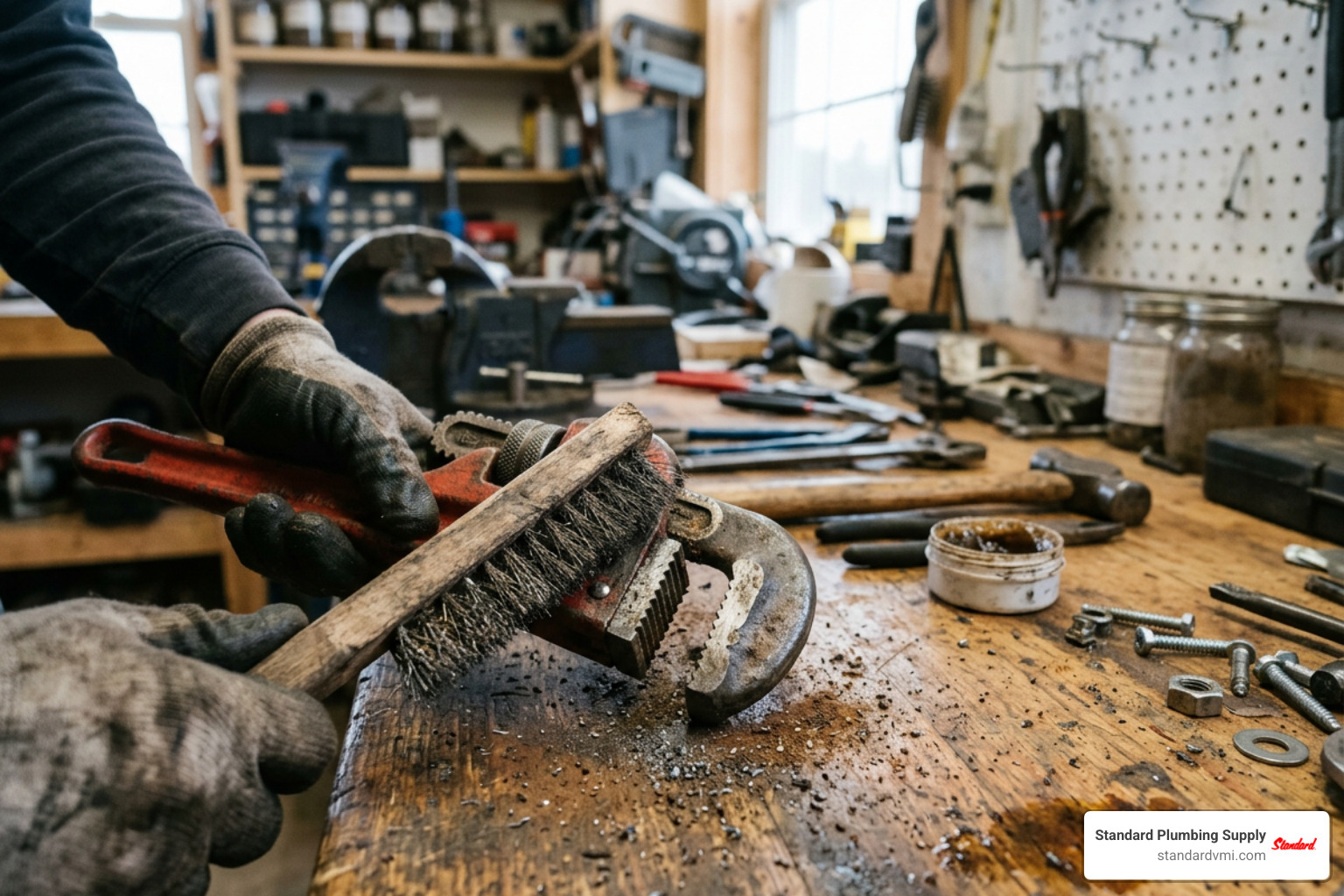
Maintaining your plumbing tool arsenal protects your equipment investment and ensures user safety. Inspecting jaw teeth regularly is critical; dull, packed, or chipped teeth lose gripping efficiency and invite dangerous slippage under heavy loads.
Clean jaw teeth using a stiff wire brush to remove packed dirt, pipe dope, and metal shavings. Keep the adjustment knurled nut and body threads lightly lubricated with machine oil to maintain smooth operation. When removing or servicing hardware on machinery covers or valve assemblies, combining specialized socket tools such as a 1 2 Socket Bit or a 10Mm Socket For Drill allows quick breakdown before applying final torque with a pipe wrench.
Frequently Asked Questions About Pipe Wrenches
What is the main difference between aluminum and steel pipe wrenches?
Aluminum pipe wrenches feature forged aluminum handles that reduce overall tool weight by approximately 40% while using the exact same hardened steel jaws found on cast iron models. Steel wrenches provide maximum mass and durability for extreme-torque shop operations, while aluminum wrenches excel in overhead applications, field service, and long work shifts by significantly reducing arm and shoulder fatigue.
Can a pipe wrench be used on hex nuts or smooth chrome fittings?
While a pipe wrench can be used in emergency situations to bite into stripped or rounded hex bolts, it should not be used for regular maintenance on undamaged hex nuts or decorative chrome fittings. The sharp serrated teeth will permanently score, gouge, and damage finished surfaces. Use smooth-jaw adjustable wrenches, spud wrenches, or polyurethane strap wrenches on finished fixtures.
How do I know when to replace the hook and heel jaws on my wrench?
Inspect the jaw teeth periodically for rounded edges, missing teeth, or heavy wear. If the wrench slips on smooth steel pipe despite applying proper directional force, the teeth have lost their biting profile. Quality professional pipe wrenches feature replaceable hook and heel jaw kits, allowing you to restore factory grip without buying a whole new tool body.
Conclusion
Understanding the mechanics, material choices, and application nuances of each pipe wrench style ensures that your field service crews and maintenance teams work safely, efficiently, and effectively. From compact offset wrenches designed for narrow cabinet spaces to lightweight aluminum models built for overhead risers, equipping your crew with the right tools eliminates downtime and prevents surface damage on client property.
At Standard Plumbing Supply, we support plumbing, HVAC, and irrigation professionals across our Western U.S. location network with comprehensive tool selections, expert technical support, fast nationwide shipping, and tailored Vendor-Managed Inventory (VMI) solutions that optimize cash flow and keep your shop fully stocked.
Explore our full inventory of trade-grade hand tools and learn more about choosing the best gear for your team by reading our expert guide on the Best Adjustable Pliers.