
What Are Pipe Wrench Pliers and When Should You Use Them?
Learn when to use pipe wrench pliers vs standard wrenches for plumbing repairs, plus tips on technique and tool selection.

What Are Pipe Wrench Pliers and Their Main Variations?
When you are working underneath a sink, behind a water heater, or inside an HVAC mechanical room, you quickly realize that no single tool handles every connection. Pipe wrench pliers bridge the gap between traditional heavy cast-iron Stilson wrenches and lightweight slip-joint pliers. They provide adjustable jaw widths combined with strong mechanical leverage, making them indispensable for plumbing and heating maintenance.
Understanding the specific jaw geometry and adjustment mechanism of each variation helps you pick the exact tool for your task.
S-Type Pipe Wrench Pliers
S-type pipe wrench pliers are designed specifically for heavy-duty work on round pipes and stubborn threaded fittings, especially in tight corners. Unlike standard straight jaws, the S-shaped jaw geometry creates a secure three-point contact on cylindrical workpieces.
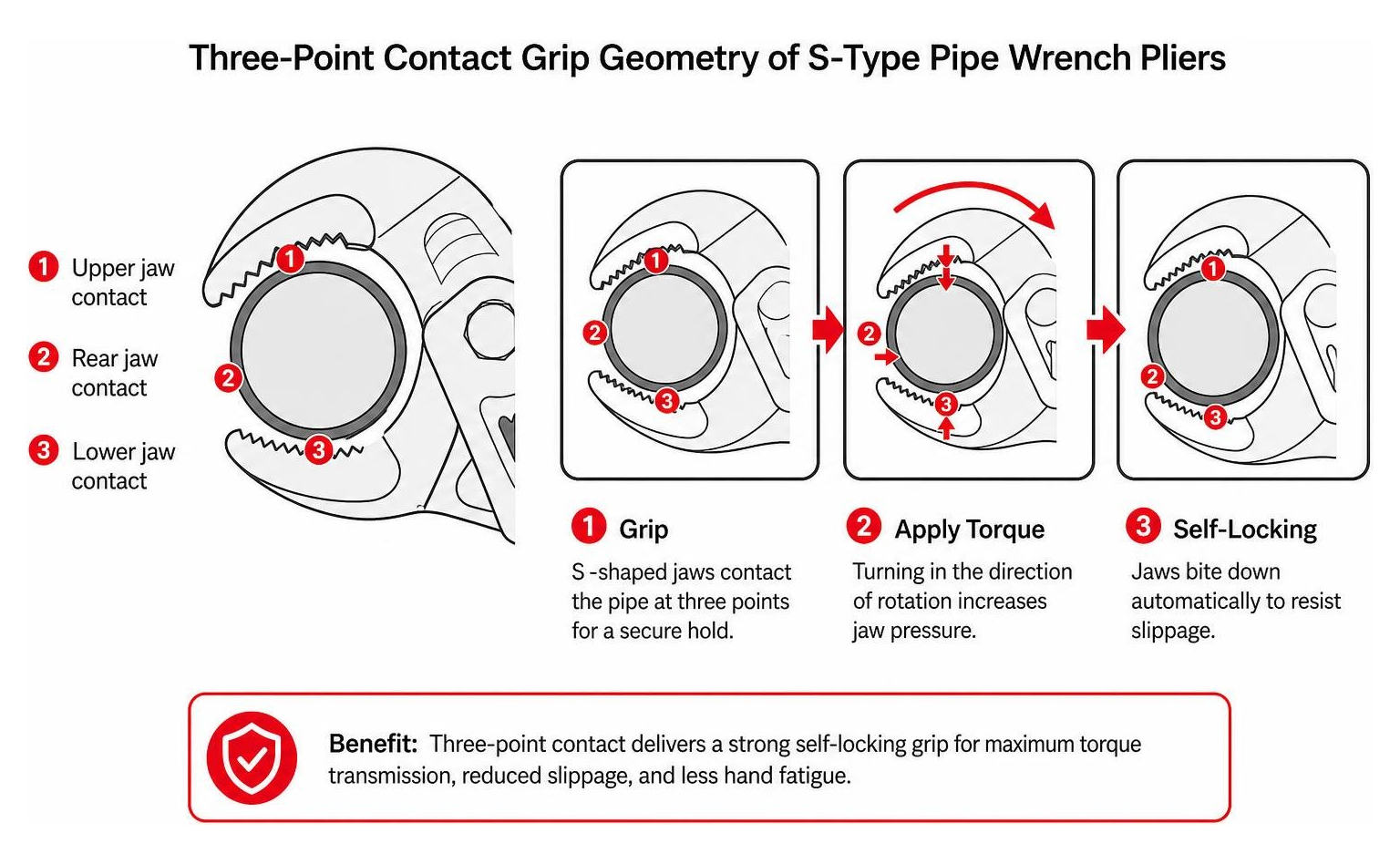
When you place the tool over a pipe, the upper and lower curves clamp the pipe firmly at three distinct points. This geometry delivers a strong self-locking action: applying force in the direction of rotation causes the jaws to bite down automatically, preventing slippage and reducing manual hand fatigue. Modern professional models, such as the Pipe Wrench S-Type, feature induction-hardened teeth rated up to roughly 56 HRC. This keeps the biting edges sharp even after heavy use on tough iron or steel pipes.
Parallel Smooth-Jaw Pliers Wrenches
When working on decorative plumbing fixtures, polished brass valves, or chrome-plated supply union nuts, serrated teeth can mar the surface finish. That is where smooth-jaw pliers wrenches come in.
A smooth-jaw Pliers Wrench combines the function of a wrench and a pair of pliers into a single tool. It features zero-backlash, parallel jaws that remain perfectly parallel throughout their movement range. By pressing a fast push-button mechanism, you can adjust the jaw opening directly on the workpiece.
These tools leverage a 10:1 mechanical force amplification. Squeezing the handles delivers high gripping pressure evenly across flat surfaces without rounding off nut corners. Additionally, the stroke action allows for a continuous ratcheting motion, letting you tighten or loosen metric and imperial fasteners quickly without resetting the tool after every turn.
Water Pump and Pipe Gripping Pliers
Water pump pliers (often called tongue-and-groove or groove joint pliers) are common staples in plumbing toolkits. Modern designs utilize box-joint construction, where one handle passes through the other to provide dual-sided support. This prevents jaw twisting under high torque loads.
High-precision water pump pliers offer up to 25 fine adjustment positions, allowing you to set the jaw opening accurately for various pipe outer diameters. Specialized pipe gripping pliers are also available with soft, plastic-jaw inserts or contoured serrated profiles, making them ideal for tightening plastic drain pipes, siphon connectors, and delicate conduit fittings without crushing the material.
Key Differences Between Pipe Wrench Pliers, Standard Pipe Wrenches, and Water Pump Pliers
Choosing between a standard straight pipe wrench, pipe wrench pliers, and water pump pliers comes down to three factors: torque demands, workspace clearances, and workpiece surface finish requirements.
Traditional straight pipe wrenches feature heavy cast-iron or drop-forged aluminum frames with floating hook jaws. They generate maximum torque for thick-walled black iron or galvanized steel gas lines, but their weight and bulk make them difficult to use in tight spaces. Water pump pliers are lightweight and quick to adjust, but they rely heavily on manual hand pressure and can slip if applied to heavy, seized pipe joints.
Pipe wrench pliers balance these trade-offs by providing self-locking leverage and high torque capacity within a compact, lightweight body.
| Feature / Metric | Standard Pipe Wrench | Pipe Wrench Pliers (e.g., S-Type / 90°) | Water Pump Pliers | Parallel Pliers Wrench |
|---|---|---|---|---|
| Primary Design Use | High-torque iron/steel threaded pipe | Compact pipe grip & tight-corner turning | Light to medium pipe, fittings & general gripping | Finished chrome, brass & flat-sided fittings |
| Jaw Contact Profile | 2-Point linear bite | 3-Point S-curve or 90° corner bite | 2-Point angled serrated grip | Smooth parallel face pressure |
| Surface Finish Impact | Deep biting marks (High damage) | Biting marks on raw metal | Moderate serration marks | Zero damage (Smooth jaws) |
| Max Torque Capacity | Extremely High | High to Very High | Moderate | High (Flat fasteners) |
| Tool Weight & Bulk | Heavy & bulky | Moderate & slim | Lightweight & compact | Lightweight & compact |
| Adjustment Style | Knurled thumb nut on floating jaw | Knurled screw or push-button | Tongue-and-groove or push-button | Push-button slider |
How to Choose the Right Pipe Wrench or Pliers for Your Project

Selecting the ideal tool requires matching the tool's physical capacity to the task at hand.
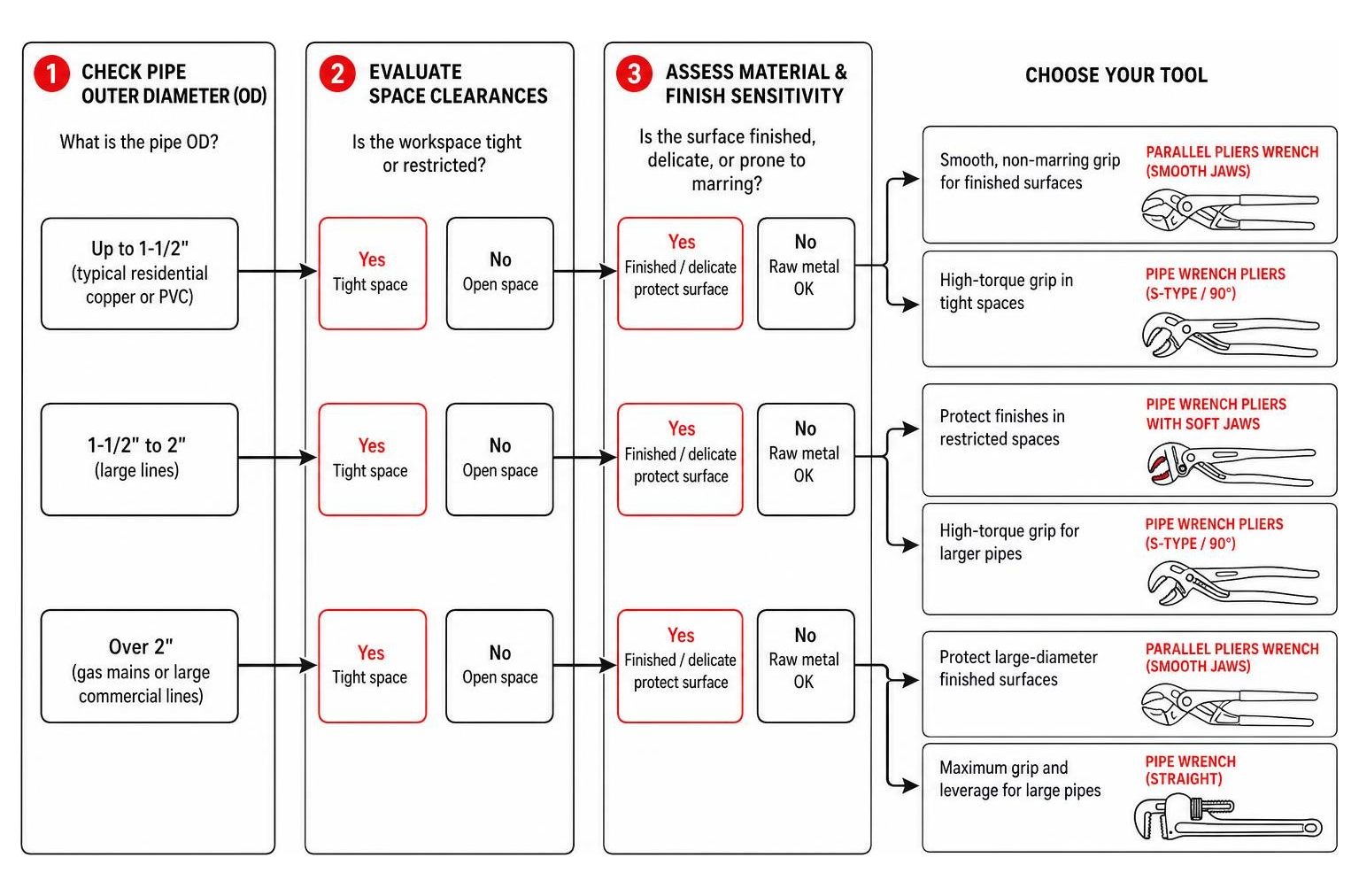
- Check the Pipe Outer Diameter (OD): Always size your tool according to the outer diameter of the pipe rather than its nominal inside diameter. For standard residential 1/2-inch to 1-1/2-inch copper or PVC lines, a 10-inch tool length is typically ideal. For 2-inch gas mains or large commercial water lines, step up to a 12-inch or 16-inch model with larger jaw openings.
- Evaluate Space Clearances: If you are working inside a narrow stud wall, vanity cabinet, or recessed ceiling plenum, standard straight pipe wrenches may not have enough swing room. An S-type or 90-degree angle nose pipe wrench plier allows you to engage fittings in tight quarters.
-
Assess Material and Finish Sensitivity:
- For black iron, cast iron, or unpolished steel, use serrated pipe wrench pliers with induction-hardened teeth to bite into the surface.
- For chrome-plated brass, polished stainless steel, or plastic trim, use a smooth-jaw pliers wrench or a tool fitted with protective soft jaws to avoid surface scratches.
- Inspect Material Quality: Professional plumbing and HVAC work requires durable tools. Look for drop-forged alloy steels (such as oil-hardened chrome vanadium) and double-T profile handle designs, which deliver high strength without adding unnecessary weight to your tool bag.
At Standard Plumbing Supply, we stock a wide inventory of professional hand tools across our locations in Utah, Idaho, Wyoming, Nevada, Arizona, Oregon, California, and Colorado. If you manage an installation fleet, our Vendor-Managed Inventory (VMI) solutions can keep your shop and service vans consistently stocked with essential tools and supplies.
Technique, Safety, and Care for Plumbing Tools
Using hand tools correctly improves job safety, prevents physical injury, and extends tool life.
- Pull, Don't Push: Always position the tool so you pull the handle toward your body rather than pushing away. If the tool slips while pushing, your knuckles can slam into nearby metal edges or concrete walls.
- Avoid Cheater Bars: Never slide a piece of metal pipe over the handle to gain extra leverage. This exceeds the engineering limits of the tool frame, which can snap the handles or distort the jaw joint.
- Wear Personal Protective Equipment: Always wear safety glasses and work gloves. Sudden release of stuck, rusted threaded fittings can cause sudden tool movement.
- Maintain Clean Jaw Teeth: Pipe teeth rely on sharp serrations to bite into metal surfaces. Periodically clean out accumulated pipe dope, thread sealant, rust, and debris using a stiff wire brush.
- Keep Adjustments Lubricated: Apply a light coat of machine oil to the pivot pins, push buttons, and adjustment screws to prevent rust and ensure smooth operation.
For more detailed comparisons on adjustable hand tools, check out our guide on the Best Adjustable Pliers.
How to Properly Master Pipe Wrench Pliers to Prevent Pipe Damage
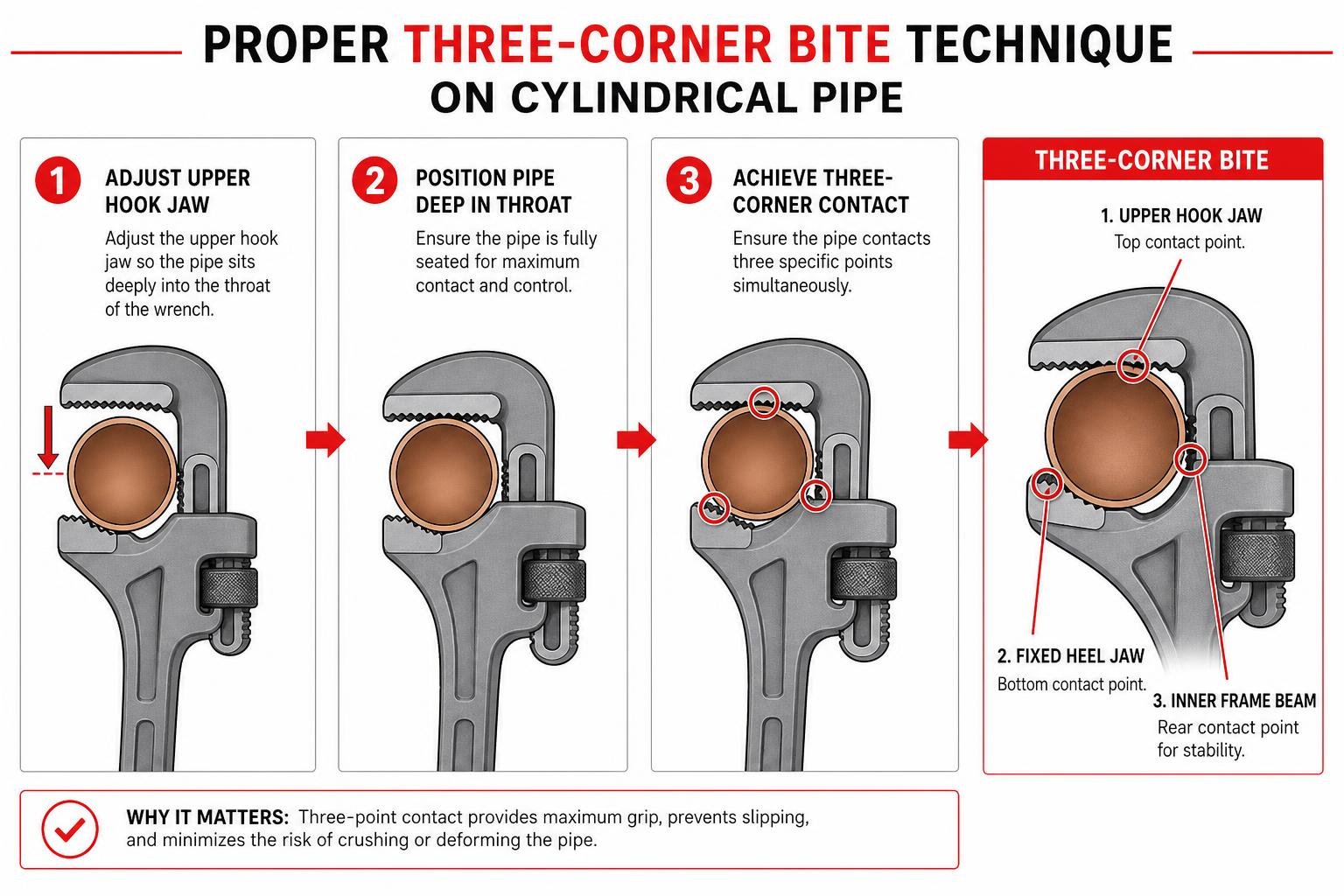
When working on thin-walled tubing or soft copper pipes, improper tool placement can crush the pipe into an oval shape or tear the metal. To avoid this, use the three-corner bite technique when applying pipe wrenches or S-type pipe wrench pliers.
To execute a three-corner bite:
- Adjust the upper hook jaw so the pipe sits deeply into the throat of the wrench.
- Ensure the pipe contacts three specific points simultaneously: the fixed heel jaw, the movable upper hook jaw, and the inner frame beam.
- Keep a small clearance gap between the back of the hook jaw and the pipe wall.
This three-point positioning distributes turning forces evenly around the pipe's circumference, providing maximum turning torque while minimizing localized crushing forces.
Frequently Asked Questions About Pipe Wrench Pliers
How do smooth-jaw pipe wrench pliers protect chrome fixtures?
Smooth-jaw pliers wrenches feature flat, precision-ground jaw faces that move parallel to one another. Unlike traditional serrated jaws that rely on sharp teeth biting into metal, smooth jaws clamp flat against the sides of a fitting with zero backlash pressure. Squeezing the handles amplifies hand force up to 10 times, distributing clamping force across the entire face of the nut to prevent surface scratching or corner rounding on chrome or brass.
What tool length and size is recommended for home plumbing?
For general residential plumbing repairs, a 10-inch (250 mm) pipe wrench plier or pliers wrench is the most versatile size. It typically accommodates pipe and nut diameters up to 1-1/2 to 2 inches while remaining compact enough to operate under kitchen sinks and vanity cabinets. Adding a smaller 7-inch or 8-inch tool for tight cabinet supply lines and a heavy-duty 12-inch or 14-inch tool for main shutoff valves creates a complete, highly functional set.
Why should you pull rather than push when using pipe wrench pliers?
Pulling a tool handle toward your body allows you to use your back and shoulder muscles for better physical control. If the tool unexpected slips off a rusted or stripped pipe, your hand moves harmlessly into open space. Pushing away from your body puts you at risk of losing balance or slamming your knuckles directly into sharp structural pipe threads or surrounding wall surfaces.
Conclusion
Whether you are unthreading a stubborn iron gas pipe with S-type pipe wrench pliers or installing a high-end chrome bathroom faucet with a smooth-jaw pliers wrench, matching the right tool to the job helps you work faster and prevents costly fixture damage.
At Standard Plumbing Supply, we serve plumbing, HVAC, and irrigation contractors with expert advice, trusted tool brands, fast nationwide shipping, and reliable vendor-managed inventory solutions across our western US branch network.
Ready to upgrade your jobsite toolkit or restock your service truck inventory? Explore our complete line of professional plumbing tools online, visit one of our regional branches, or learn more about optimizing your supply chain through our guide to the Best Adjustable Pliers.