
In Depth Guide to Buying Waterpump Pliers
In Depth Guide to Buying Waterpump Pliers - Learn about waterpump pliers

The Complete Buyer's Guide to Waterpump Pliers
Waterpump pliers are one of the most versatile hand tools in any plumber's, HVAC tech's, or irrigation professional's kit. They grip round pipes, hex nuts, and irregular fittings across a wide range of sizes — all with one adjustable tool.
Quick answer: What are waterpump pliers?
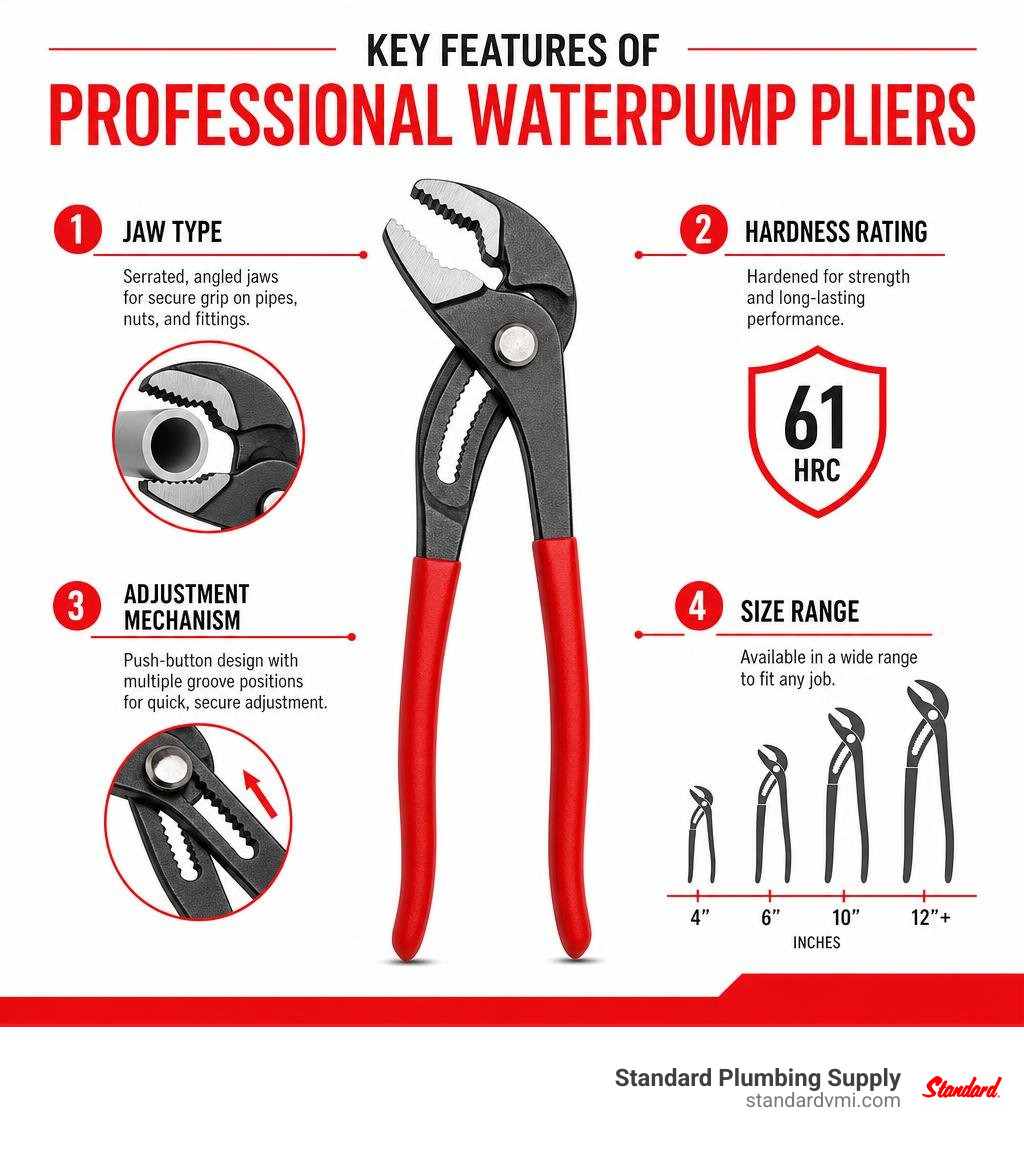
- Adjustable jaw pliers designed to grip pipes, nuts, and fittings of varying diameters
- Use a slip-joint mechanism to slide between size positions without removing the tool from the workpiece
- Available in sizes from 4 inches (mini) up to 12+ inches for heavy-duty work
- Common materials: forged Chrome Vanadium steel, often hardened to ~61 HRC
- Top brands include KNIPEX, RIDGID, Sonic Tools, and DOYLE
- Price range: roughly $10–$70 depending on size, brand, and features
Whether you're a property manager sourcing tools for a maintenance crew or a small business owner stocking a service van, choosing the right waterpump pliers saves time, reduces tool failures, and protects fittings from damage.
Getting this decision wrong means stripped fittings, worn-out teeth, or the wrong jaw size for the job — all of which cost more in the long run.
I'm Jacob Reese, VP at Standard Plumbing Supply in Salt Lake City, and I've spent years helping contractors and property managers source the right plumbing tools — including waterpump pliers — through reliable supply chains and vendor-managed inventory programs. In this guide, I'll break down exactly what to look for so you buy once and buy right.
What Are Waterpump Pliers and How Do They Work?
At their core, waterpump pliers (frequently referred to as tongue-and-groove pliers or channel-locking pliers) are adjustable gripping tools engineered to apply massive rotational torque to cylindrical, square, and hexagonal workpieces. What sets high-performance waterpump pliers apart from basic slip-joint pliers is their offset pivot point and adjustable fulcrum.
By altering the pivot position along an arched path or notched track, the user can adjust the distance between the upper and lower jaws while maintaining a comfortable, ergonomic handle grip distance.
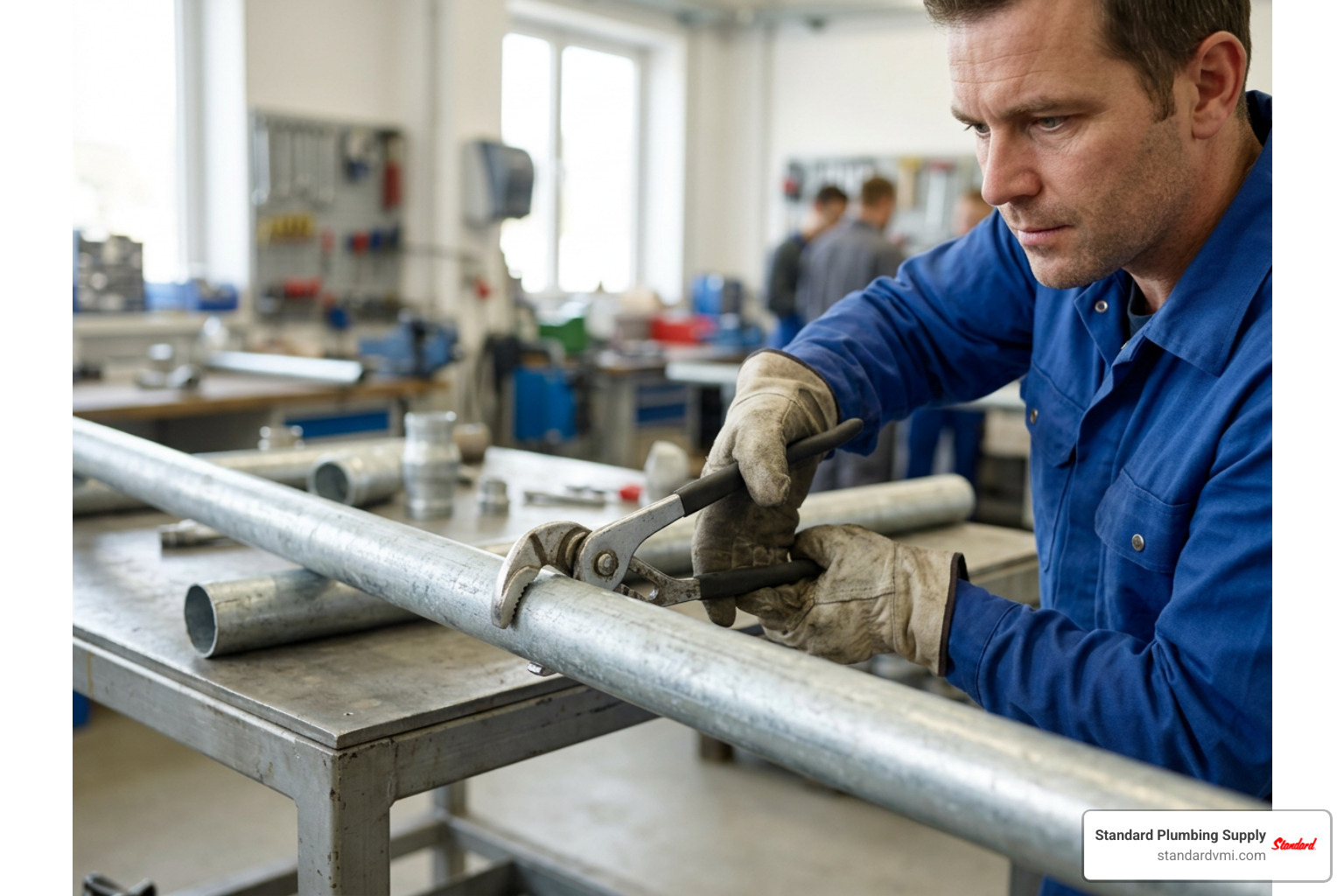
When you squeeze the handles, force transfers directly through the hardened hinge assembly to the jaw teeth. High-grade models incorporate optimized jaw geometry that creates a self-locking effect. Once you place the upper jaw onto a pipe or nut and apply force on the top handle, the lower jaw bites into the material automatically. This converts your manual downward effort straight into rotational leverage, meaning you don't have to strain your hand constantly squeezing both handles together.
Waterpump Pliers vs. Pipe Wrenches and Pliers Wrenches
It is easy to lump all adjustable plumbing tools together, but using the wrong tool for a specific fitting can quickly ruin a project. Understanding the distinct differences between waterpump pliers, pipe wrenches, and pliers wrenches ensures maximum speed and zero workpiece damage.
| Tool Type | Primary Jaw Design | Surface Contact | Best Workpiece Application | Risk of Marring |
|---|---|---|---|---|
| Waterpump Pliers | Serrated curved/V-jaw | Multi-point biting grip | Black iron, PVC, brass valves, hex fittings | Moderate to High (due to sharp teeth) |
| Pipe Wrench | Floating serrated hook jaw | Heavy bite with spring leverage | Heavy steel pipe, iron nipples, stuck couplings | Very High (intended for rough pipe) |
| Pliers Wrench | Smooth parallel jaws | Flat flush surface contact | Chrome fixtures, plated brass, sensitive union nuts | None (zero play, smooth jaw face) |
While standard pipe wrenches rely on heavy, cast-iron bodies and spring-loaded floating jaws to bite into unrefined steel pipe, they are often far too bulky to fit into tight under-sink cabinets or between closely spaced joists.
Conversely, pliers wrenches use smooth, flat parallel jaws that squeeze down flat surfaces with zero backlash, making them perfect for delicate chrome-plated bathroom fixtures.
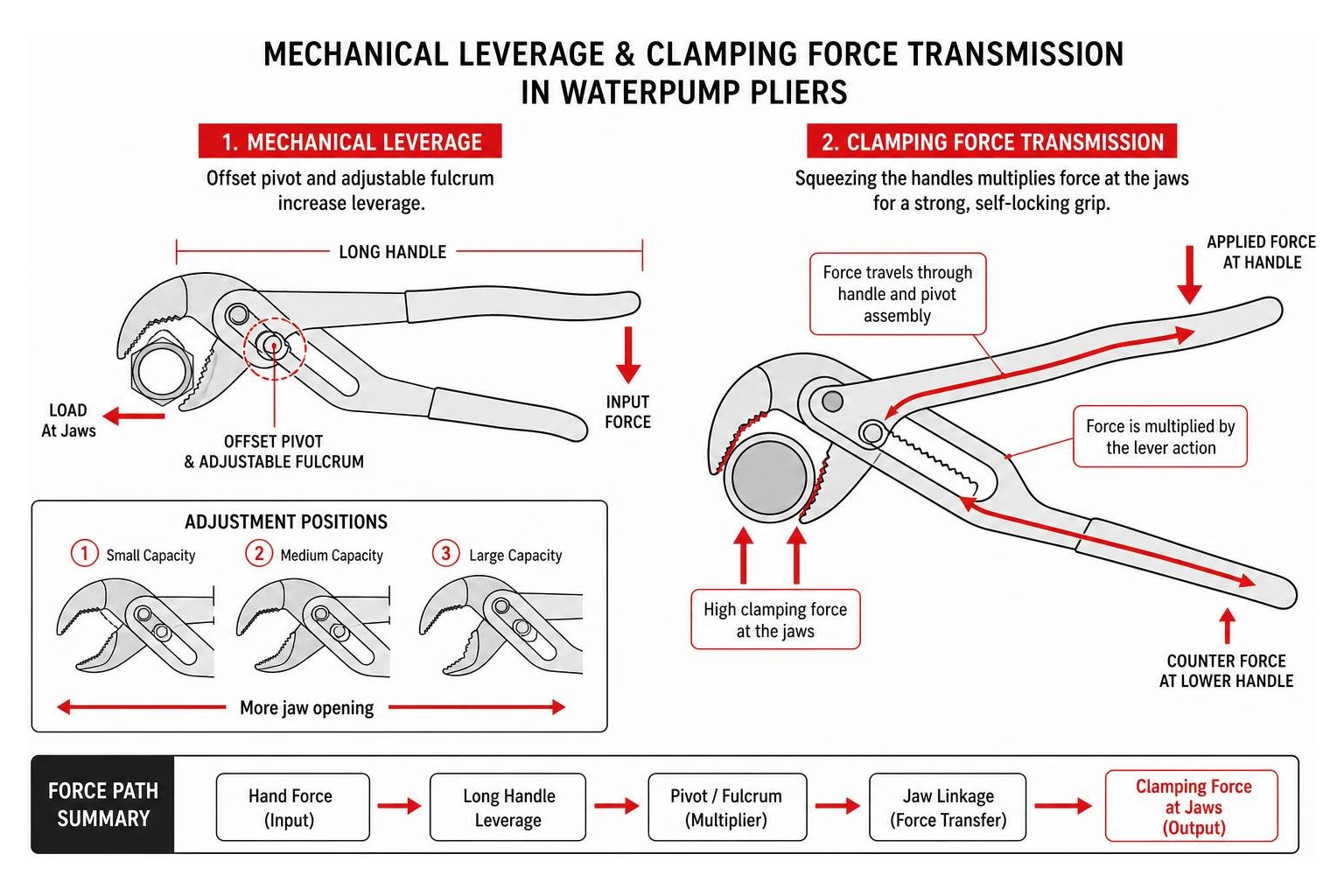
Waterpump pliers strike the perfect balance: they offer aggressive gripping teeth like a pipe wrench but feature a slim box-joint profile and lightweight forged body that fits easily into narrow utility spaces. You can browse a wide selection of Water Pump Pliers for Secure Grip across standard retail channels, but choosing trade-grade quality is essential for daily commercial installations.
Core Applications in Plumbing, HVAC, and Irrigation
For commercial service crews and municipal maintenance staff across our service areas, waterpump pliers serve as the ultimate frontline tool across three primary sectors:
- Plumbing Assemblies: Securing compression fittings, tightening copper adapters, assembling threaded brass valves, and breaking free stubborn drain trap unions.
- HVAC Maintenance: Turning copper gas line valves, adjusting burner fittings, and tightening heavy-duty hex nipples on boilers and chillers.
- Irrigation Infrastructure: Adjusting high-pressure backflow preventer unions, gripping smooth PVC schedule 80 fittings, and servicing outdoor control valve manifolds.
When working on complex control panels or equipment installations, technicians frequently pair their gripping tools with complementary drill accessories like 5/16 Impact Driver Bits to speed up sheet metal cabinet disassembly before applying mechanical force to internal plumbing lines.
Key Design Features and Durability Indicators
Not all hand tools are built to withstand daily jobsite abuse. Budget options bought at big-box checkout counters might seem appealing initially, but soft metal alloys, weak pivot rivets, and smooth-wearing teeth quickly make them liability hazards. High-durability features protect your investment and keep your service vans running without continuous replacement expenses.
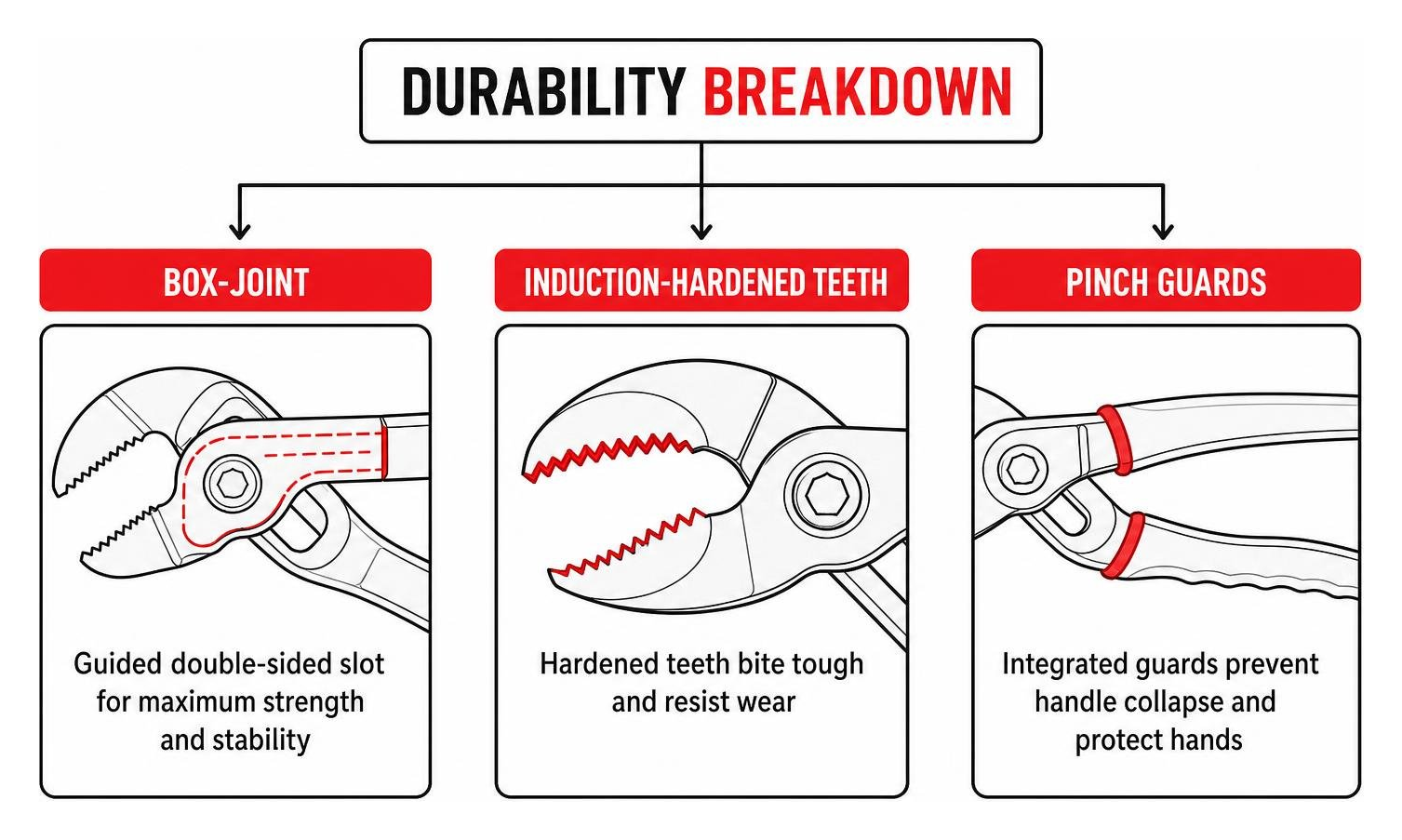
When evaluating tools for commercial service fleets, we always check three key physical indicators:
- Joint Construction: Look for a box-joint design rather than a simple lap joint. A box-joint guides the moving arm through a double-sided slot, providing superior torsional stability under extreme twisting forces.
- Pinch Guard Protection: Integrated pinch protection stops handle stops before they collapse completely, preventing painful hand injuries during high-force slippage.
- Handle Dipping & Comfort: High-friction vinyl coatings or dual-component ergonomic handles improve grip when hands are covered in pipe dope, cutting oil, or irrigation mud.
Chrome Vanadium Steel and Hardness Ratings
The foundation of any heavy-duty tool is its metallurgy. Premium manufacturers construct their tools from high-grade electric steel alloyed with Chrome and Vanadium. This material combination undergoes precise multi-stage oil hardening to yield high ductility, preventing sudden brittle fractures when high leverage is applied.
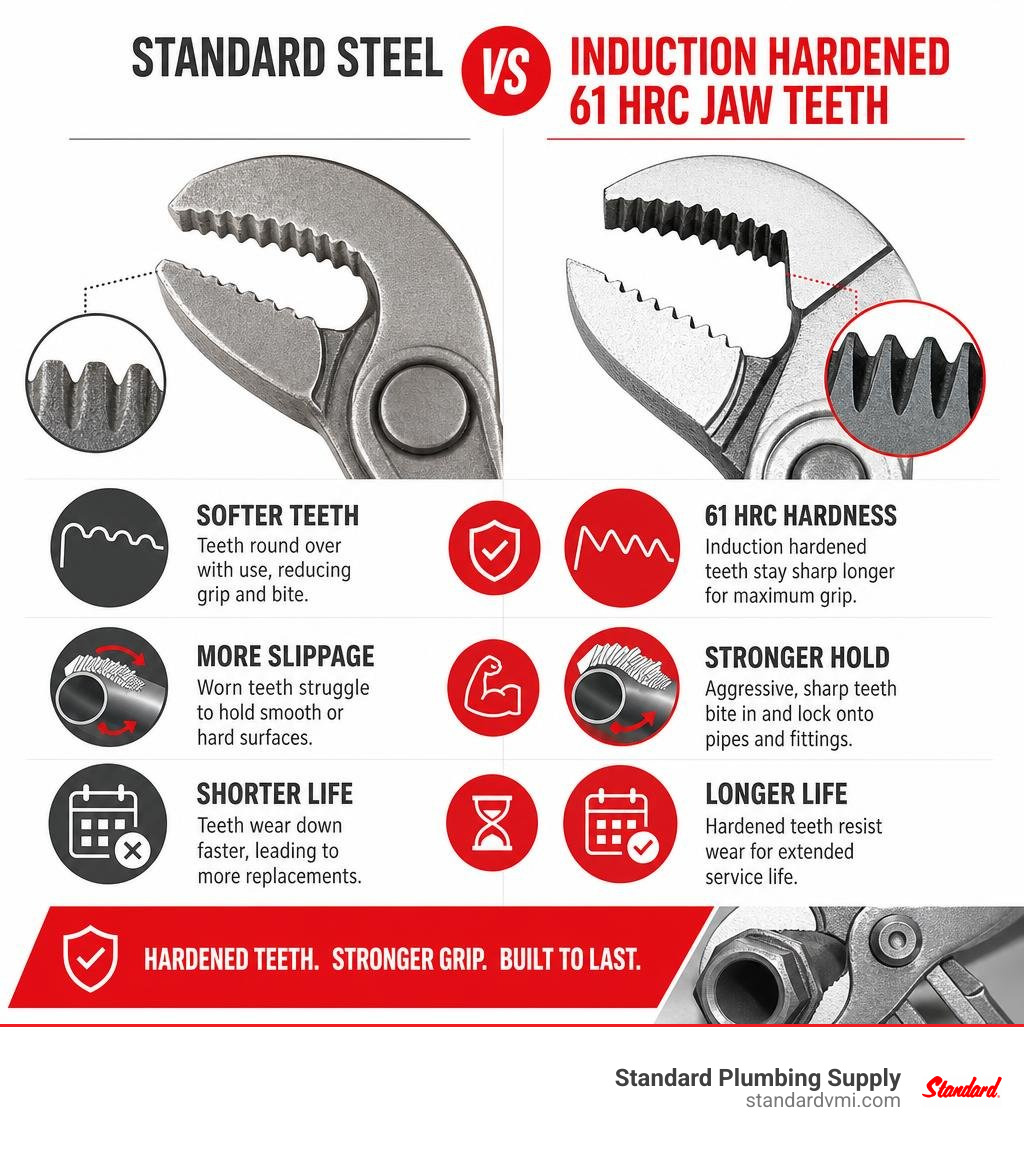
While the body of the tool remains flexible enough to absorb high torque, the gripping teeth undergo additional high-frequency induction hardening. High-tier tools like the KNIPEX Alligator® Water Pump Pliers | KNIPEX and KNIPEX Alligator® Water Pump Pliers | KNIPEX feature jaw teeth hardened to approximately 61 HRC (Rockwell Hardness scale). Standard budget tools often hover below 50 HRC, meaning their jaw teeth flatten out within a few months of gripping hard steel pipe nipples.
For specialized mechanical assemblies where fastening hex bolts precedes pipe connection work, using a precision 5/16 Hex Driver Bit Complete Guide alongside high-hardness pliers keeps fastener edges crisp and damage-free.
Push-Button vs. Traditional Grooved Adjustment Mechanisms
The mechanism used to adjust jaw width dictates both working speed and locking security on the jobsite.
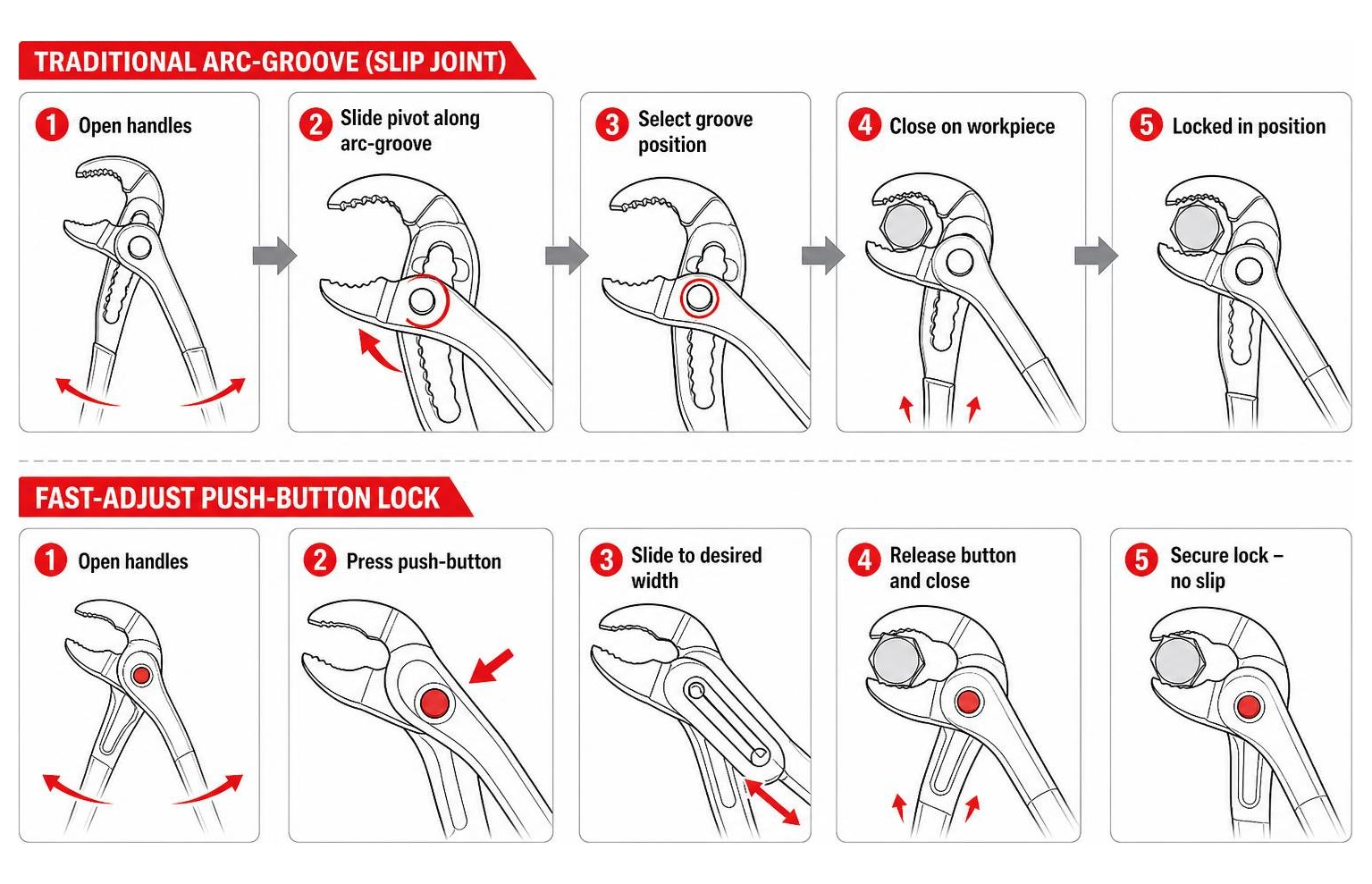
Traditional Groove-Joint (Arc-Groove)
The classic design utilizes curved ridges cast into the inner face of one handle arm. The user swings the handles open, slides the pivot pin along the track, and closes the jaw on the fitting.
- Pros: Simple, dirt-insensitive construction ideal for outdoor trenching and muddy irrigation work.
- Cons: Coarse adjustment steps (often only 5 to 7 positions) mean the handle span can open awkwardly wide, reducing hand grip power.
Push-Button Quick-Lock Mechanisms
Modern high-performance pliers, such as the 12" Cobra® Water Pump Pliers 87 01 300 and 8 in. Fast-Adjust Water Pump Pliers, feature spring-loaded push-button mechanisms. Pressing the button releases a hardened central pin, allowing you to slide the jaw to fine-tuned positions—often offering anywhere from 15 to 30 adjustment notches.
- Pros: Fine adjustment allows perfect adaptation to any workpiece diameter; hinge bolt locks securely so the jaw position cannot slip unintentionally during heavy strain.
- Cons: Extremely fine gear teeth can collect excessive debris if submerged in concrete slurry or thick mud without regular cleaning.
Manufacturers like Sonic tools also engineer heavy-duty options featuring oil-hardened German steel bodies; trade professionals can inspect options directly on the official Waterpump Pliers catalog.
Specialized Features and Sizing for Tradespeople
Selecting the correct plier length and jaw capacity is essential to achieving proper mechanical advantage. Choosing a tool that is too short forces technicians to apply dangerous physical exertion, while using an oversized tool in a restricted valve box makes precise adjustments nearly impossible.
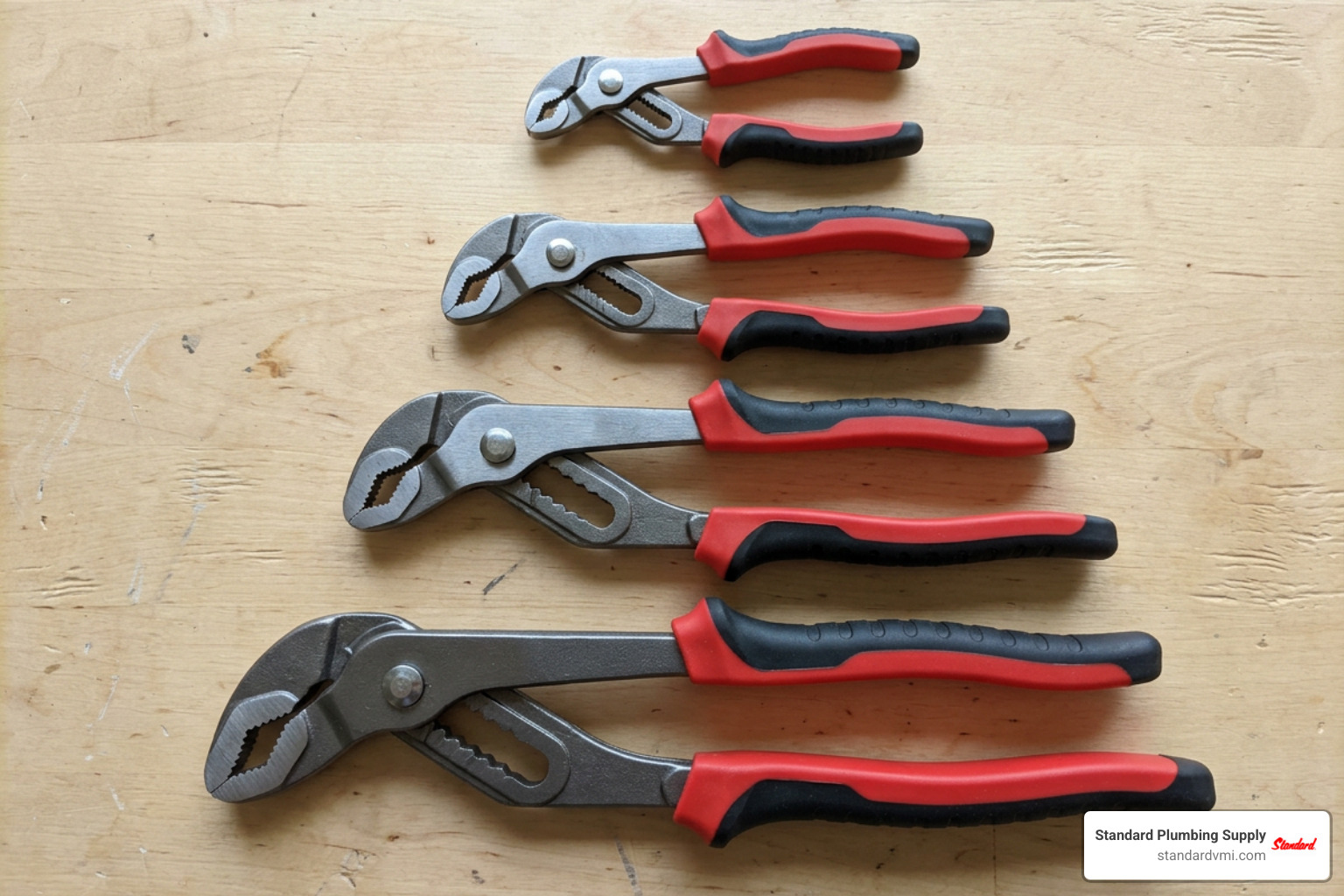
Selecting Waterpump Pliers Sizes for Plumbing and HVAC Tasks
Tool selection should align directly with the pipe diameters and space constraints typical of your specific trade tasks.
- 4-Inch Micro/Mini Pliers: Pocket-sized tools like the Cobra® XS Water Pump Pliers | KNIPEX Tools or WORKPRO mini pliers offer a 1-inch jaw capacity while weighing under 0.15 lbs. They excel in cramped cabinet corners, behind wall-mounted water heaters, or for quick gear and valve adjustments.
- 7- to 8-Inch Compact Pliers: Exceptional for electrical conduit fittings, small appliance water lines, and light residential repair tasks where tight space access is critical.
- 10-Inch Standard Pliers: The universal choice for professional plumbing. Providing up to 2-inch pipe capacity, a quality 10-inch tool handles 90% of daily trade applications including sink basket strainers, supply nipples, and gas lines.
- 12-Inch and Larger Heavy-Duty Pliers: Delivering up to 2-3/4 inch gripping capacity, 12-inch models provide substantial hand leverage required for main line valves, large brass unions, and commercial HVAC connections.
When completing comprehensive equipment service, technicians routinely carry multi-tool setups. Combining reliable pliers with driver sets described in The Ultimate Guide to 1/4 and 5/16 Reversible Nut Drivers allows seamless transitioning between panel removal and heavy piping adjustments.
Insulated, Slim-Jaw, and Self-Clamping Designs
Beyond standard models, specialized service conditions warrant targeted tool variants:
- 1000V Insulated Pliers: Essential for commercial HVAC technicians and utility workers operating near live electrical panels, motor controls, or pump wiring harnesses. Look for multi-layer dipping rated under official VDE / IEC 60900 standards, as seen on specialized models such as Alligator® Water Pump Pliers | KNIPEX Tools.
- Slim-Jaw & V-Jaw Profiles: V-jaw geometry provides three contact points on round stock, square bars, and hex nuts. This multi-point contact distributes pressure evenly, preventing slipping and reducing jaw tooth wear.
- Auto-Adjusting Mechanisms: Modern spring-driven auto-lock pliers automatically adapt their jaw width simply by closing the handles on the workpiece, enabling rapid, true one-handed operation during elevated overhead work.
For specific specialty installations, contractors can reference European installation standards, such as those detailed on the Rothenberger water pump pliers SP technical specification guide.
Frequently Asked Questions About Waterpump Pliers
How do self-locking jaws reduce hand fatigue during extended use?
Self-locking jaws rely on specialized offset jaw geometry where the upper jaw teeth angle backward into the workpiece surface. Once the tool is adjusted to fit the workpiece, applying downward force to the top handle causes the teeth to bite deeper into the pipe or nut automatically.
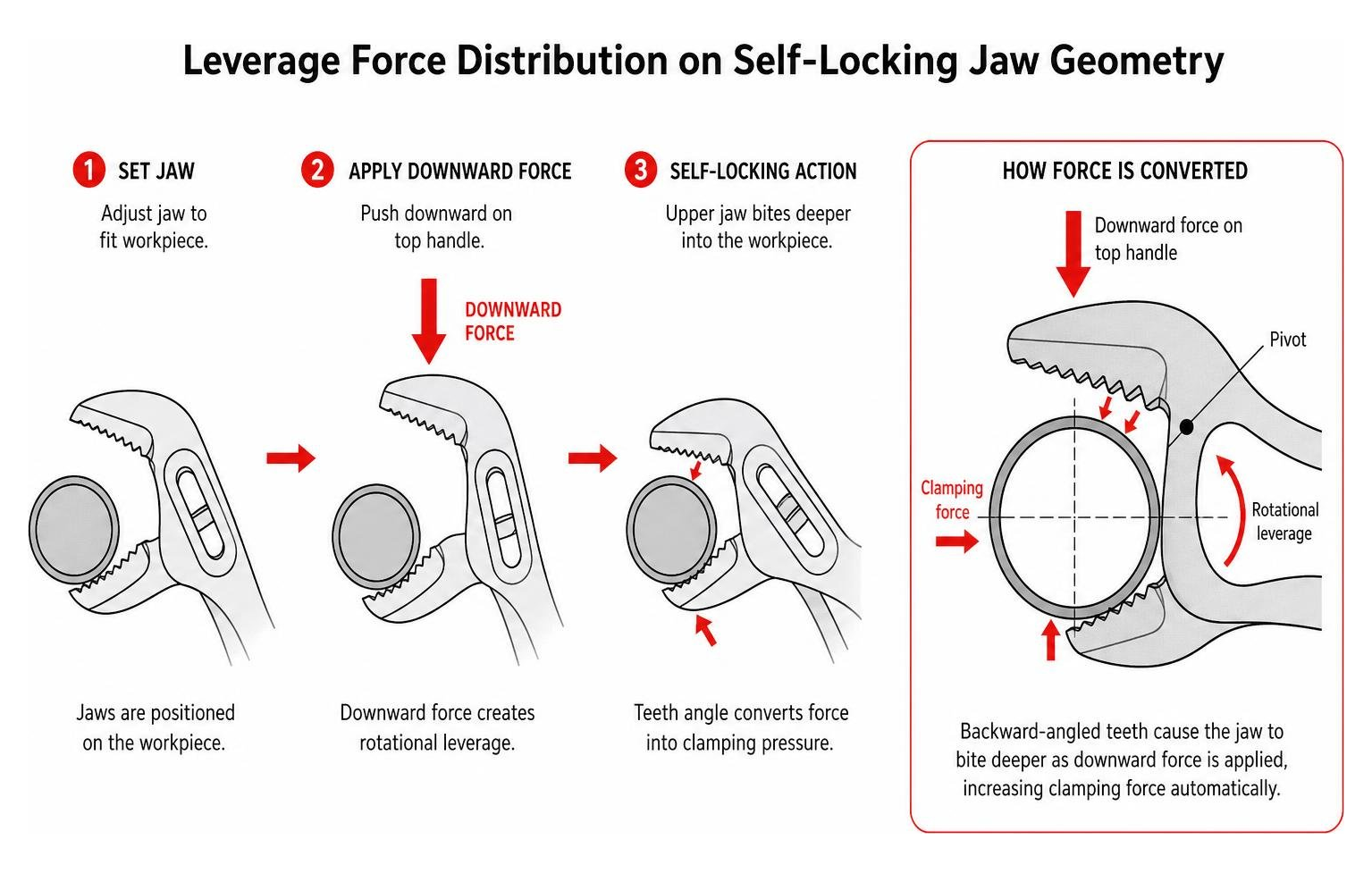
This geometry converts downward turning effort into clamping force. As a result, the technician does not need to constantly squeeze both handles together with high hand strength. Squeezing is replaced by simple downward weight application, dramatically lowering hand and forearm fatigue during high-volume mechanical installations.
Why are box-joint pliers preferred over standard lap-joint designs?
A traditional lap joint consists of two flat metal halves overlaid and fastened by a central pin. Under severe twisting load, lap joints can flex sideways, causing the jaw teeth to misalign and slip off the fitting.
In contrast, a box-joint design routes one handle directly through a double-guided slot in the opposite handle arm. This two-sided support structure completely eliminates lateral play and twisting under heavy torsional load. Additionally, box joints provide better protection against dirt ingress, making them far more reliable for rugged outdoor utility and plumbing trench work.
What size water pump plier is best for general plumbing work?
For everyday residential and commercial plumbing, a 10-inch waterpump plier is widely considered the industry standard gold model. A 10-inch length provides an ideal leverage ratio while maintaining a compact enough profile to fit inside vanity cabinets, valve boxes, and wall cavities.
It comfortably grips pipes up to 2 inches in diameter and hex fittings up to 1-13/16 inches across flats. If a service truck could carry only a single size, the 10-inch option delivers the maximum versatility across all trade scenarios.
To ensure your crew is fully equipped for fastener operations alongside plumbing connections, we also recommend stocking utility vehicles with specialized driving sockets like the 9/16 Nut Driver Bit, 1/2 Socket Bit, and standard Phillips Screwdriver Bit along with a 10mm Socket for Drill to streamline hardware removal.
Conclusion
Investing in high-quality waterpump pliers is one of the most effective ways to boost daily jobsite efficiency, eliminate slipping accidents, and maintain clean, unmarred plumbing fittings. By prioritizing forged Chrome Vanadium steel construction, induction-hardened teeth (rated near 61 HRC), box-joint stability, and fine-tuning adjustment mechanisms, contractors ensure their crews work faster and safer across every jobsite.
At Standard Plumbing Supply, we believe reliable hand tools are only half the efficiency equation. To keep your commercial plumbing, HVAC, or irrigation operation operating at peak performance without costly delays, we offer comprehensive Vendor-Managed Inventory (VMI) solutions.
Our VMI programs automatically track, restock, and organize your shop or service fleet inventory with trusted professional-grade tools, fitting supplies, and hardware — saving your staff valuable hours and freeing up critical working cash flow.
With dozens of convenient store branches located throughout Utah, Idaho, Wyoming, Oregon, California, Arizona, Nevada, Colorado, and Nebraska, expert technical support is always close at hand.
Whether you need fast nationwide shipping on individual replacement tools or want to streamline your entire company inventory management, our team is ready to help your business build a stronger bottom line.
Explore plumbing tools and trade supply resources to learn more about how our inventory programs and trade supply networks support working professionals every day.