
Demystifying the 5/16 Impact Driver Bits and Nut Drivers
Master heavy-duty fastening with 5 16 impact driver bits—discover top choices, uses, and maintenance tips for lasting performance.
Why Choosing the Right 5/16 Impact Driver Bits Matters for Heavy-Duty Jobs
5/16 impact driver bits are specialized fastening tools designed to handle high-torque applications without breaking or stripping — here's what you need to know at a glance:
- What they are: Hex-shanked bits with a 5/16" drive size, built to absorb the rotational shock of impact drivers and manual hammer-struck drivers
- Who needs them: Contractors, property managers, and tradespeople doing HVAC installation, structural fastening, automotive repair, or climbing hold installation
- Why they're different: Unlike standard 1/4" power tool bits, 5/16" bits offer a thicker shank, greater shear strength, and compatibility with manual impact drivers
- What to look for: S2 steel construction, magnetic tip retention, 3-inch length for deep access, and impact-rated durability ratings
- Where to buy: Available from brands like Klein Tools, TengTools, Ko-ken, and Wera — through suppliers like Standard Plumbing Supply
Most people grab the wrong bit because they don't realize shank size changes everything — especially when switching between power and manual impact drivers.
The difference between a bit that lasts and one that snaps on the second strike often comes down to just a few key specs. This guide breaks all of that down simply and clearly.
I'm Jacob Reese, VP at Standard Plumbing Supply, and through years of working closely with contractors and tradespeople across the plumbing and HVAC industry, I've seen how the right 5/16 impact driver bits can make or break efficiency on the job. Understanding which bits hold up under real working conditions is something I care deeply about, and I'll walk you through exactly what to look for.
Understanding 5/16" Impact Bits and Nut Drivers
When you are staring down a stubborn, rusted fastener or preparing to secure heavy-duty hardware, your choice of driver bit is the only thing standing between a successful job and a stripped, useless piece of metal. Traditional screwdriver bits simply aren't built to handle the violent, rotational bursts of modern power tools. That is where impact-rated accessories step in to save your knuckles and your sanity.
Impact-rated tools are engineered differently from the ground up. While standard bits are brittle and rigid, impact bits are manufactured to flex under extreme pressure. This flexibility is crucial because an impact driver does not just spin; it delivers rapid, concussive rotational blows to break loose stuck fasteners or drive heavy screws home. Without the ability to absorb this shock, the bit head will shatter or shear off entirely.
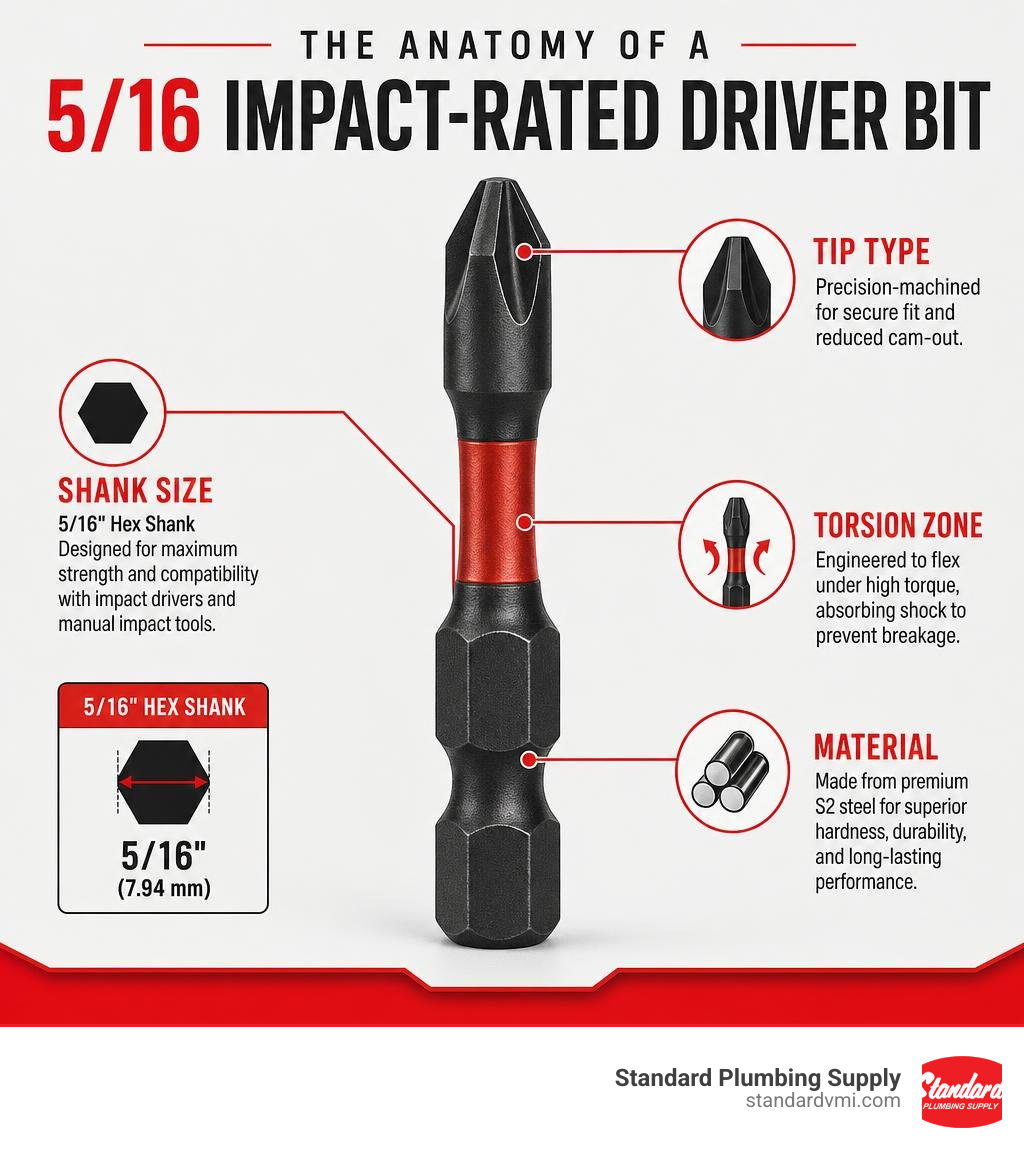
The hex shank design is another critical element. It locks securely into the quick-release chuck of your impact driver, preventing slippage. However, when we talk about 5 16 impact driver bits, there is an important distinction to make between the drive head size and the shank size.
What is a 5/16" Impact Bit?
To demystify the terminology, a 5/16" impact bit can refer to two distinct designs:
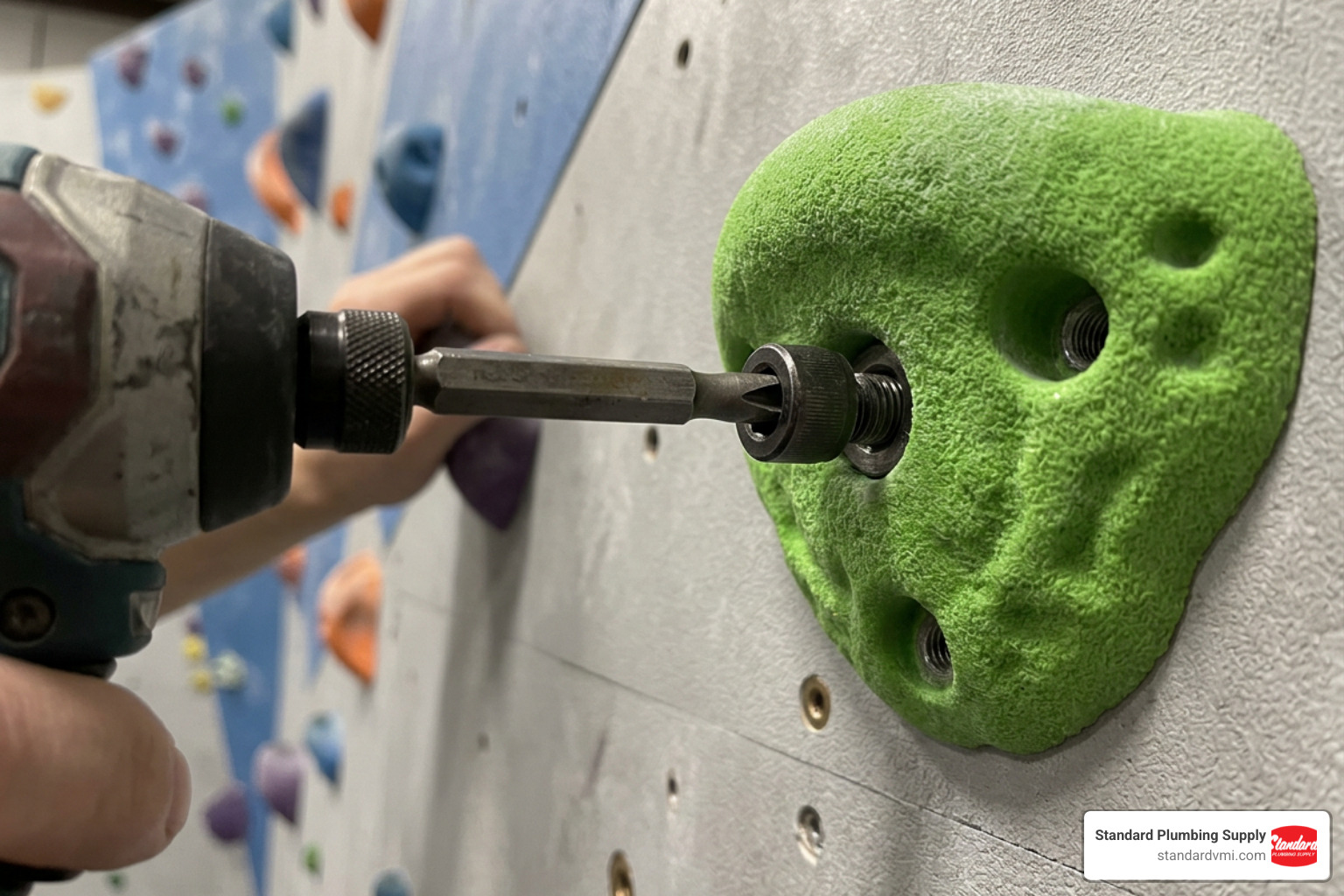
- A bit with a 5/16" male hex tip (often used for driving large socket-head cap screws, such as those found on commercial climbing walls or heavy machinery).
- A 5/16" nut driver (a female socket designed to spin hex-head screws, incredibly common in HVAC ductwork and plumbing brackets).
- A manual impact driver bit with a thick 5/16" shank designed to fit into hand-struck impact drivers.
For power tool applications, most premium bits like the Makita Impact XPS 5/16" Magnetic Nutsetter feature a standard 1/4" hex shank that fits directly into your cordless impact driver, while the business end of the tool is sized to engage 5/16" fasteners.
On the other hand, if you are using a manual, hammer-struck impact driver (the kind you hit with a 32-ounce club hammer to break loose stubborn brake rotor screws), the entire shank of the bit itself is a beefy 5/16" thick. This added mass is vital because a standard 1/4" shank would instantly snap under the direct force of a hammer blow.
Impact Bits vs. Standard Hex Bits
The secret sauce that separates high-quality 5/16 impact driver bits from standard hex bits is the presence of a specialized torsion zone.
If you look closely at an impact-rated bit, you will notice a narrowed midsection between the shank and the tip. This is not just for aesthetics; it acts as a mini torsion bar. When the impact driver strikes, this zone temporarily twists, absorbing the peak torque spikes and reducing the stress transferred to the tip.
Standard hex bits lack this engineered flex point. Because they are completely rigid, the metal quickly succumbs to fatigue. Under heavy load, the force has nowhere to go but directly into the fastener head or the tip of the bit, resulting in cracked tips, stripped screw heads, and wasted time.
For an in-depth breakdown of how different driver designs impact your daily workflow, check out The Ultimate Guide to 1/4 and 5/16 Reversible Nut Drivers.
Choosing the Best 5 16 Impact Driver Bits for Heavy-Duty Jobs
Whether you are anchoring plumbing manifolds to concrete, assembling structural steel framing, or setting up climbing holds on a commercial climbing wall, you need a bit that can survive high-torque cycles.
To help you visualize the difference in engineering, let's look at how premium S2 steel impact bits stack up against standard carbon steel bits:
| Feature | Premium S2 Steel Impact Bits | Standard Carbon Steel Bits |
|---|---|---|
| Material Composition | Proprietary S2 Tool Steel (high-alloy) | Standard High-Carbon Steel |
| Hardness & Flexibility | Dual-tempered (hard tip, flexible core) | Uniformly hardened (highly brittle) |
| Torsion Zone | Yes (absorbs extreme torque spikes) | No (transfers all shock to the tip) |
| Typical Lifespan | Up to 10x longer under impact load | Extremely short; prone to instant snapping |
| Best Used For | Cordless impact drivers & manual impact tools | Standard rotary drills and hand screwdrivers |
Key Features of Premium 5 16 Impact Driver Bits
When shopping for the best 5 16 impact driver bits, the material is your first line of defense. Look for bits manufactured from S2 steel. This state-of-the-art alloy is specifically formulated for shock resistance and durability. It undergoes a specialized heat-treatment process that ensures the tip remains incredibly hard and wear-resistant, while the inner core retains enough elasticity to flex without breaking.
Precision machining is another hallmark of a premium bit. High-quality manufacturers use CNC cutting to ensure the bit fits snugly into the screw head. A loose fit leads to "cam-out"—where the bit slips out of the fastener under load, instantly ruining both the bit and the screw.
If you are working with heavy-duty manual impact drivers or 1/2" socket adapters, options like the 5/16" PH Impact Driver Bits PH2 ×1 – TengTools provide the robust, professional-grade durability required to withstand repeated high-energy impacts without wearing down.
The Advantage of 3-Inch Length and Magnetic Features
Ask any service technician working in Heber City, Sandy, or Orem, and they will tell you: trying to hold a heavy fastener in place with one hand while balancing a power tool in the other is a recipe for frustration. That is why magnetic features and extended bit lengths are absolute game-changers.
A 3-inch bit length offers the perfect balance of reach and stability. It allows you to access deep-set fasteners inside junction boxes, electrical panels, plumbing chases, or recessed climbing holds where a standard 1-inch insert bit simply cannot reach.
When you combine that extra reach with a powerful rare-earth magnet, your productivity skyrockets. The magnetic tip holds the fastener securely to the bit, allowing for true one-handed operation. This is not just a convenience; it is a safety feature when you are working on a ladder or reaching into tight, awkward spaces.
Practical Applications and Maintenance
The beauty of 5 16 impact driver bits lies in their versatility across multiple trades. In the HVAC world, 5/16" is the undisputed king of sheet metal screws, used to assemble ductwork, secure furnace cabinets, and mount outdoor condenser units. In automotive repair, manual 5/16" shank bits are essential for striking loose seized brake rotor screws or rusted chassis bolts.
For heavy construction and plumbing, these bits are frequently paired with high-torque fasteners to secure pipe hangers, structural brackets, and heavy equipment mounts. For specialized drilling needs, tools like the 5/16" SHOCKWAVE™ Impact Hex Drill Bit allow you to transition seamlessly from drilling pilot holes in wood, plastic, or metal to driving fasteners without ever switching tools.
Best Practices for Using 5 16 Impact Driver Bits
Even the toughest S2 steel bits can fail if they are abused. To get the absolute most out of your investment, keep these best practices in mind:
- Keep it Straight: Always maintain a perfectly straight line of force. Tilting your impact driver even slightly increases the risk of cam-out and puts uneven lateral pressure on the bit, which can cause it to snap.
- Let the Tool Do the Work: Do not lean your entire body weight into the impact driver. Modern impact tools are designed to do the heavy lifting. Firm, steady pressure is all that is required to keep the bit engaged.
- Manage Your RPMs: When driving into hard materials like metal or stainless steel, high speeds generate friction and heat, which quickly destroys the temper of the steel. Slow down and use consistent pressure.
- Ensure Full Engagement: Before pulling the trigger, make sure the bit is seated completely in the fastener head. Halfway engagement is the number one cause of stripped bits and ruined screws.
Maintenance Tips to Extend Bit Life
A little bit of care goes a long way toward keeping your tools out of the scrap bin.
First, keep your bits clean. Magnetic bits are notorious for attracting metal shavings, rust flakes, and construction debris. This buildup prevents the bit from seating fully in the screw head, leading to slippage. Wipe your bits down regularly with a clean rag or use a stiff wire brush to clear out the hex pocket.
Second, protect them from moisture. While many premium bits feature black oxide or phosphate coatings to fight off corrosion, storing damp tools in a closed toolbox will eventually lead to rust. A quick spray of light tool oil or WD-40 before storage will keep them pristine.
Finally, use the right tool for the job. Never use a driver bit as a chisel or a pry bar. These actions put lateral forces on the tool that it was never designed to handle, leading to micro-fractures in the steel that will cause it to shatter during its next high-torque use.
Frequently Asked Questions about 5/16" Impact Accessories
Why do manual impact drivers require 5/16" shanks instead of 1/4" shanks?
Manual, hammer-struck impact drivers are designed to convert the raw physical force of a heavy hammer blow into high-torque rotation. This process puts an incredible amount of sudden, violent stress on the tool.
A standard 1/4" hex shank simply does not have enough cross-sectional mass to survive these strikes; it would shear or bend almost instantly. The thicker 5/16" shank provides the structural integrity and shear strength required to absorb the direct impact of a hammer blow and transfer that energy safely to the stuck fastener.
Can I use 5/16" impact bits for drilling metal and stainless steel?
Yes, but with caution. If you are using an impact-rated drill bit, such as a stepped-tip or heavy-duty twist drill, you can certainly drill through mild steel and stainless steel.
However, stainless steel is notoriously prone to work-hardening if it gets too hot. To prevent burning out your bit, you must use a lower RPM, apply firm and steady downward pressure, and use a high-quality cutting lubricant (like a cutting paste or aerosol lubricant) to keep the heat to a minimum.
What is the difference between a 5/16" nut driver and a 5/16" hex driver bit?
This is one of the most common points of confusion on the job site.
- A 5/16" nut driver is a female socket. It slips over the outside of a 5/16" hexagonal screw head or nut (like a sheet metal zip screw).
- A 5/16" hex driver bit (often called an Allen or hex key bit) is a male driver. It inserts inside a recessed 5/16" hexagonal hole in the head of a bolt (like a socket-head cap screw used in heavy machinery or climbing holds).
If you are looking for a reliable, professional-grade solution to drive hex-head fasteners with maximum surface contact and minimal wobble, the Klein Tools 5/16-Inch Magnetic Hex Driver is an industry-standard choice that delivers exceptional performance.
Conclusion
At the end of the day, a tool is only as good as the results it delivers. Choosing high-quality 5/16 impact driver bits manufactured from premium S2 steel ensures that you can tackle the toughest HVAC, plumbing, and structural jobs without constant interruptions from broken equipment. By matching the right bit to your specific application and following smart maintenance habits, you will save time, protect your fasteners, and keep your projects running smoothly.
At Standard Plumbing Supply, we are proud to support local contractors, tradespeople, and industrial operations across Utah—from our fully stocked locations in Sandy, Orem, and Heber City, to our fast nationwide shipping network. We don't just sell trusted brands; we partner with your business to make your operations more profitable and stress-free.
If you are looking to streamline your inventory, eliminate last-minute supply runs, and keep your team fully equipped with the exact tools they need, explore our custom Standard Plumbing Supply VMI Solutions. Let us handle the supply chain so you can focus on doing what you do best. Stop by one of our local Utah branches or reach out today to see how we can support your next project!