
How to Choose an Adjustable Butane Gas Regulator
Learn how to choose an adjustable butane gas regulator for safe pressure control, appliance compatibility, and compliance with industry standards.

Choose the Right Adjustable Butane Gas Regulator
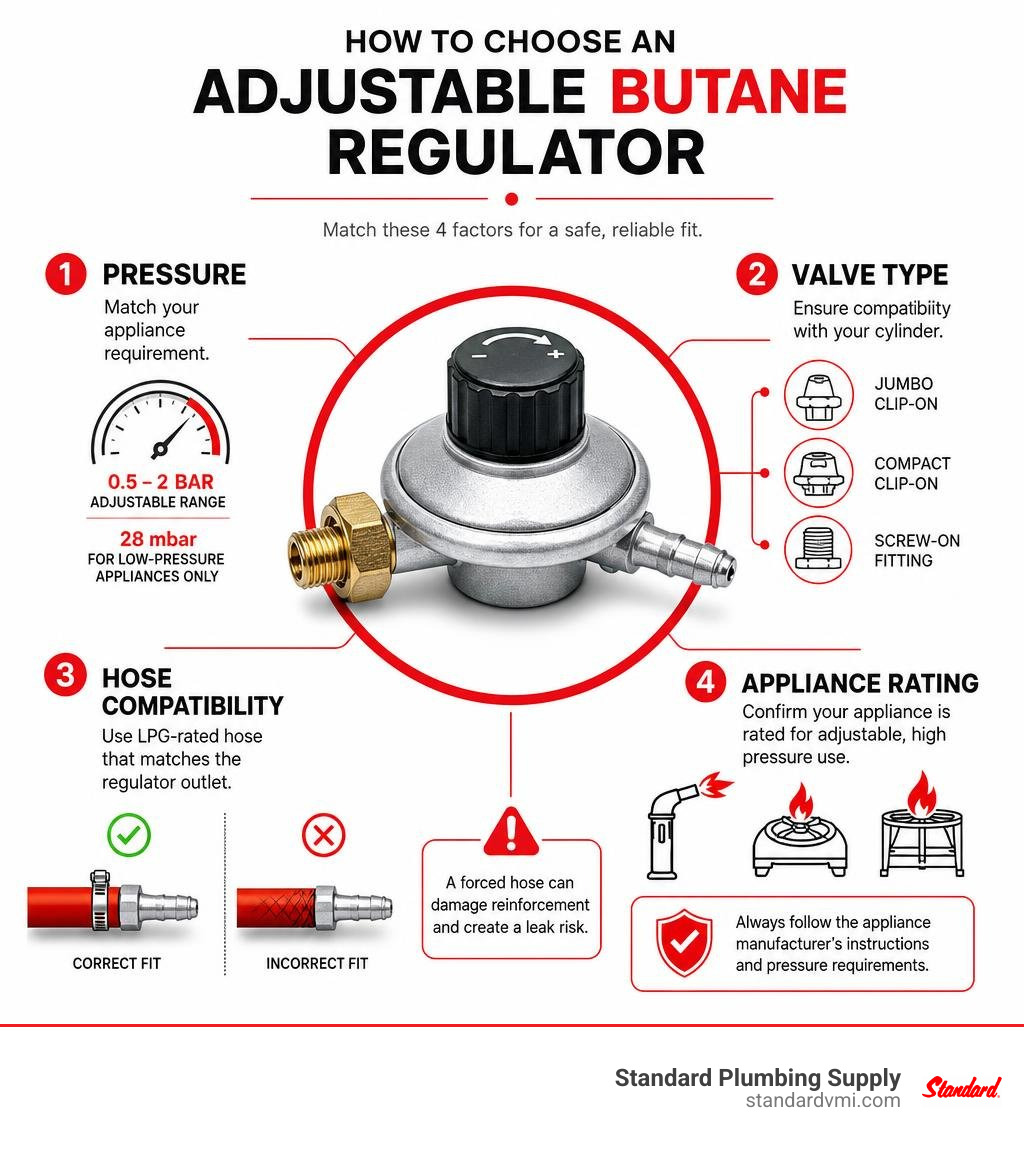
An adjustable butane gas regulator lets you set the gas pressure delivered from a cylinder to equipment designed for variable or high-pressure LPG supply. Most models used for specialist equipment adjust from about 0.5 to 2 bar, while ordinary domestic butane cookers and heaters usually need a fixed 28 mbar regulator.
Quick answer: Choose an adjustable regulator only when the appliance label or manufacturer specifies a high-pressure, variable-pressure butane supply. Match all three items before buying:
- Required appliance pressure - Never use a 0.5-2 bar regulator on a 28 mbar appliance.
- Cylinder valve connection - Butane bottles may use Jumbo or Compact clip-on valves, or a screw-on fitting.
- Hose and outlet size - Use LPG-rated hose that matches the regulator nozzle exactly. A forced hose can damage its internal reinforcement and create a leak risk.
For property maintenance teams and small businesses, the right regulator helps keep specialty burners, torches, and outdoor equipment working safely without creating extra downtime or inventory confusion. Standard Plumbing Supply supports trade customers with product guidance, dependable availability, and fast shipping for maintenance and repair needs.
I am Jacob Reese, Vice President at Standard Plumbing Supply, with experience helping contractors and facilities teams source dependable plumbing, HVAC, and gas-system components. In this adjustable butane gas regulator roundup, I will focus on the practical compatibility details that help teams buy confidently and avoid costly mismatches.
Understanding the Adjustable Butane Gas Regulator vs Standard Models
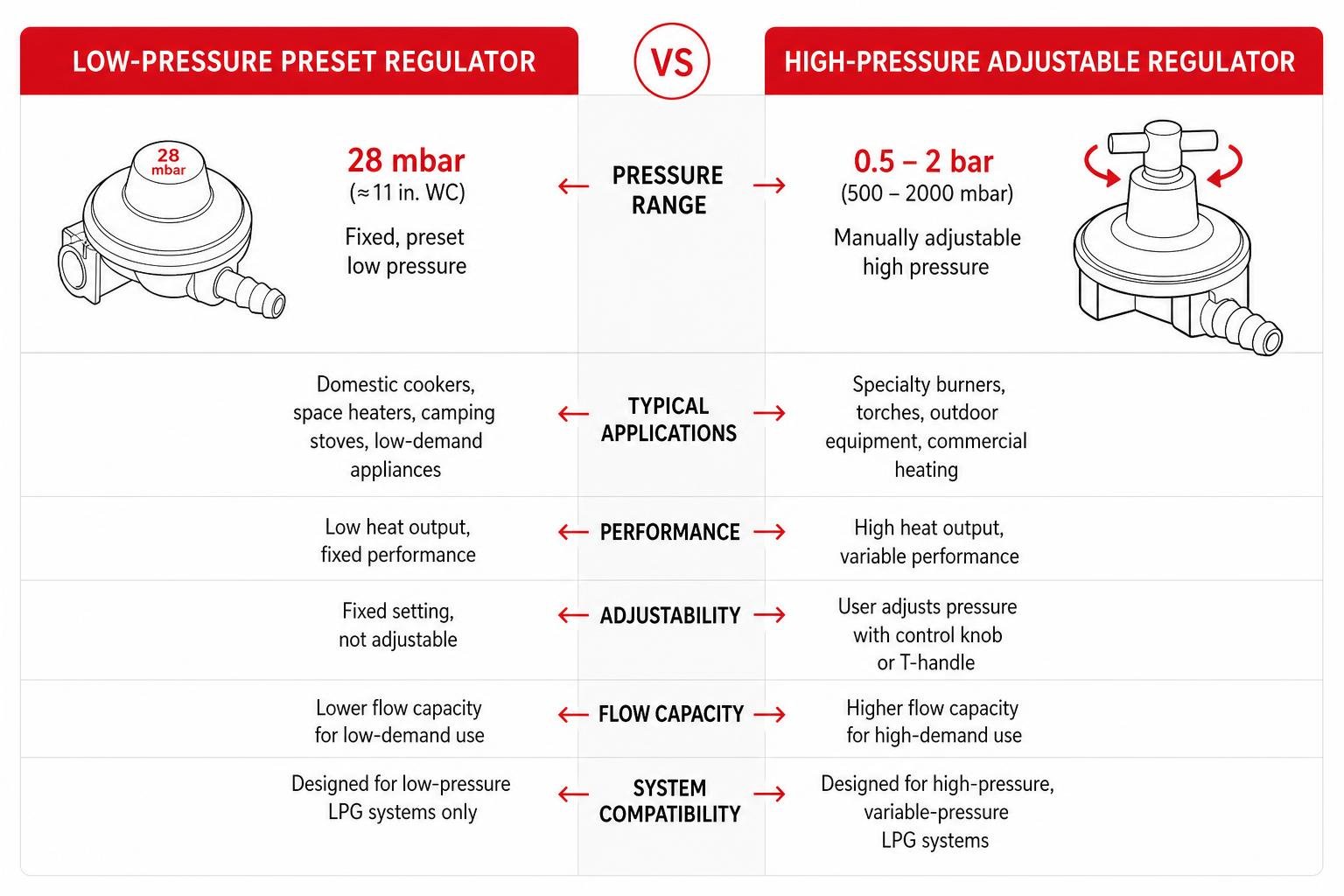
When managing gas infrastructure or sourcing equipment for field crews, understanding the mechanical distinction between a standard fixed regulator and an adjustable butane gas regulator is vital. Standard butane regulators deliver a preset low pressure—typically calibrated to a constant 28 mbar (approximately 11 inches water column). These standard low-pressure units are designed specifically for fixed-demand appliances such as domestic indoor cookers, small space heaters, and standard outdoor camping stoves where heat output remains within narrow operating parameters.
In contrast, an adjustable butane gas regulator allows the operator to manually alter the delivery pressure, usually within a range of 0.5 to 2 bar (500 mbar to 2000 mbar). That is between 18 and 70 times higher than the pressure delivered by a standard low-pressure device! This dramatic increase in variable delivery flow rate is required for heavy-duty gas appliances that demand varying heat output or high gas volumes. By rotating a control knob or T-handle, users adjust the internal spring tension against the flexible diaphragm, altering how much gas bypasses the valve seat. To learn more about standard versus specialized units, you can check our guide on different types of gas regulator.
Pressure Ranges (0.5 to 2 Bar) and Appliance Performance
Operating pressure ranges such as 0.5 to 2 bar directly dictate appliance performance, total BTU output, and flame velocity. High-capacity adjustable regulators, such as those engineered by manufacturers like Cavagna or Kosan, are rated for flow capacities reaching 8 kg/hr or higher.
When powering commercial heating equipment or industrial gas torches, a standard 28 mbar regulator simply cannot provide sufficient mass flow. The higher pressure range delivers the gas velocity necessary to maintain flame stability at the burner head during maximum demand. Increasing delivery pressure from 0.5 bar up toward 2 bar boosts heat production dramatically, giving operators precise control over high-demand gas flow for specialized tasks.
Key Safety Risks of Using an Adjustable Butane Gas Regulator on Low-Pressure Appliances
We cannot overstate the severe hazards of installing a high-pressure adjustable butane gas regulator onto equipment designed for standard low-pressure (28 mbar) operation.
- Appliance Diaphragm Rupture: Standard gas appliances utilize delicate low-pressure internal control valves and rubber diaphragms calibrated for 28 mbar. Subjecting these components to 500 mbar (0.5 bar) or more causes immediate structural rupture.
- Severe Gas Leakage: Over-pressurization destroys seals and hose connections, causing catastrophic gas leaks around the control knobs and appliance manifold.
- Uncontrolled Flame Blowouts: Excessive pressure forces gas through burner orifices at high velocity, creating massive, uncontrolled jet flames or flame lifting, which presents extreme fire and explosion hazards.
- Incomplete Combustion: Over-fueling a low-pressure burner starves the flame of required oxygen, causing incomplete combustion that generates lethal levels of carbon monoxide (CO).
Applications, Cylinders, and Valve Compatibility
High-pressure adjustable butane regulators are intended strictly for specialized, high-demand equipment. Common commercial, agricultural, and industrial applications include:
- Industrial Heat Torches & Roofing Burners: Heavy heating, asphalt sealing, and weed-burning torches require intense high-velocity flames.
- Agricultural Equipment: Agricultural heating units, cow dehorners, and farm bird scarers ("crow bangers") rely on high-pressure pulses to function.
- Commercial Plumbing & Metal Processing: Pre-heating pipework, soldering heavy copper connections, and lead melting call for concentrated high-BTU gas delivery.
Connecting these regulators correctly requires matching the regulator inlet to the specific cylinder valve fitting. Butane cylinders do not use a single universal standard; fittings vary by bottle size and region. For an overview of container connection styles, review our guide on different types of lpg regulators.
| Cylinder Valve Type | Typical Adaptor / Thread Size | Common Cylinder Capacities | Primary Application Field |
|---|---|---|---|
| Jumbo Clip-On Valve | 35mm Quick-Release Clip | 13kg to 15kg Large Bottles | Commercial Heaters & Agricultural Tools |
| Compact Clip-On Valve | 20mm or 27mm Quick-On | 5kg to 13kg Cylinders | Patio Heaters & Mobile Equipment |
| Threaded Nut Fitting | 21.8mm Left-Hand (LH) Thread | 4.5kg, 7kg, 15kg Cylinders | Trade Torches & Industrial Burners |
| Camping Screw-On | M16 x 1.5 Thread | Camping cylinders (R901, R904, R907) | Portable Field Equipment |
Selecting the Right Valve and Hose Sizing for Your Adjustable Butane Gas Regulator
Choosing the proper hose size and nozzle connection is just as vital as matching the cylinder valve. High-pressure adjustable regulators, such as the Cavagna High Pressure Butane Regulator 0.5-2 bar Adjustable 21.8 mm nut x 6.3 mm Nozzle 8Kg-h , commonly feature specialized outlet nozzles—such as 6.3mm or 8mm hose tails—or G 1/4" threaded connections.
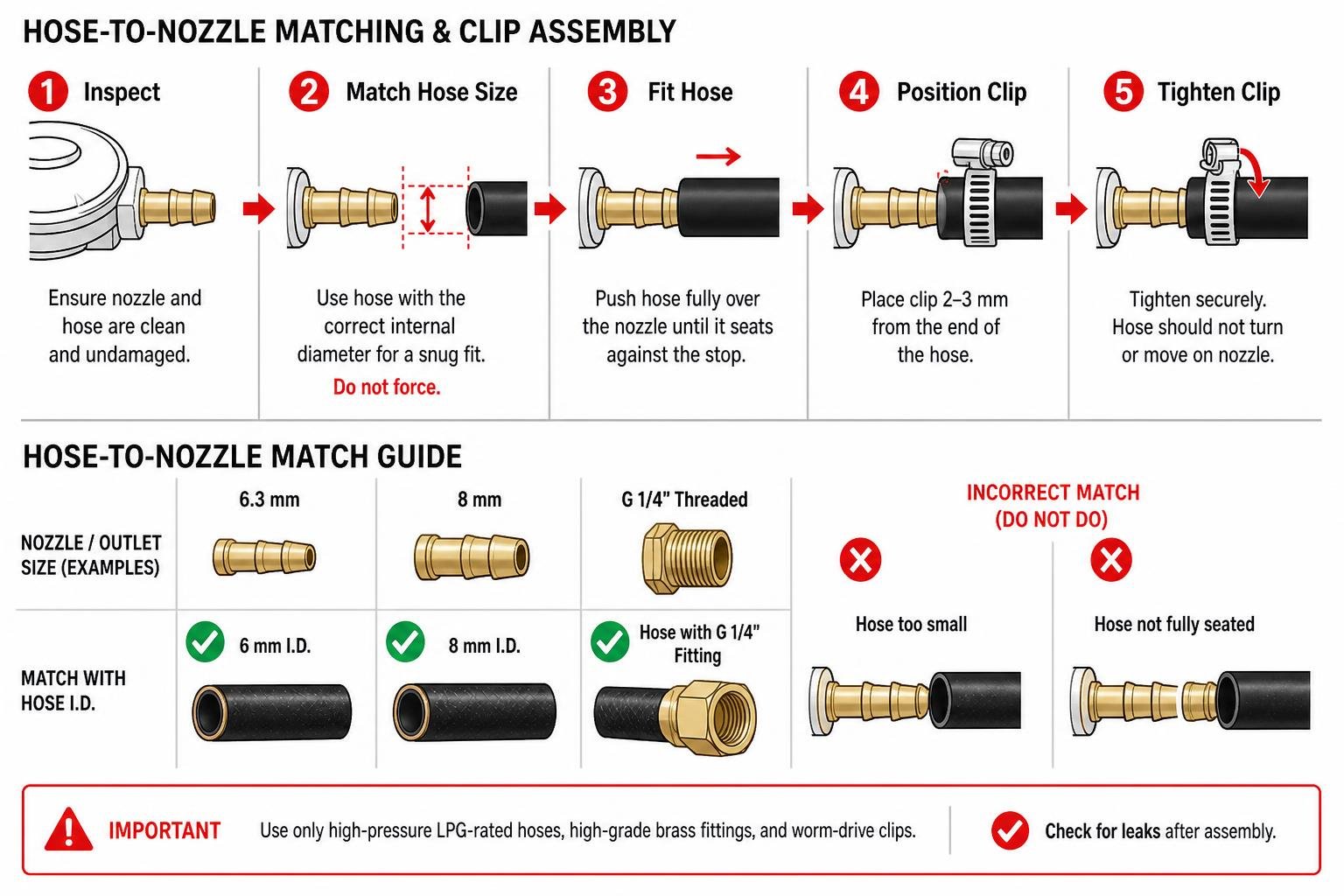
Never attempt to force a hose with an improper internal diameter onto a larger regulator nozzle. Forcing a tight hose over a fitting stretches and breaks the internal synthetic braiding, severely undermining the hose's structural integrity. Under high pressure (0.5 to 2 bar), a weakened hose can burst or develop hidden micro-fractures. Always use high-pressure LPG-rated hoses secured with high-grade, leak-tight brass fittings and proper worm-drive hose clips.
Butane vs Propane Compatibility and Environmental Temperature Factors
A frequent question we hear at Standard Plumbing Supply is whether butane and propane regulators are interchangeable. While both gases are liquefied petroleum gas (LPG), their physical properties differ significantly:
- Boiling Point: Butane has a boiling point of approximately -0.5°C (31.1°F), whereas propane boils down at -42°C (-43.6°F).
- Vapor Pressure: Propane exerts significantly higher internal cylinder pressure at room temperature than butane.
- Standard Delivery Pressures: Standard low-pressure butane operates at 28 mbar, whereas low-pressure propane operates at 37 mbar.
Because butane transitions from liquid to gas right around the freezing threshold (-0.5°C), cold ambient weather severely impacts butane performance. In low temperatures, butane cylinder pressure drops drastically because the liquid inside cannot draw enough environmental heat to vaporize. If cold-weather pressure loss occurs, operators often mistakenly dial up an adjustable butane gas regulator to compensate, only to experience liquid carryover or total flame extinction.
For year-round outdoor operation in colder climates across Utah, Idaho, Wyoming, and Oregon, propane is generally preferred. When monitoring complex gas lines, using a specialized unit like a dual gauge regulator helps teams track both cylinder content pressure and delivery pressure simultaneously.
Safe Installation, Pressure Adjustment, and Compliance Standards
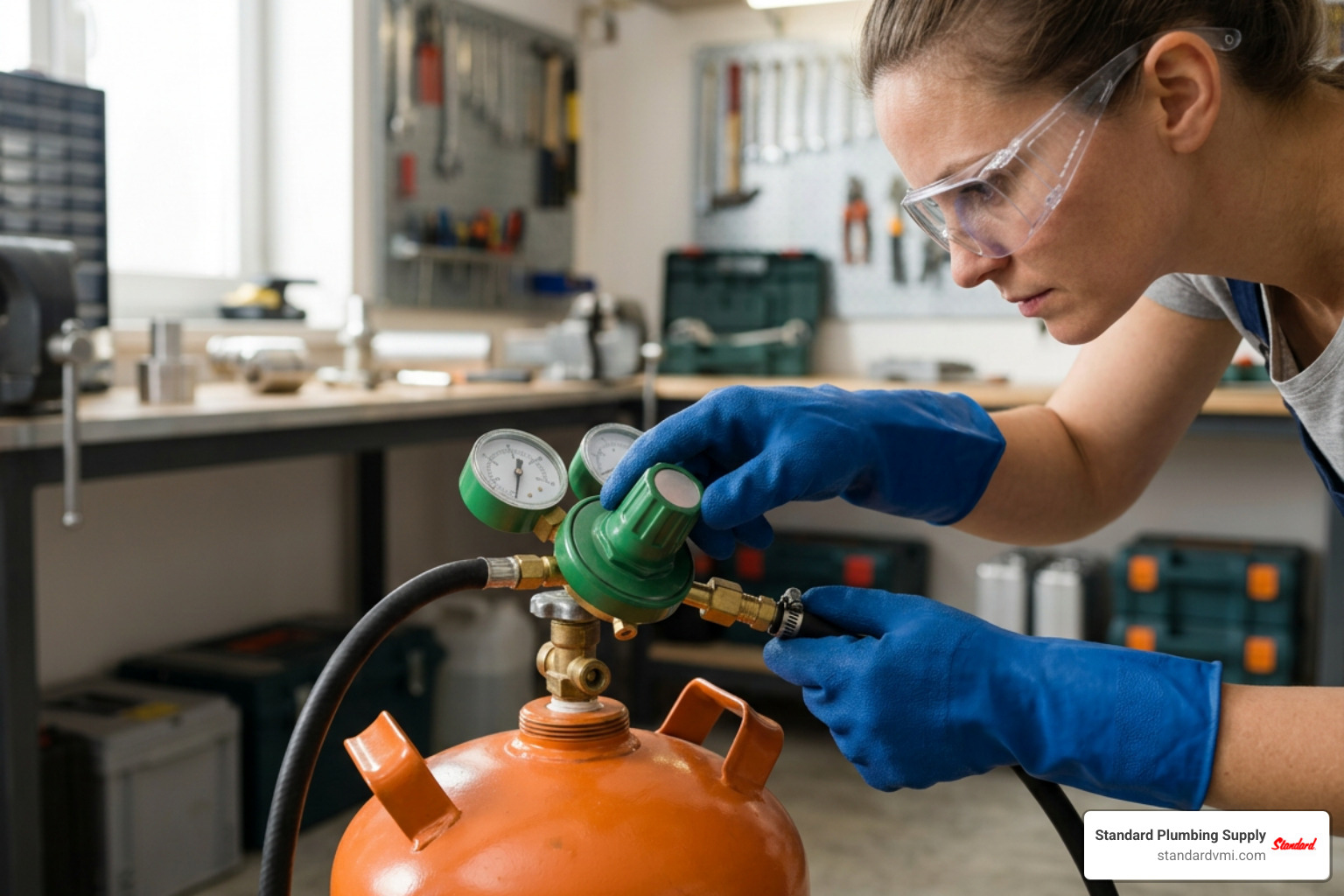
Installing and adjusting an adjustable butane gas regulator demands absolute adherence to safety protocols. Before connecting any regulator, inspect the cylinder valve and regulator threads or clip mechanisms for dirt, debris, or damaged rubber seals.
Step-by-Step Procedure for Safely Adjusting Gas Pressure
Follow this strict protocol when connecting and adjusting pressure on high-pressure butane systems:
- Verify Equipment Rating: Confirm that the connected appliance is explicitly rated for variable high pressure (0.5 to 2 bar).
- Mount the Regulator: For threaded valves (such as 21.8mm LH threads), thread the nut counter-clockwise (left-hand threads are standard on gas fittings) and tighten securely with an appropriate wrench. For clip-on models, firmly press the quick-release collar onto the valve until it clicks locked.
- Perform a Soapy Water Leak Test: Apply a dedicated gas leak detector spray or a soapy water solution to all joint connections. Open the cylinder valve slightly. Look carefully for expanding bubbles, which indicate a gas leak. If bubbles form, immediately close the gas valve and rectify the connection.
- Initial Pressure Setup: Ensure the regulator adjustment knob or T-handle is turned fully counter-clockwise to its lowest pressure setting before opening the main gas valve.
- Slowly Open the Gas Supply: Open the main cylinder valve slowly to prevent sudden pressure surges from tripping internal excess flow safety valves or Under-Pressure Shut-Off (UPSO) devices.
- Adjust Pressure Under Operation: Light the burner following manufacturer guidelines. Slowly turn the adjustment handle clockwise to increase pressure or counter-clockwise to decrease pressure.
- Verify Pressure Output: Whenever possible, use an inline manometer or pressure gauge to verify that the delivered bar pressure exactly matches the appliance specifications.
Essential Safety Standards and Certifications to Look For
When buying gas regulation equipment for commercial jobs, never compromise on safety certifications. Legitimate safety approvals guarantee that materials, diaphragms, and relief valves have undergone rigorous testing for structural durability and gas compatibility. Key standards to check include:
- BS16127 Approval: A rigorous British safety standard certifying high-pressure gas regulators for safety, material durability, and flow performance.
- EN 16129 Standard: The primary European standard governing construction, safety, pressure limits, and testing of LP gas regulators and safety devices.
- NF Standard Compliance: French national safety certification ensuring strict quality and pressure control specs, frequently found on complete connection assemblies such as the Gas Regulator Kit Butane 28 mbar + 2m Flexible Hose Screwable .
Frequently Asked Questions About Gas Pressure Regulation
What appliances require a high-pressure adjustable regulator instead of a 28 mbar regulator?
High-pressure adjustable regulators are required exclusively for high-demand industrial and commercial gear such as heavy-duty roofing torches, metal melting furnaces, commercial weed burners, agricultural heating blowers, and specialized farm equipment like crow bangers. Standard residential stoves, indoor cabinet heaters, and standard camping grills run on fixed 28 mbar regulators and will be damaged or cause fires if connected to high-pressure regulators.
Can you safely use a butane regulator with propane gas?
No, you should never swap butane and propane regulators without checking explicit manufacturer multi-fuel ratings. Propane operates at much higher cylinder pressures than butane. Using a standard butane regulator on a propane cylinder can lead to diaphragm failure or over-pressurization. Furthermore, cylinder valve thread profiles differ between fuel types to prevent dangerous accidental cross-connections.
How do cold temperatures affect butane gas regulator performance?
Because butane's boiling point is -0.5°C (31.1°F), cold ambient temperatures slow down liquid vaporization inside the bottle. As temperature drops toward freezing, cylinder pressure plummets, causing the regulator to deliver lower gas volume regardless of how high you turn the adjustment knob. In sub-freezing weather, butane gas systems fail to operate effectively, requiring temperature-controlled enclosures or a switch to propane gas.
Conclusion
Selecting the right adjustable butane gas regulator boils down to three critical factors: matching the appliance's required pressure range (0.5 to 2 bar versus standard 28 mbar), verifying exact cylinder valve fitting dimensions, and pairing the regulator with the correct LPG-rated high-pressure hose. Using high-pressure regulators on standard appliances creates severe fire and equipment risks, making proper selection critical for safe operation.
At Standard Plumbing Supply, we serve property maintenance professionals, plumbing contractors, and commercial facilities managers across Utah, Idaho, Wyoming, Oregon, California, Nevada, Arizona, Colorado, and Nebraska. We provide access to trusted commercial brands, expert technical guidance, fast nationwide shipping, and vendor-managed inventory (VMI) solutions that keep your shop stocked and your jobs running smoothly. Explore our full range of gas line components and expert plumbing and VMI solutions today to keep your job sites safe, compliant, and fully operational.